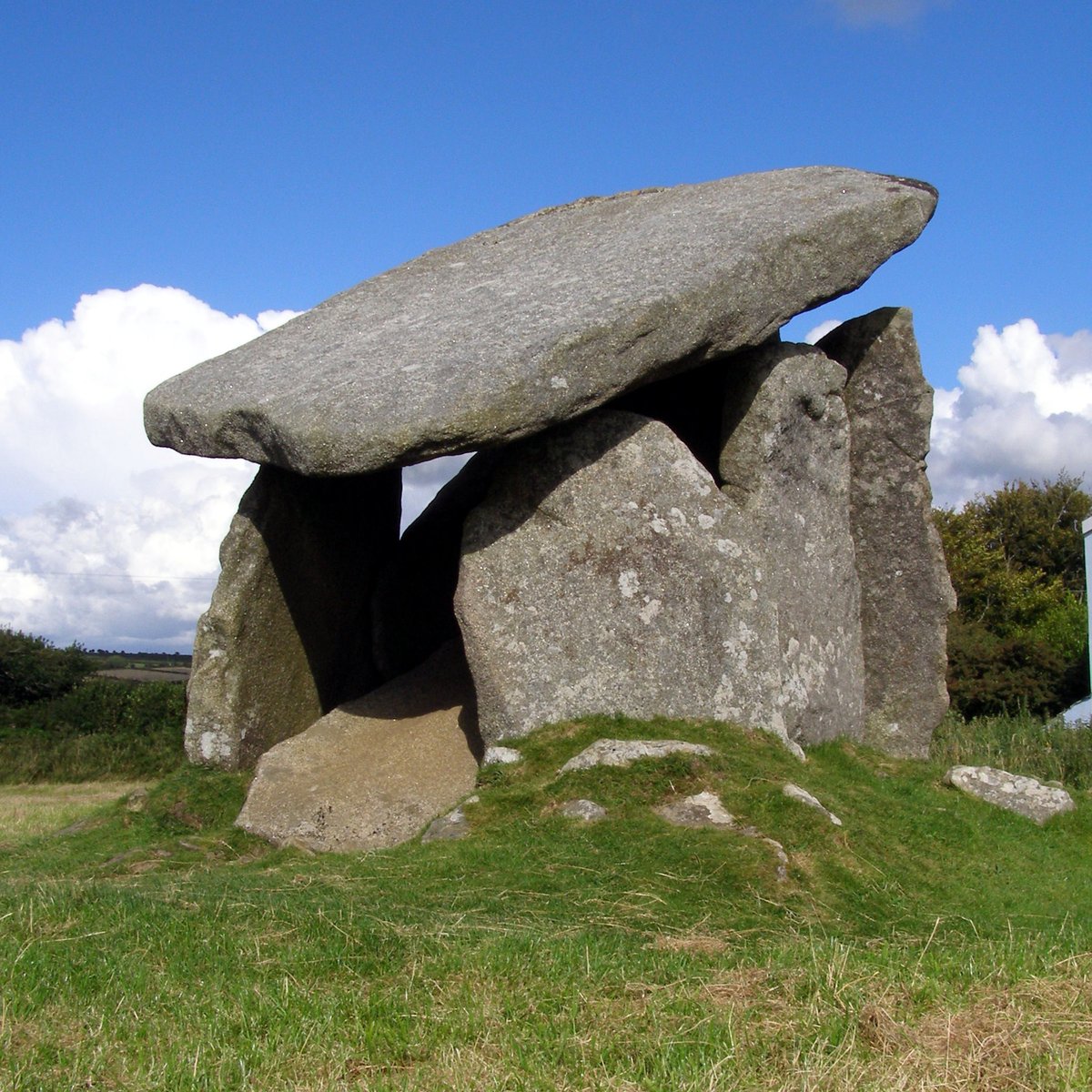

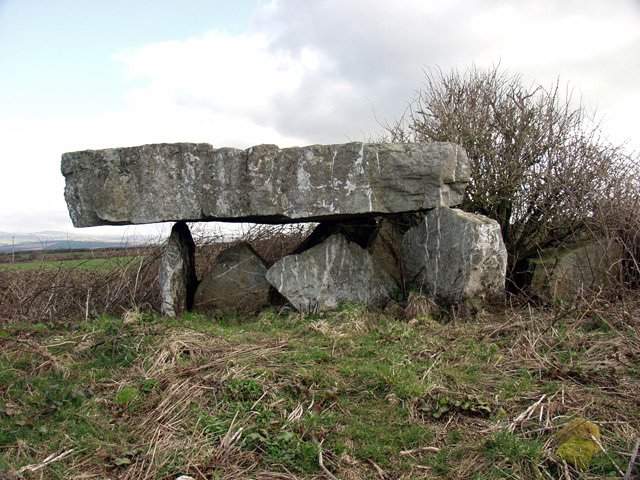
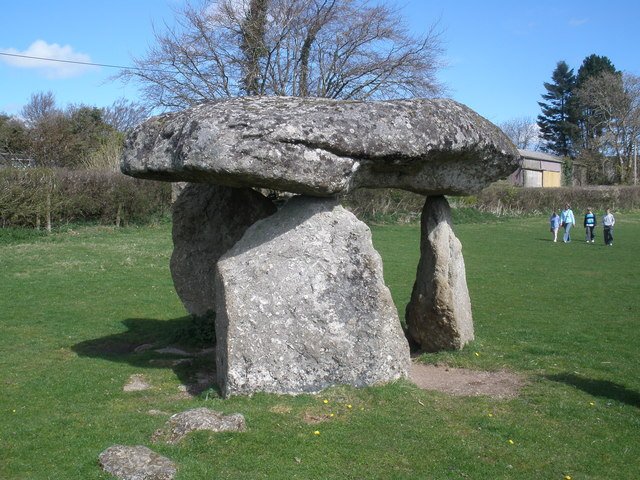
Trethevy Quoit (Cornish: Koyt Tredhewi) is a well-preserved megalithic structure located in the hamlet of Tremar Coombe in Cornwall, England. Locally known as "the giant's house", the site dates back to the Neolithic period between 3700 and 3500 BC. It consists of five standing stones capped by a large 10.5-ton cover slab and was added to the Heritage at Risk Register in November 2017 due to erosion and damage.
Originally covered by a mound with a diameter of 6.5 metres, the structure features a group of horizontal stones including a fallen back wall and side stones. A special feature of this site is a small rectangular stone at the bottom right of the front stone that allows access to the chamber, which is now opened only very rarely. The cover slab features a natural hole at its upper end, which may have been used for astronomical observation.
Historical records show that John Norden first mentioned the site in 1584, and William Copeland Borlase studied and drew it in the 19th century. Modern interpretations have highlighted the unique nature of the antechamber and its parallels to structures in Brittany. Recent excavations suggest such megaliths may have been used as religious structures or community graves over long periods of time.
Sources: Wikipedia, OpenStreetMap, Wikidata, Wikimedia Commons
Written by Nicolo Ciampini
Discuss this with the author and others
No comments yet. Be the first to start the conversation.