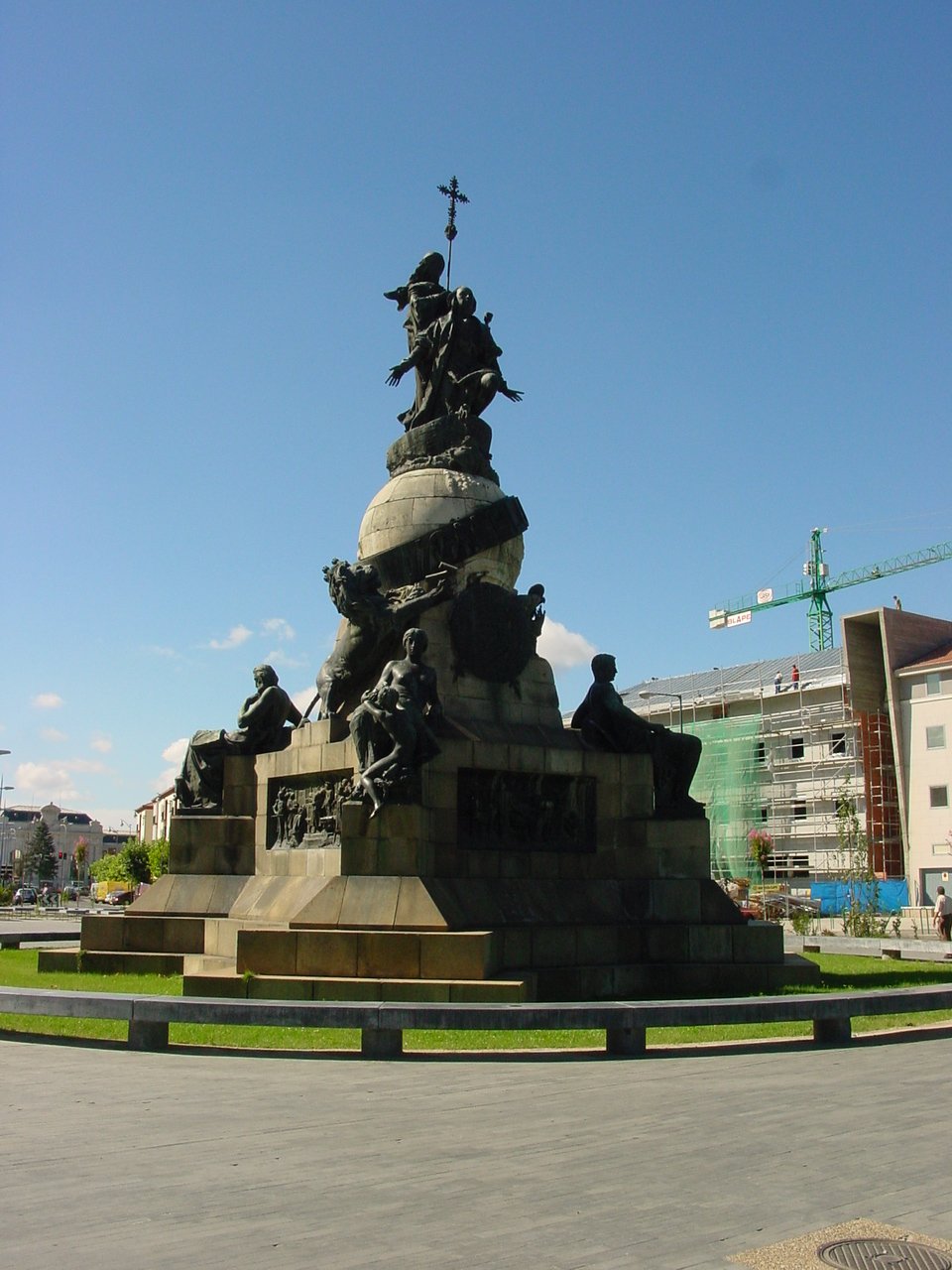

The Monument to Columbus is an instance of public art in Valladolid, Spain. Located in the centre of the Plaza de Colón, the monument was conceived to celebrate the 400th anniversary of Columbus' arrival in the Americas. The project followed a design by Antonio Susillo, with the bronze parts cast in Paris at the Thiébaut Frères' foundry.
The monument was initially intended for a park in Havana, but plans were aborted due to the Cuban rebellion and independence from Spain. While the bronze elements remained in Paris, the ashlar pieces were stored in Pontevedra. Valladolid, the death place of the Genoese explorer, competed with Seville and Madrid for the monument until the Council of Ministers awarded it to Valladolid in 1901.
Work on the concrete socle began in 1903 by the Compañía anónima de Hormigón armado de Sestao, and the ensemble was unveiled on 14 September 1905. The pedestal features four bronze reliefs illustrating events in the life of Columbus, including the departure from Palos and the reception by the Catholic Monarchs. Four seated statues representing Study, History, Nautics, and Value lie on the corners of the monument.
The monument stands 16.40 metres high and weighs 7,000 kg. It features a globe made of white stone from Ibeas, circumvented by a bronze ribbon with the inscription non plus ultra. A lion from below is sculpted to have scratched the letter 'n' from the motto. In 2019, the monument was covered in red paint and tagged with a political slogan by the youth organization 'Yesca'.
Sources: Wikipedia, OpenStreetMap, Wikidata, Wikimedia Commons
Written by Nicolo Ciampini
Discuss this with the author and others
No comments yet. Be the first to start the conversation.