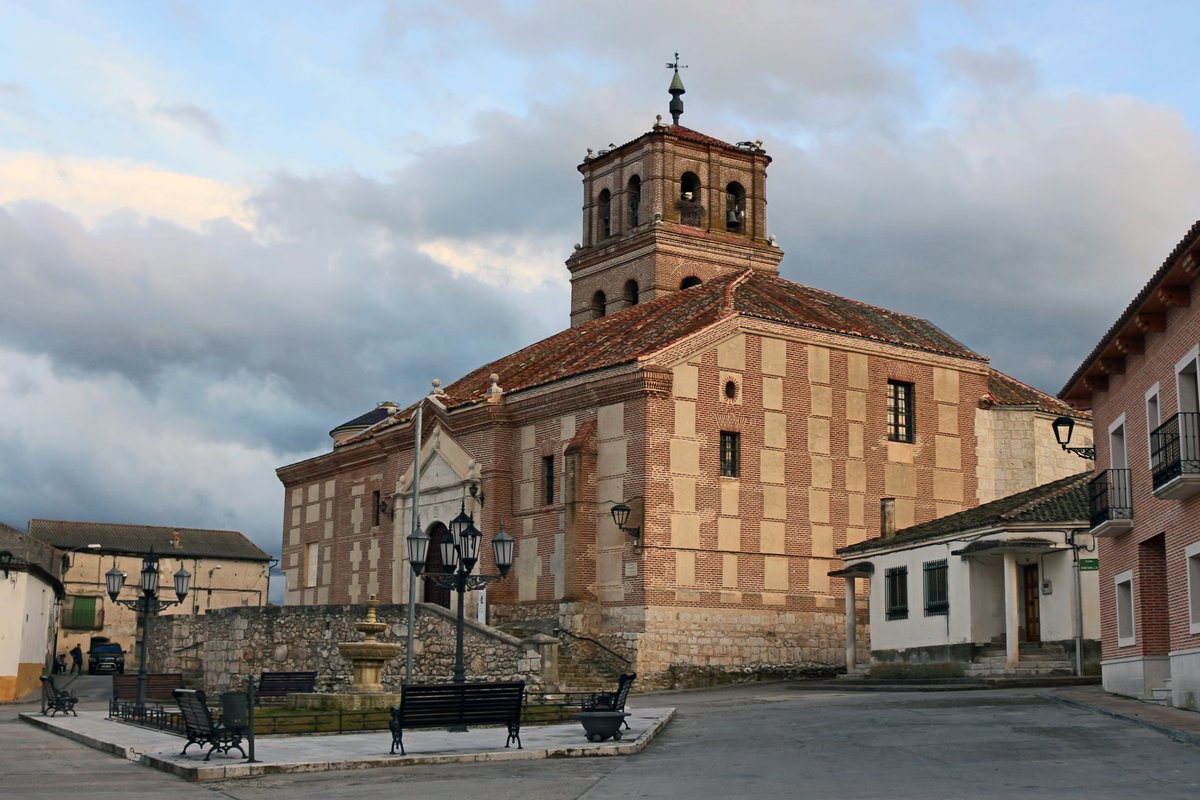

Nestled in the heart of Alcazarén, the Church of Santiago Apostle stands as a monument to the passage of time. Built in the 14th century, it showcases a beautiful fusion of Gothic-Mudéjar architecture, with renovations in the 17th and 18th centuries. What sets this church apart is its unique combination of historical significance and artistic treasures within its walls. This church’s story is just as much about the past as it is about the present.**Located in the** [Valladolid Province](https://commons.wikimedia.org/wiki/Valladolid_(Provincia)) **of** [Castile and León](https://commons.wikimedia.org/wiki/Castilla_y_Le%C3%B3n), **Spain**, the Church of Santiago Apostle has been a cultural property in Alcazarén for centuries.
Historical relics, such as the powerful image of Santiago Matamoros, showcase its role in the 9th century Battle of Clavijo. As time passed, the church underwent significant changes during the 17th and 18th centuries, altering its original appearance. The exterior of the church features three arches, while the three naves inside are covered with varying styles of vaults. The central nave boasts cannon, lunettes, and arista, while the lateral naves are adorned with arista vaults.
The sacristy and the nave of the Gospel are covered with Baroque plaster. The tower, standing beside the head on the side of the Epistle, is adorned with balls and ends in a chapit. The main entrance is on the side of the Gospel, with another simpler entrance with a semi-circular arch on the side of the Epistle. Four sepulchers, located in the presbytery, are significant. One sepulchre bears the inscription: 'This sepulchre is of Francisco Gómez notary and of his wife Ana Sánchez and their heirs, blessed by this church with permission from the bishop, year of 1605.'**In addition to the three sepulchers previously listed, a fourth sepulchre bearing the inscription: 'Doted this sepulchre Maria de Aldevela wife who was of Juan de Villanueva with 500 maravedis of annual rent.
1600, and another sepulchre with no inscription but displaying a coat of arms also exist in the presbytery.**The church, both a cultural property and a place of worship, stands today as a testament to the past, offering a peaceful haven for visitors filled with historical significance and artistic treasures. Whether you are a history enthusiast or an art lover, a visit to this church in Alcazarén is a must.
Sources: Wikipedia, OpenStreetMap, Wikidata, Wikimedia Commons
Written by Nicolo Ciampini
Discuss this with the author and others
No comments yet. Be the first to start the conversation.