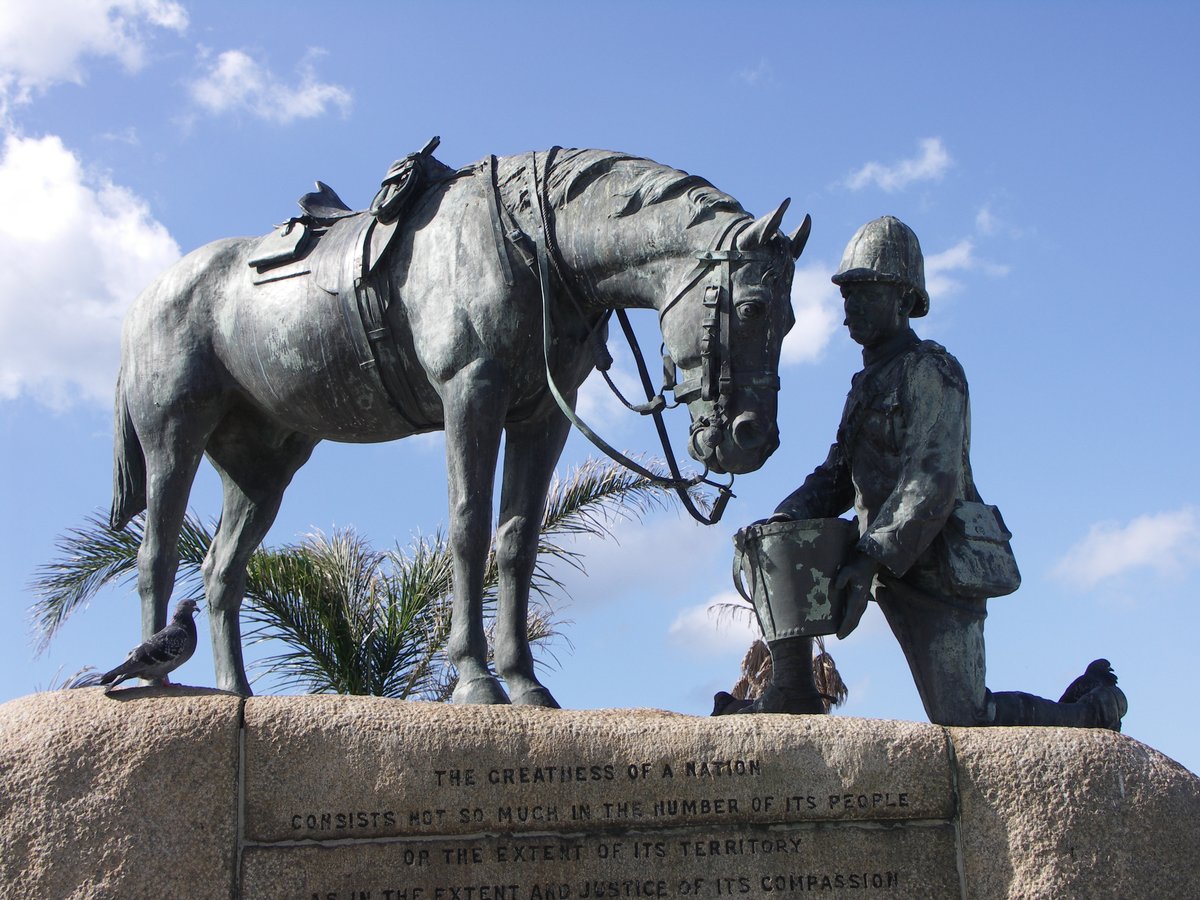

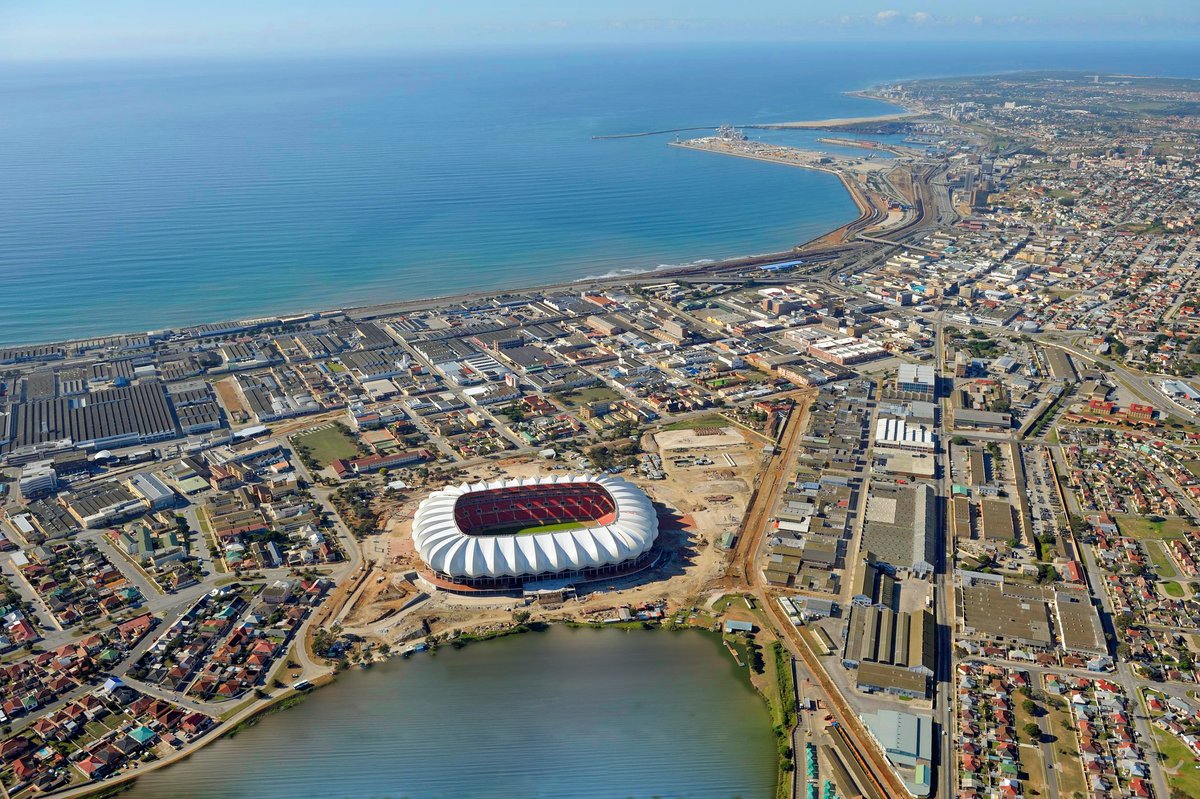
Set within the heart of Gqeberha, Eastern Cape, South Africa, stands a heartrending chronicle of the horses who served and gave their lives during the Anglo-Boer War (1899-1902), a historical testimony known as the Horse Memorial. Situated beside St George's Park in its early days, it now stands along Cape Road, a representation of the steeds that responded to the call. A masterpiece crafted by Joseph Whitehead, the life-sized bronze statue portrays a tender image: a kneeling soldier presenting a bucket of water to a service horse.
The horse stands 16.2 hands (66 inches, 168 cm) and the figure of the soldier is life size. The figure stands as a voice for the countless horses that were brought to the land of South Africa, hailing from countries as far as the United States and Australia, numbering approximately 50,000 and 35,000, respectively. Port Elizabeth served as a crucial gateway for these horses during the war, as most were landed there.
It was a committee of ladies, spearheaded by Harriet Meyer, who raised funds for this statue, which was unveiled on February 11, 1905, by the Mayor Alexander Fettes. In another era, the monument was relocated to Cape Road during the 1950s. The Horse Memorial received an attack in 2015 by a group associated with the Economic Freedom Fighters, yet it remains a piece of the city's lore, a silent testament to the horses who served.
As many as 300,000 horses sacrificed their lives in British service during the Anglo-Boer War, making the Memorial a haunting embodiment of the service the animals gave, with Port Elizabeth being a key entry point for the number of horses brought to South Africa by Britain.
Sources: Wikipedia, OpenStreetMap, Wikidata, Wikimedia Commons
Written by Mutabor
Discuss this with the author and others
No comments yet. Be the first to start the conversation.