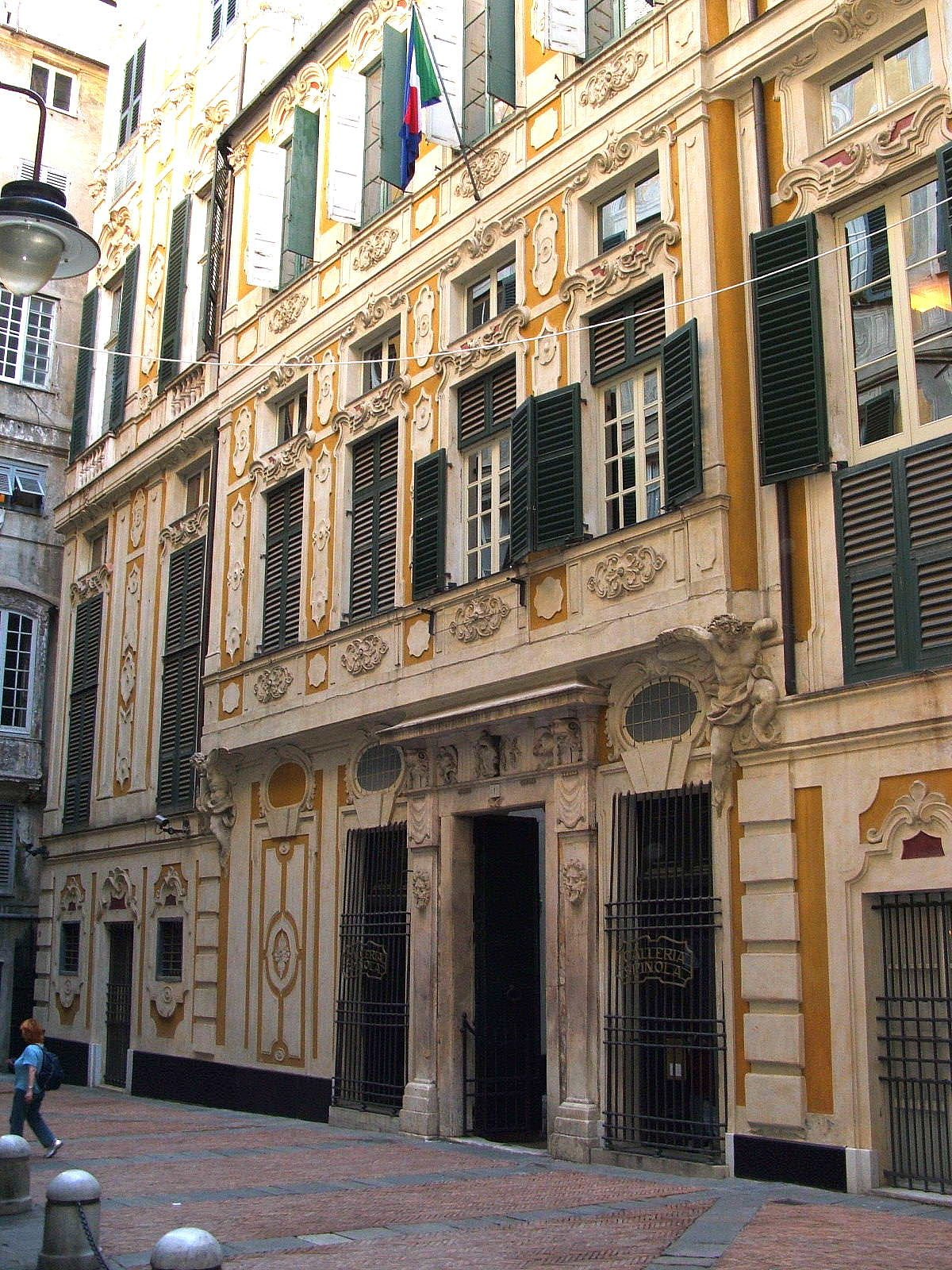

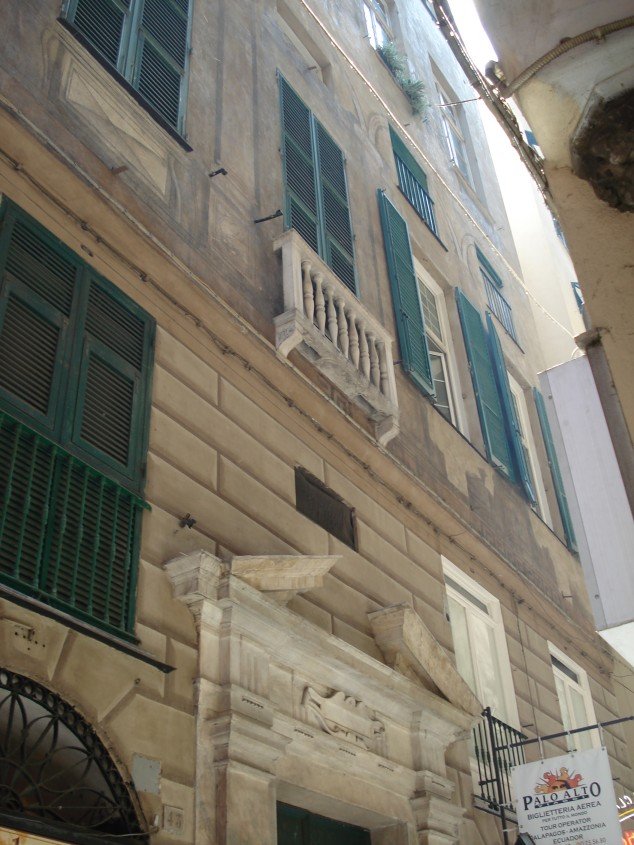
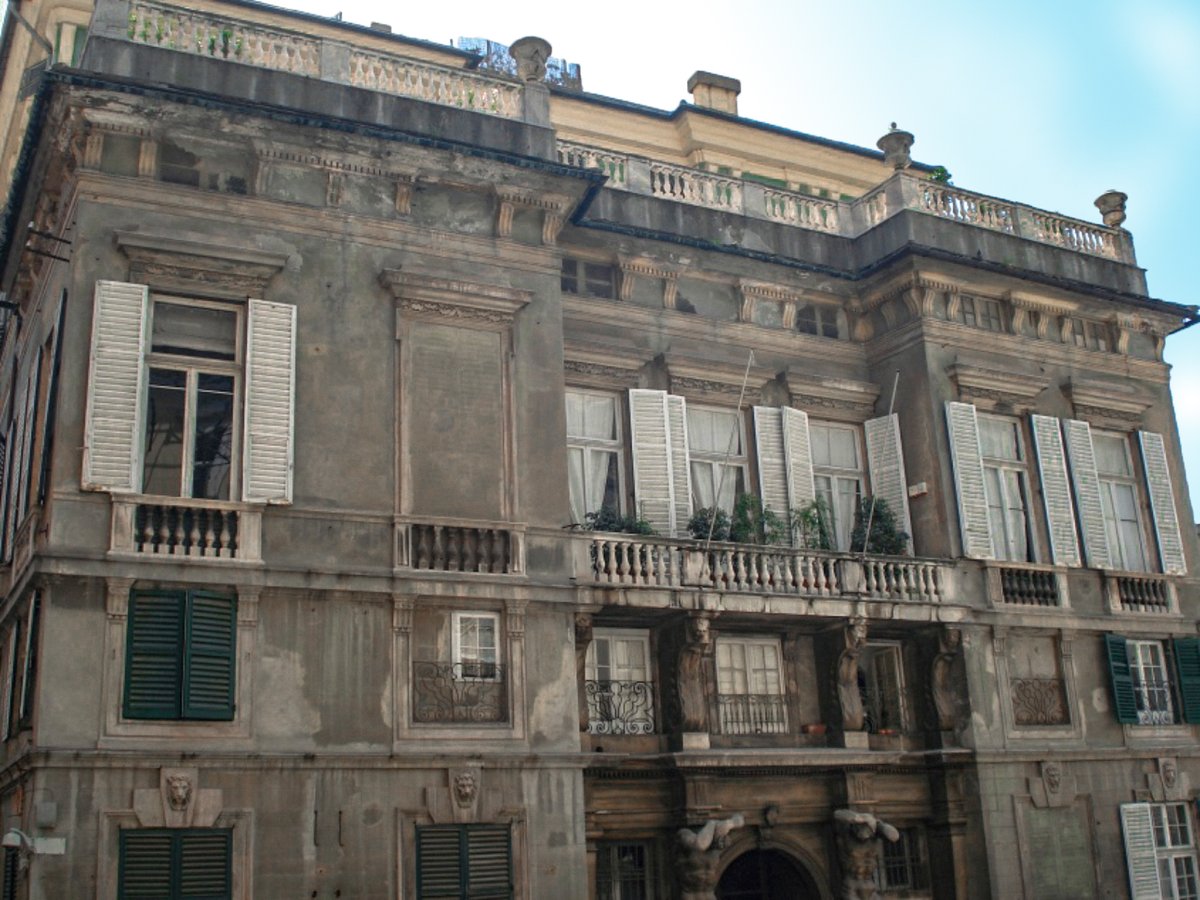
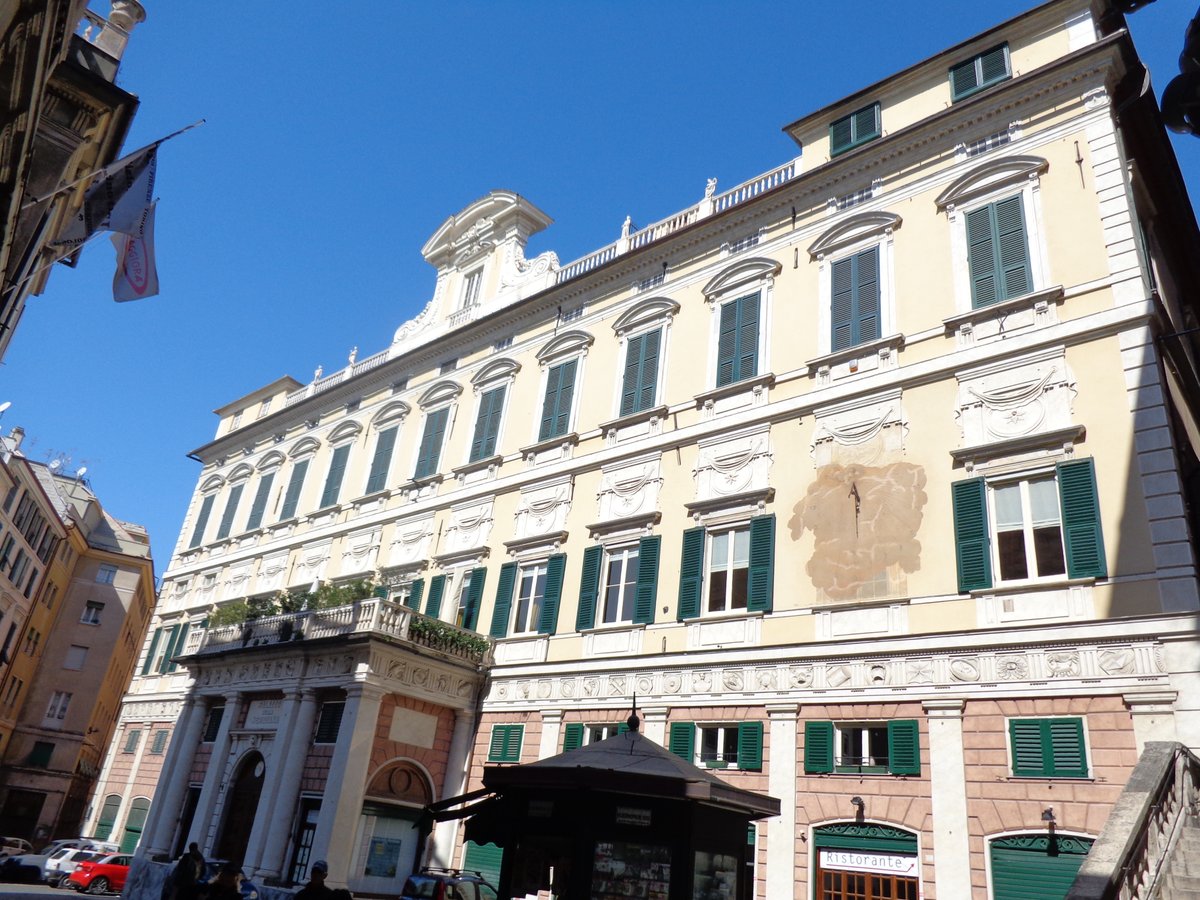
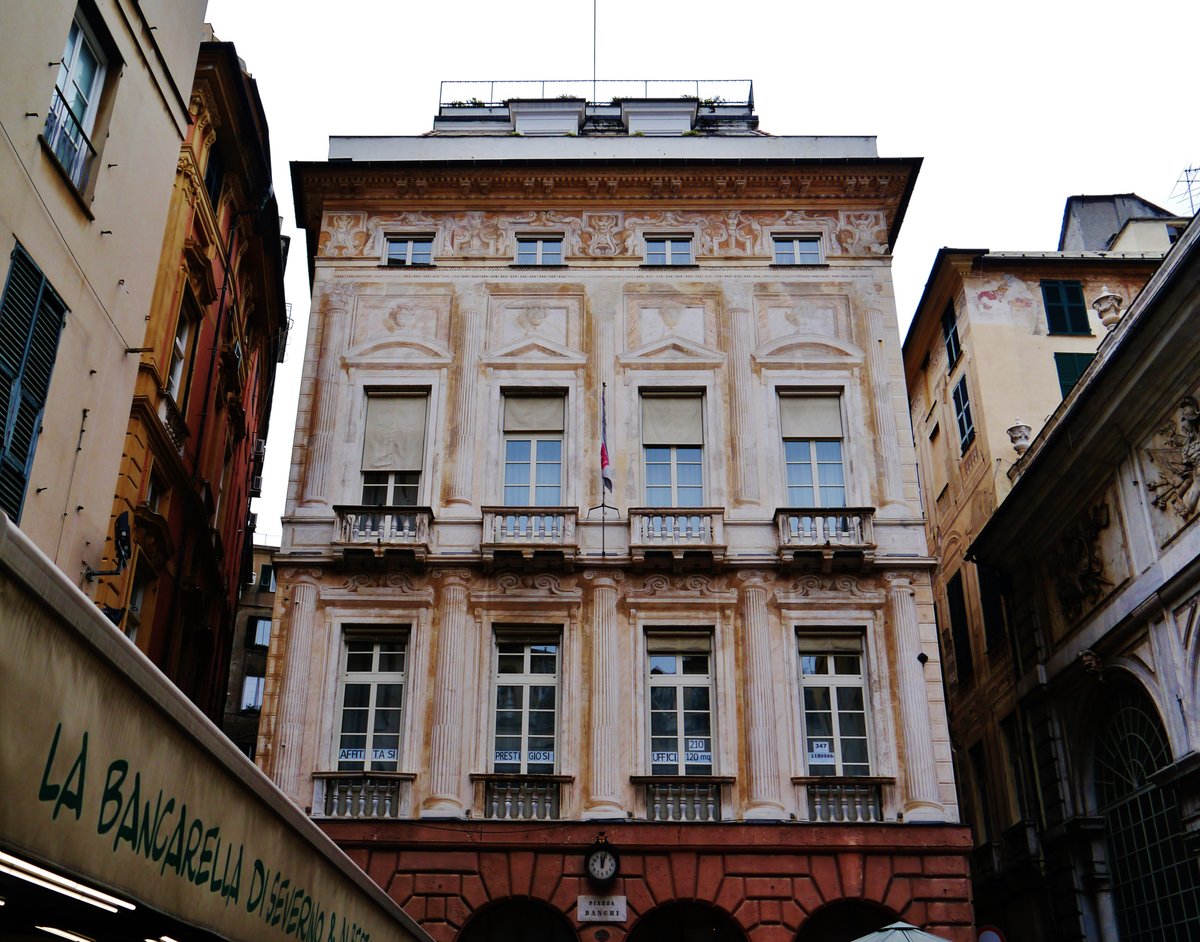
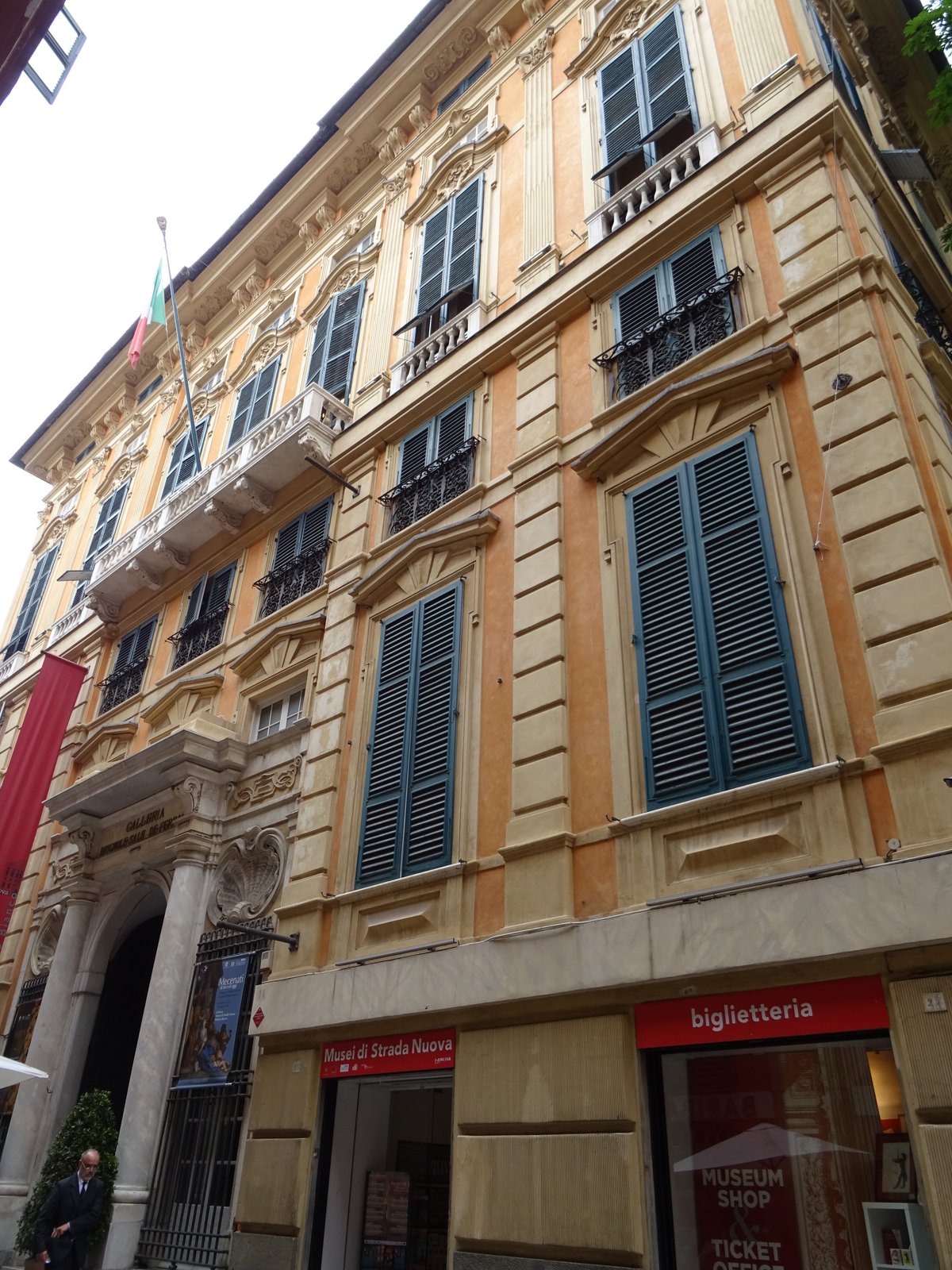
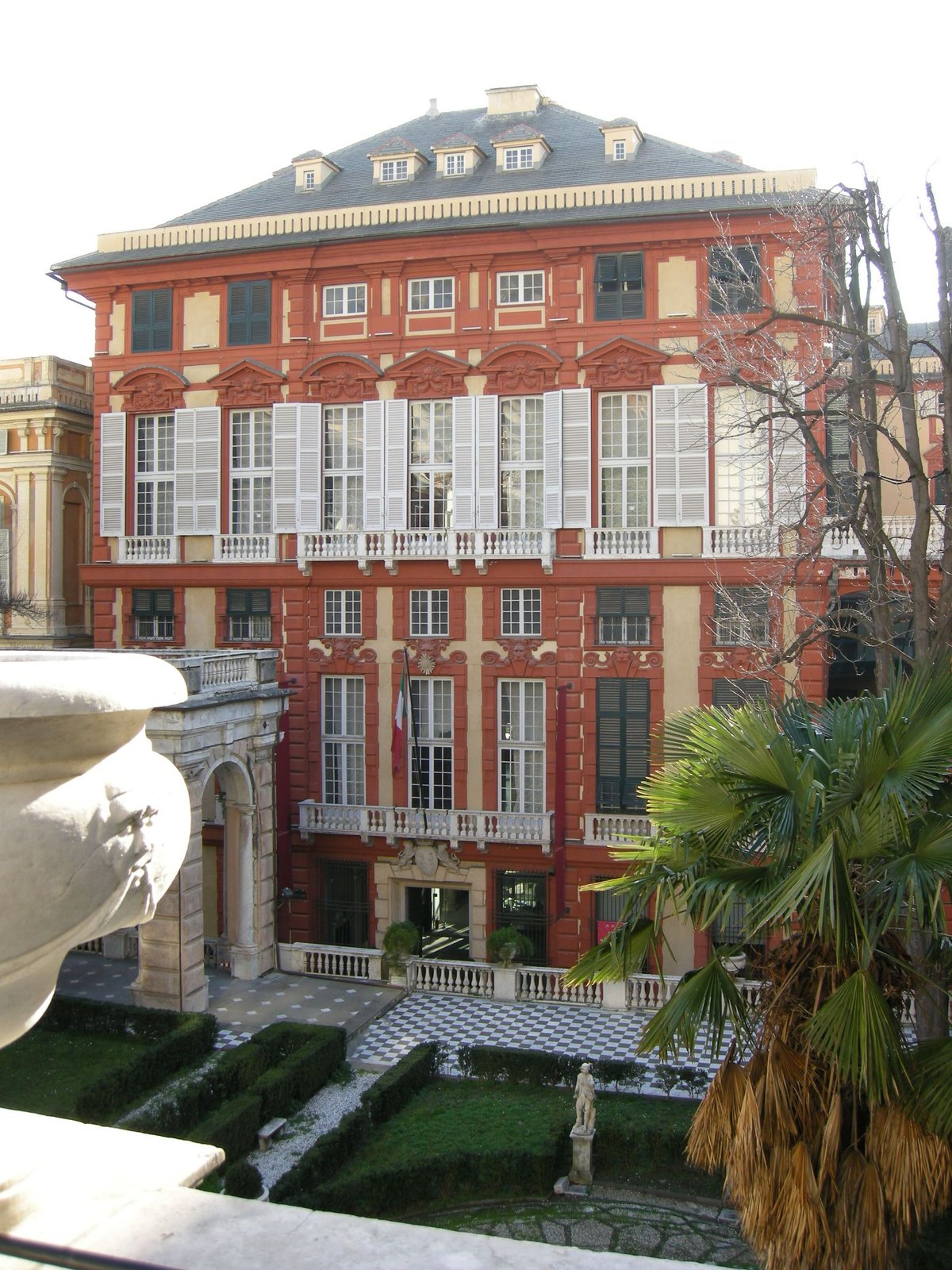
In the late 1500s, construction began on the Palazzo Spinola di Pellicceria, also known as Palazzo Francesco Grimaldi, using funds from a will made by Francesco Grimaldi prior to 1593. Built upon medieval foundations in the historical center of Genoa, the palace became part of the Rolli. This was a system of private residences used by the government to host prominent guests during state visits. The architectural importance of the palace was recognized early on, with an etching of its facade appearing in Peter Paul Rubens's 1622 book I Palazzi di Genova.
The palace remained with the Grimaldi family until between 1641 and 1650, when it was transferred to Ansaldo Pallavicini to settle a debt. Pallavicini was responsible for closing the open loggia on the first floor. Ownership eventually passed through marriage to the Doria family and then to the House of Spinola in the 18th century. During the mid-18th century, Maddalena Doria directed a Rococo refurbishment, commissioning a Gallery of Mirrors and hiring several artists to paint the decorations and quadratura. Later, during the Napoleonic occupation, her grandson Paolo Francesco Spinola was forced to sell many works of art from the collection.
Today, the building houses the National Gallery of Palazzo Spinola. While the third floor was destroyed during bombing in World War II, it was subsequently rebuilt. The palace, donated to the Italian government in 1958, has housed the national gallery since 1993. The collection includes notable works such as an equestrian portrait of Giovanni Carlo Doria by Rubens and a statue of Justice by Giovanni Pisano.
Sources: Wikipedia, OpenStreetMap, Wikidata, Wikimedia Commons
Written by Nicolo Ciampini
Discuss this with the author and others
No comments yet. Be the first to start the conversation.