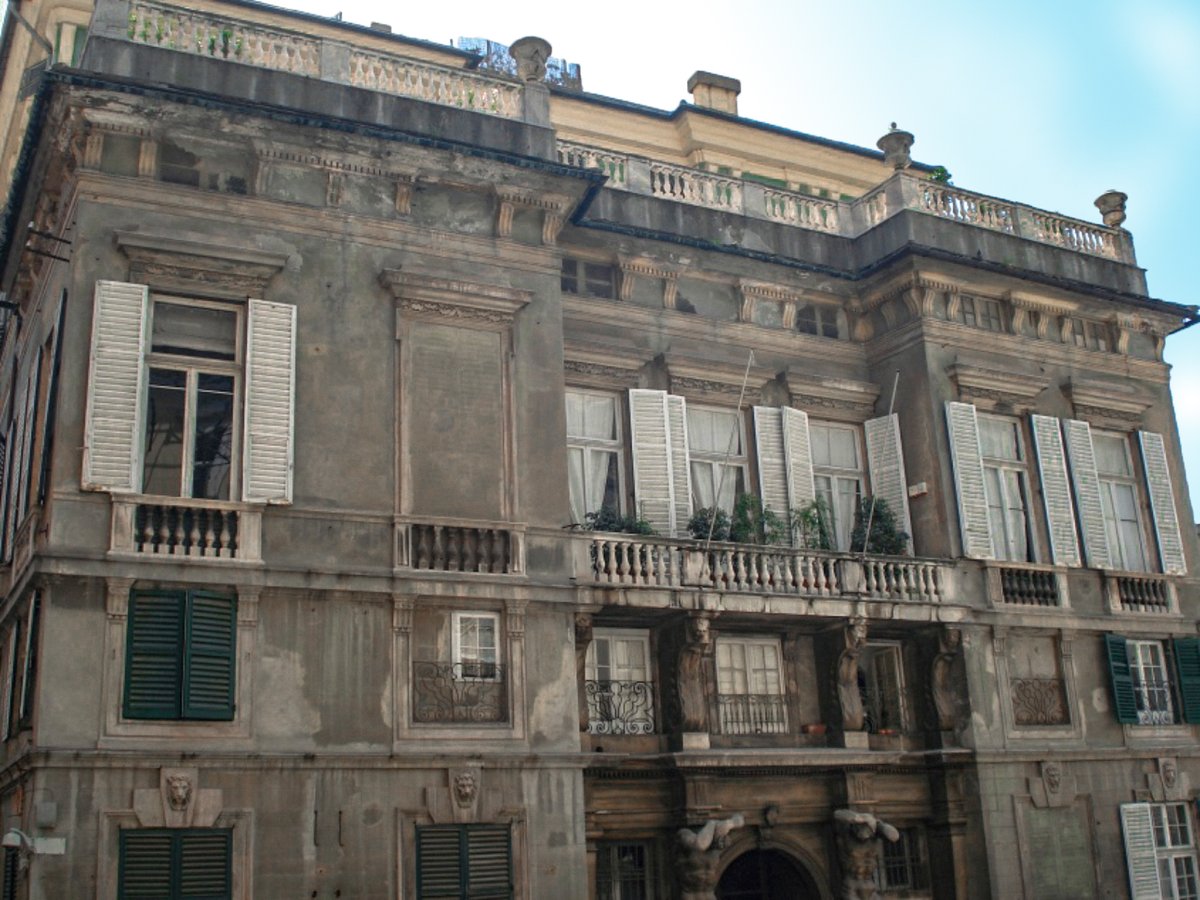

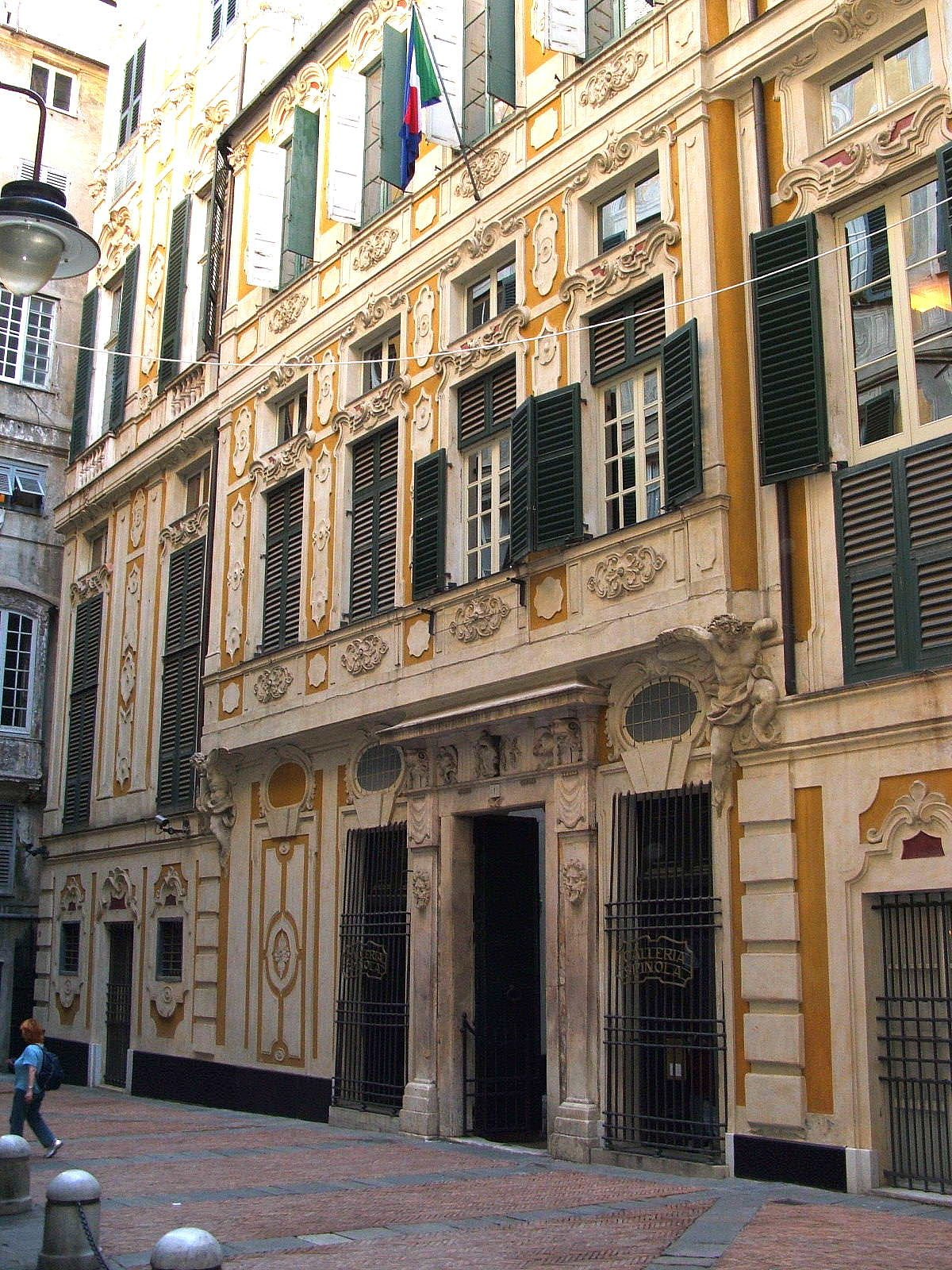
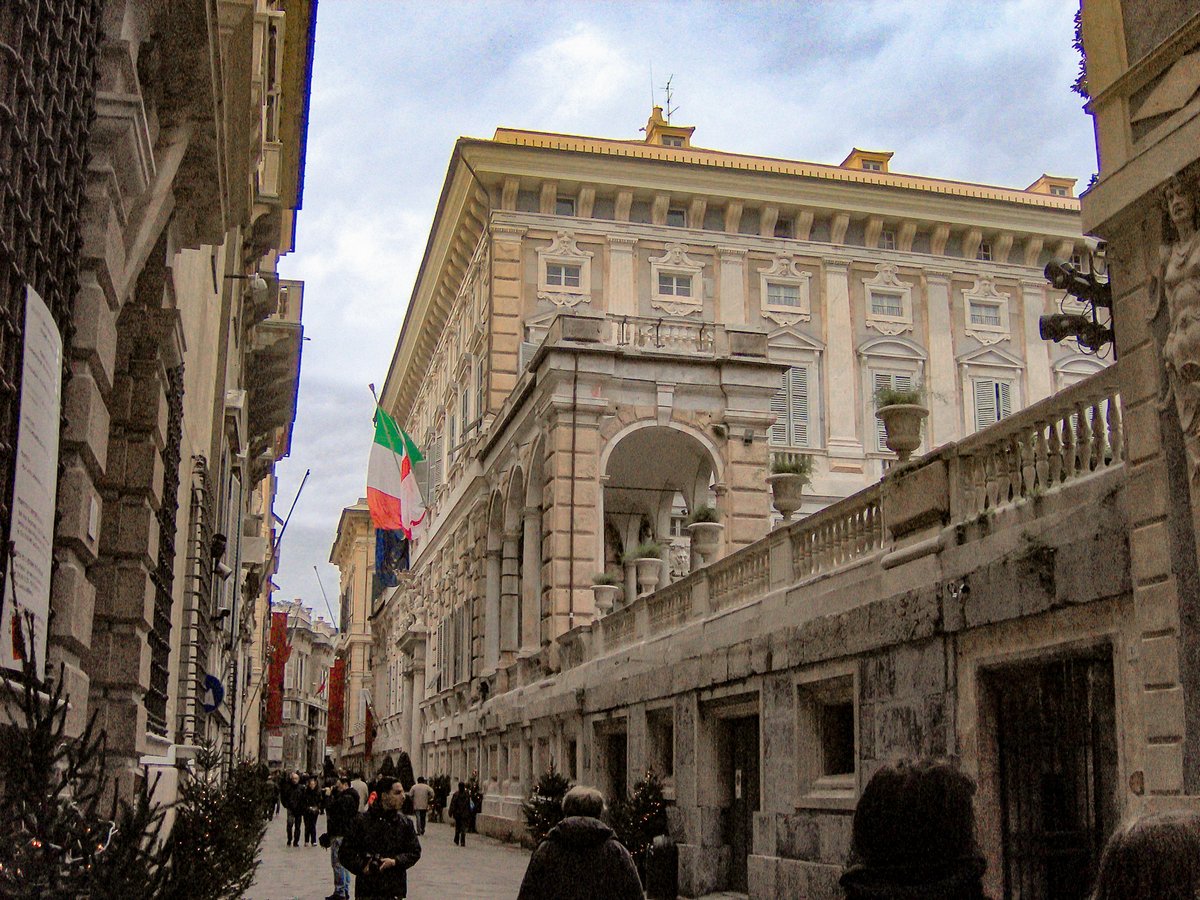
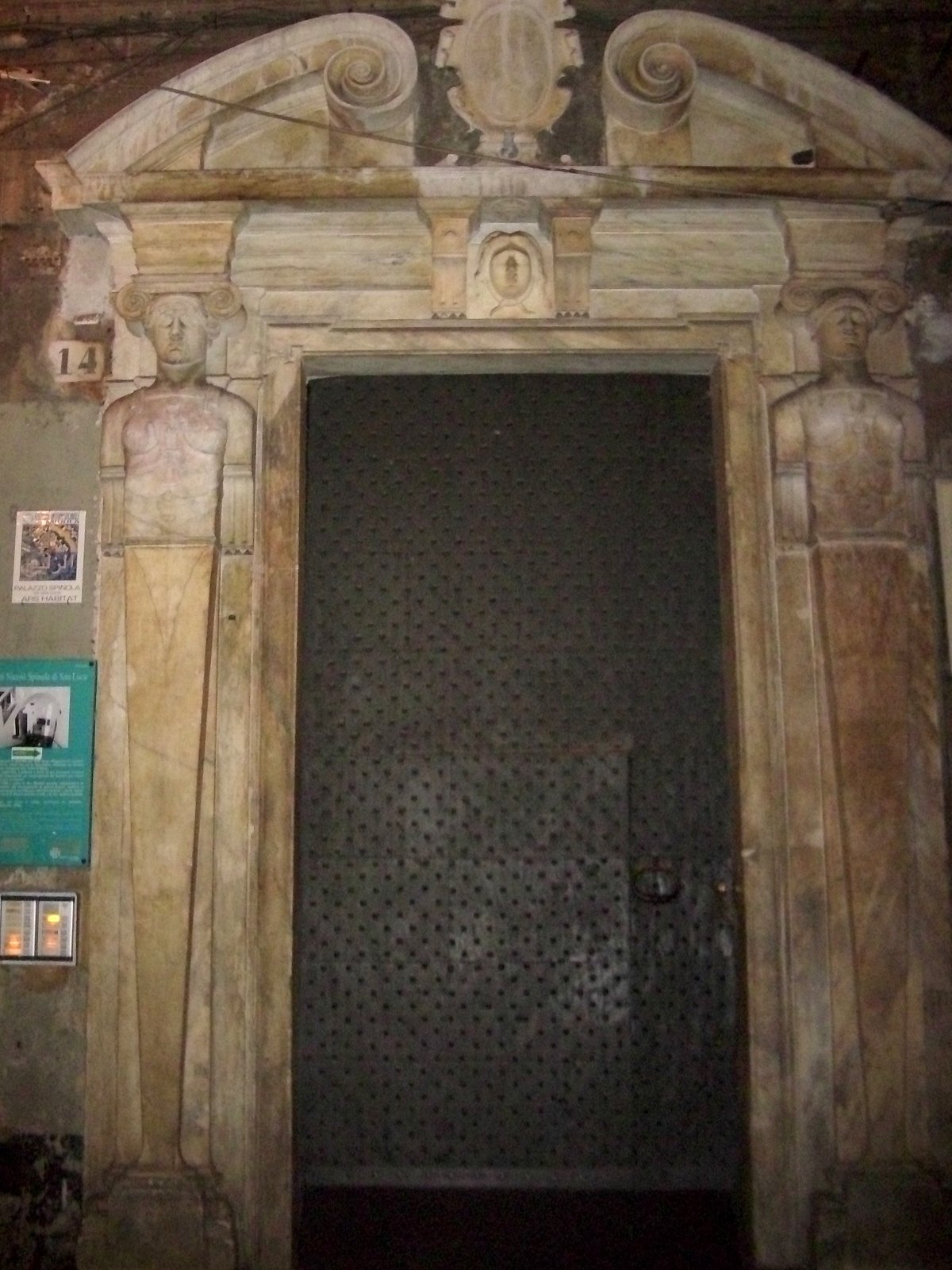
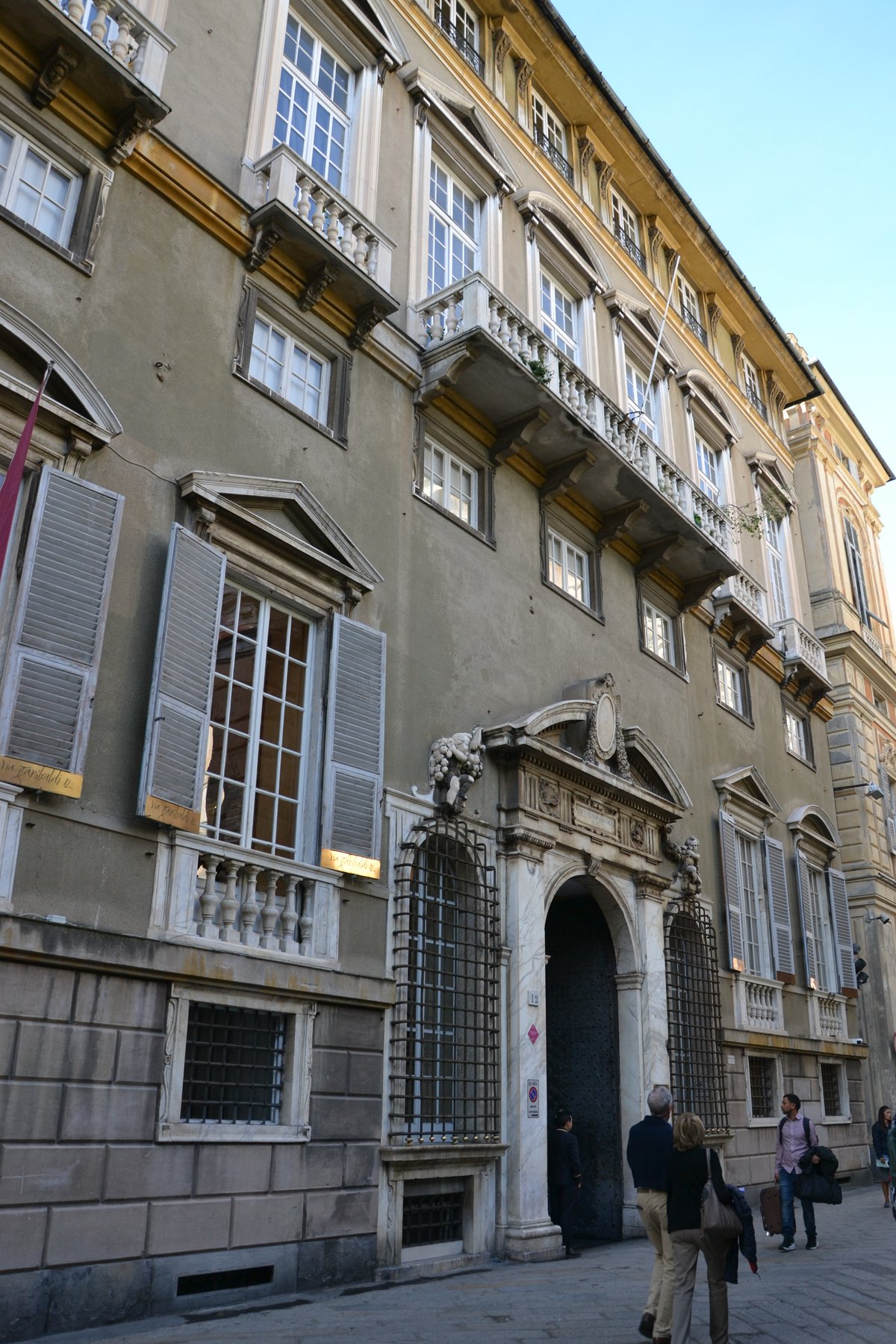
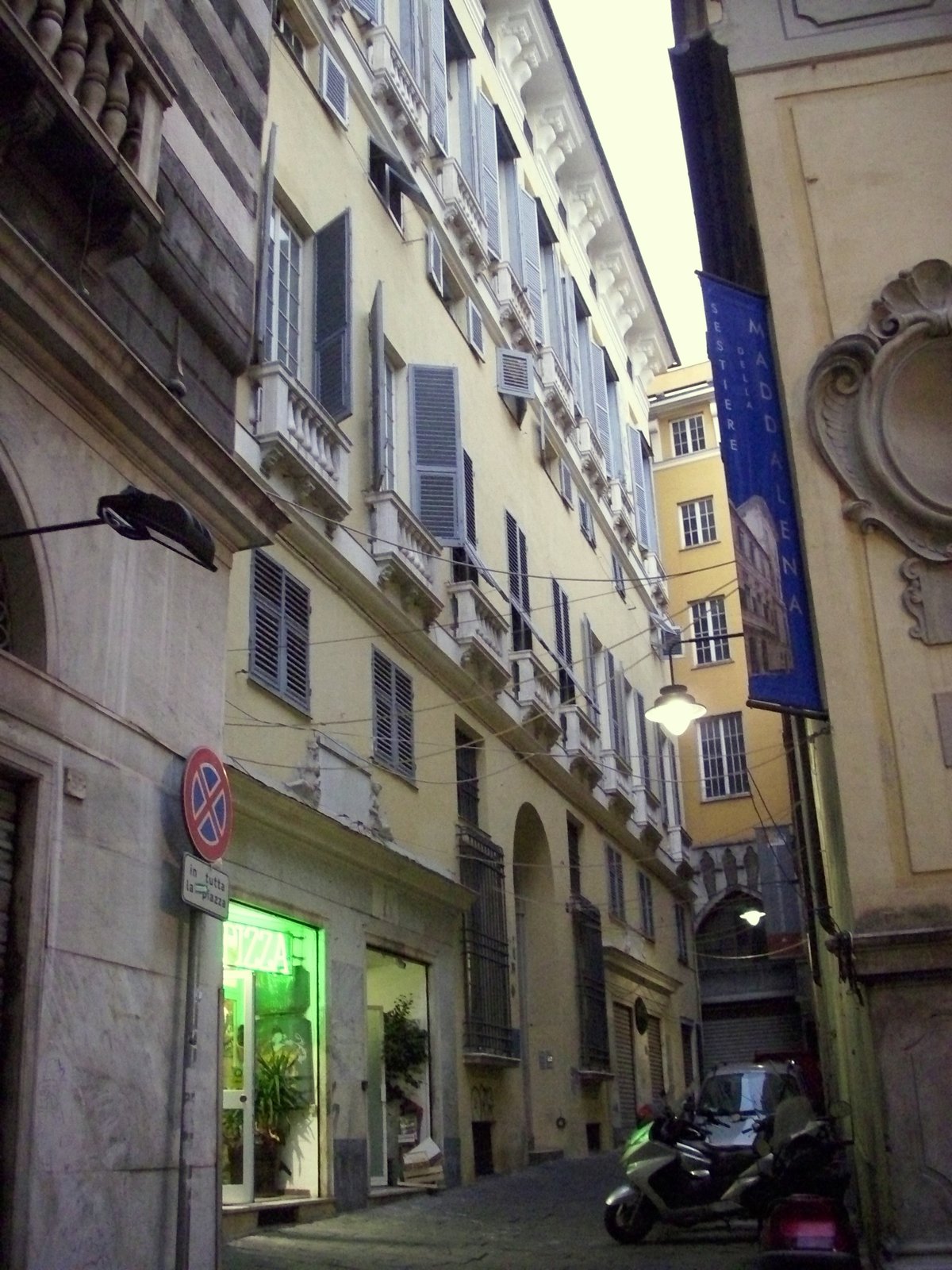
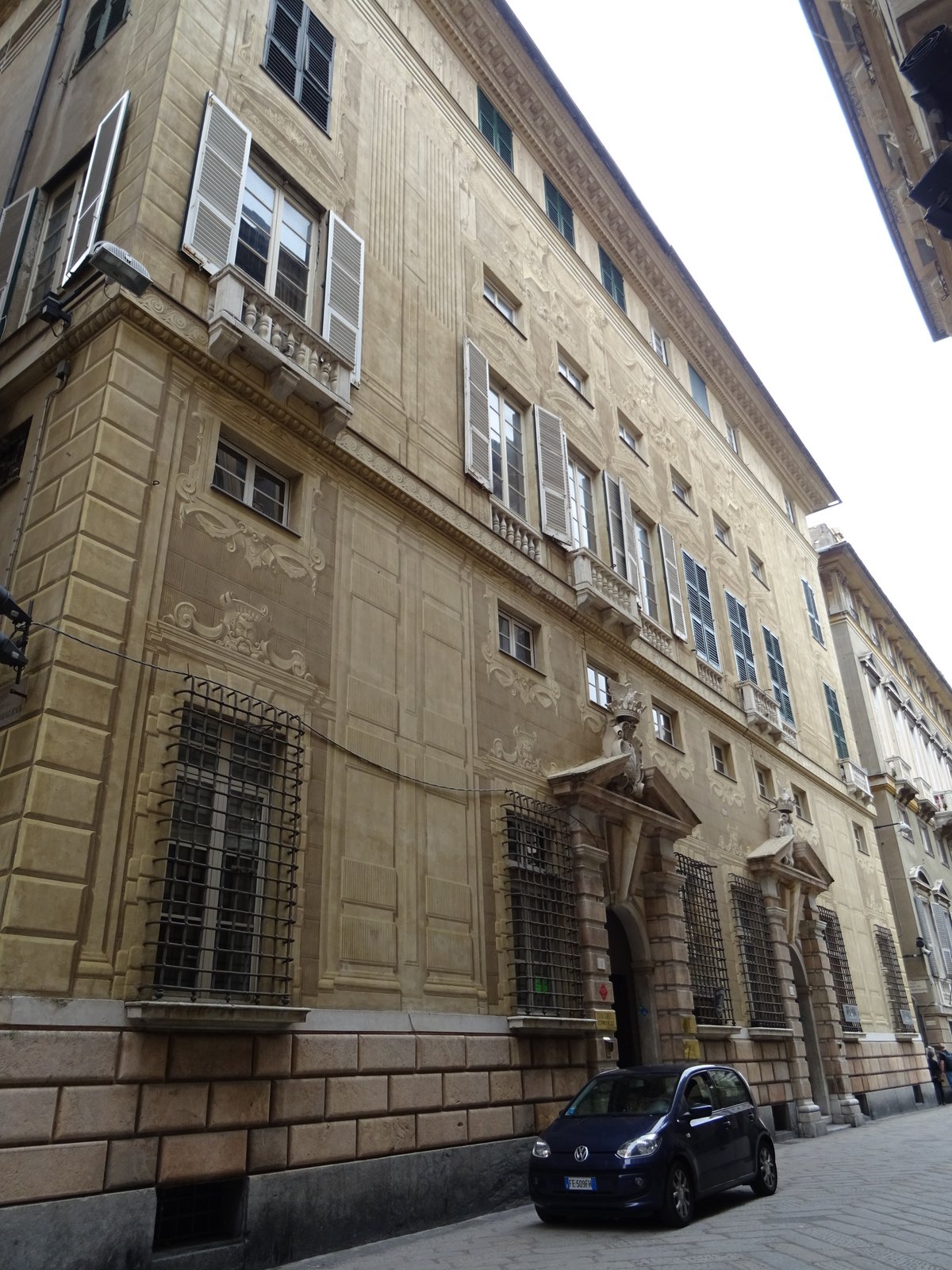
In the late 1700s, the city of Genoa rearranged its layout around the Palazzo Gio Carlo Brignole. Originally, the building faced a tiny alleyway while the current piazza was occupied by gardens. When the Strada Nuovissima was constructed between 1778 and 1786, the entrance was moved to its current position. It was decorated with two telamons created by Filippo Parodi in 1671, which originally closed the garden street at the entrance of the Brignole Garden.
The palace is part of the Rolli system, a network of guest houses for high-ranking visitors to the Republic of Genoa. In 1671, Gio Carlo Brignole reconstructed the building by annexing several houses belonging to Gio Luca De Franchi to his family estate. The palace remained in the Brignole family until it passed to the Durazzo family in the mid-19th century.
Inside, the noble floor features frescoes by Gregorio and Lorenzo De Ferrari depicting Prometheus giving life to a statue, Aurora, and Diana in search of Endymion. The vault and front portico feature works by Giuseppe Isola from the Durazzo period, while the upper atrium features grotesque decorations by Federico Leonardi. Today, this historic building serves as an events center, remaining part of the 42 palaces designated as a UNESCO World Heritage site in 2006.
Sources: Wikipedia, OpenStreetMap, Wikidata, Wikimedia Commons
Written by Nicolo Ciampini
Discuss this with the author and others
No comments yet. Be the first to start the conversation.