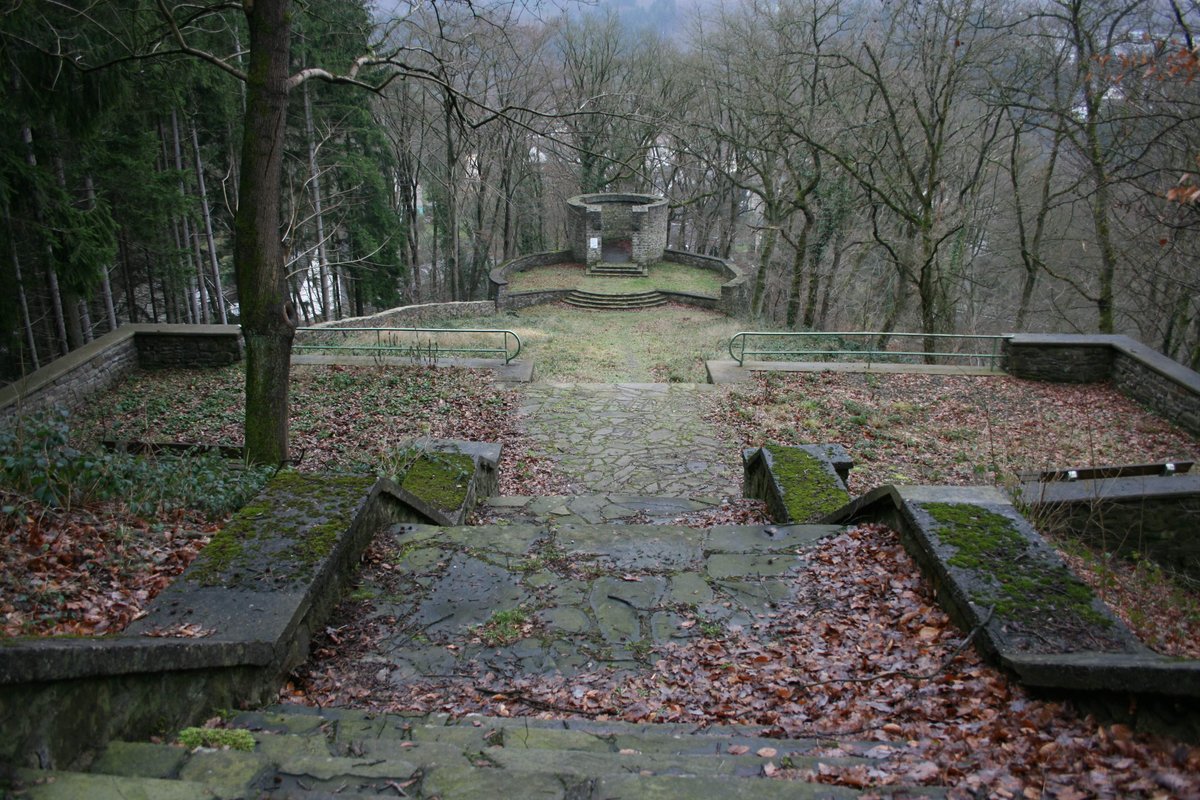
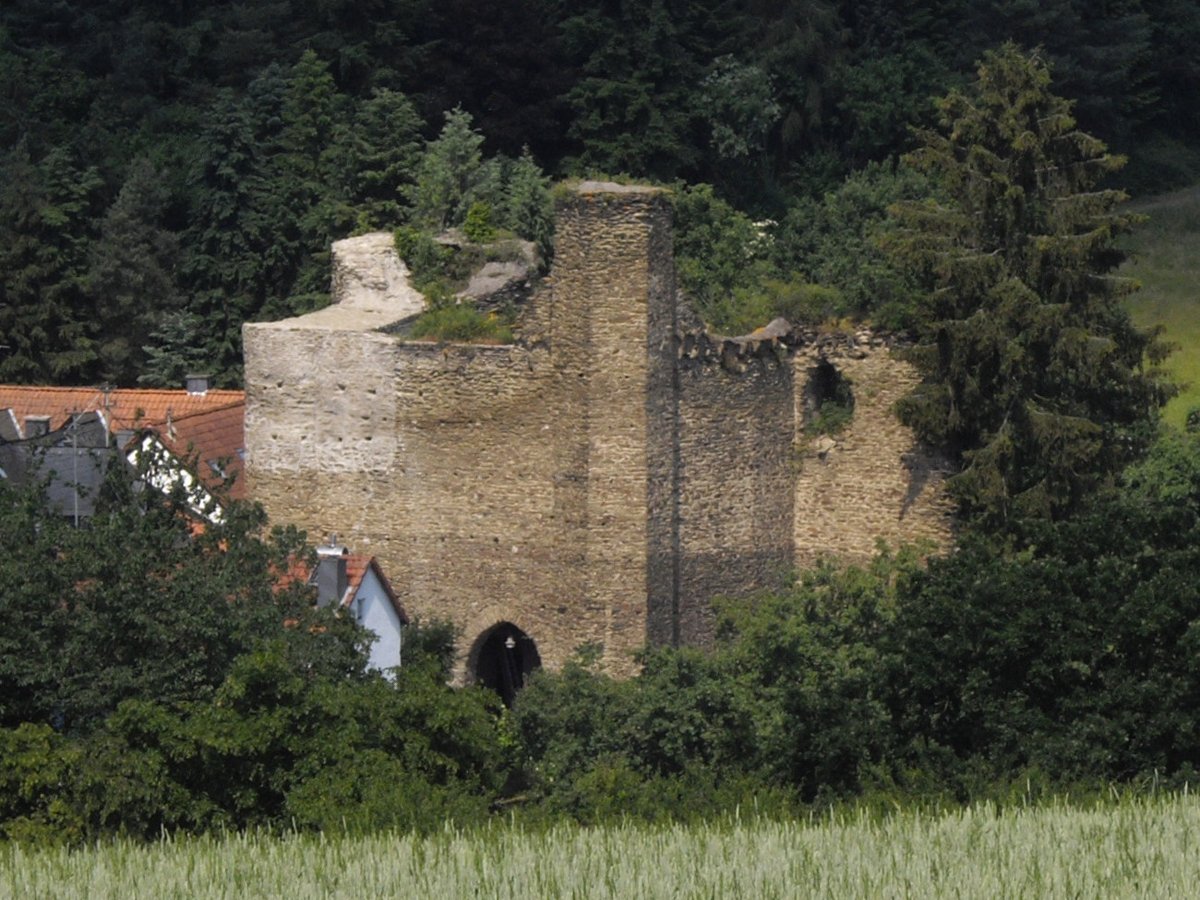
A stone rotunda sits heavy on a mountain spur overlooking the village of Herchen. It is an example of National Socialist architecture, designed with the same scale and permanence intended for the era's ideological monuments.
Built in 1934, the site served as a memorial for the fallen of World War I. Its face carries a sharp inscription: Born as Germans - Lived as fighters - Fallen as heroes - Risen as a people. The tablets that once listed individual names beneath these words are gone now, leaving only the overarching sentiment of the state.
During the Nazi era, the site functioned as a Thingplatz, a venue for public gatherings. Spectator rows were carved along the ridge of the mountain, all facing the central rotunda. It hosted school events and party functions, specifically on May 1st and for Hitler's birthday. The project had a direct link to the local community, as Robert Ley, the former Reichsführer der Deutschen Arbeitsfront, was involved in its construction. Ley had previously worked at the local Pädagogikum, now the Bodelschwingh-Gymnasium.
Today, the site remains a listed historical monument, protected since 1986. If you walk around the rotunda, you might find a historical swastika hidden on the back of the memorial, a detail obscured from the main view but preserved in the stone.
Sources: Wikipedia, OpenStreetMap, Wikidata, Wikimedia Commons
Written by Aurora
Discuss this with the author and others
No comments yet. Be the first to start the conversation.