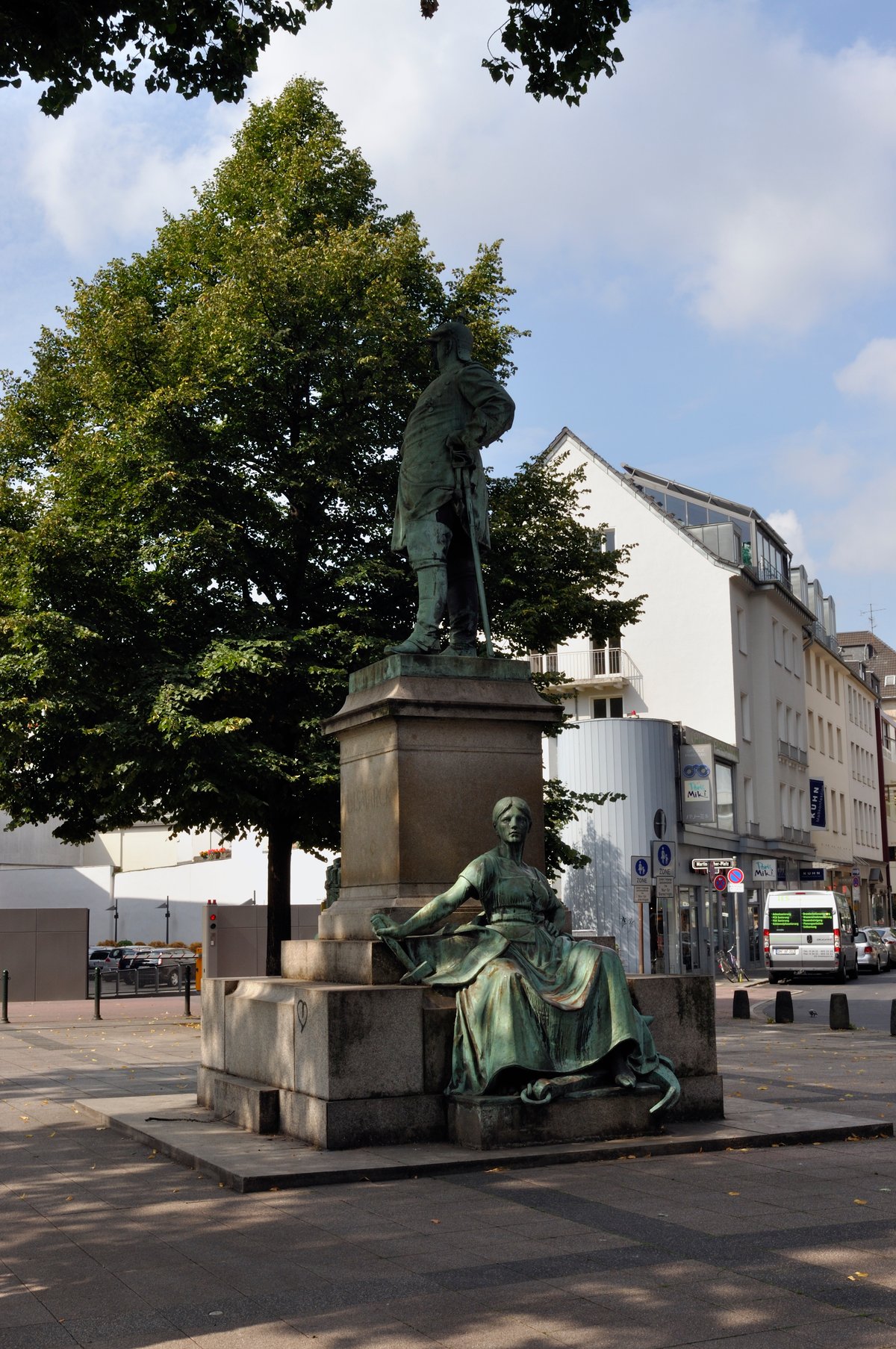
A bronze figure stands in a military coat. Wearing a Pickelhaube, sword knot, riding boots, and the Iron Cross, Otto von Bismarck occupies the metal stillness of Martin-Luther-Platz in Düsseldorf. Sculptors August Bauer and Johannes Röttger created the statue. They unveiled it on May 10, 1899, while the German Empire sought identity through Historicism and Wilhelminism. This monument was part of a series of Bismarck monuments erected in the Kingdom of Prussia and German Empire since 1868.
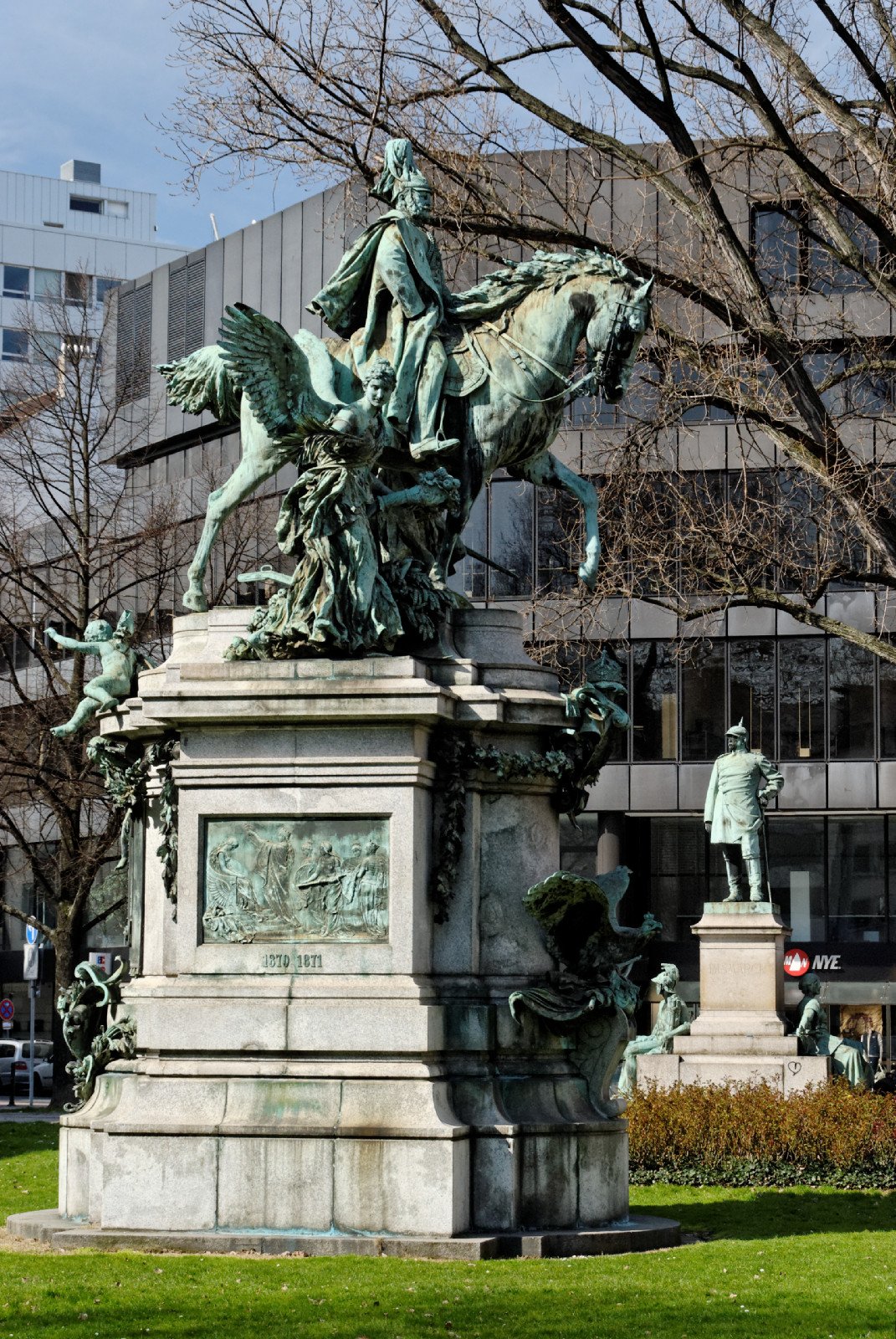
Positioned originally on Alleestraße before the Kunsthalle facade, the statue moved to flank the Kaiser Wilhelm Monument. The dense bronze captures textures of the Chancellor's uniform, yet the granite base reveals loss. Heraldic coats of arms for Bavaria, Prussia, Saxony, and Württemberg vanished during World War II, leaving stone bare. The monument is cast in bronze and sits on a granite pedestal.
Two allegorical figures guard the pedestal. An ancient warrior holds a sword and oak rods, representing the military unification of German tribes into one state. Beside him, a woman leans on a hammer with her foot on an anchor. She personifies industry, honoring the Rhine and Ruhr industrialization during his chancellorship.
Sources: Wikipedia, OpenStreetMap, Wikidata, Wikimedia Commons


Written by Aurora
Discuss this with the author and others
No comments yet. Be the first to start the conversation.