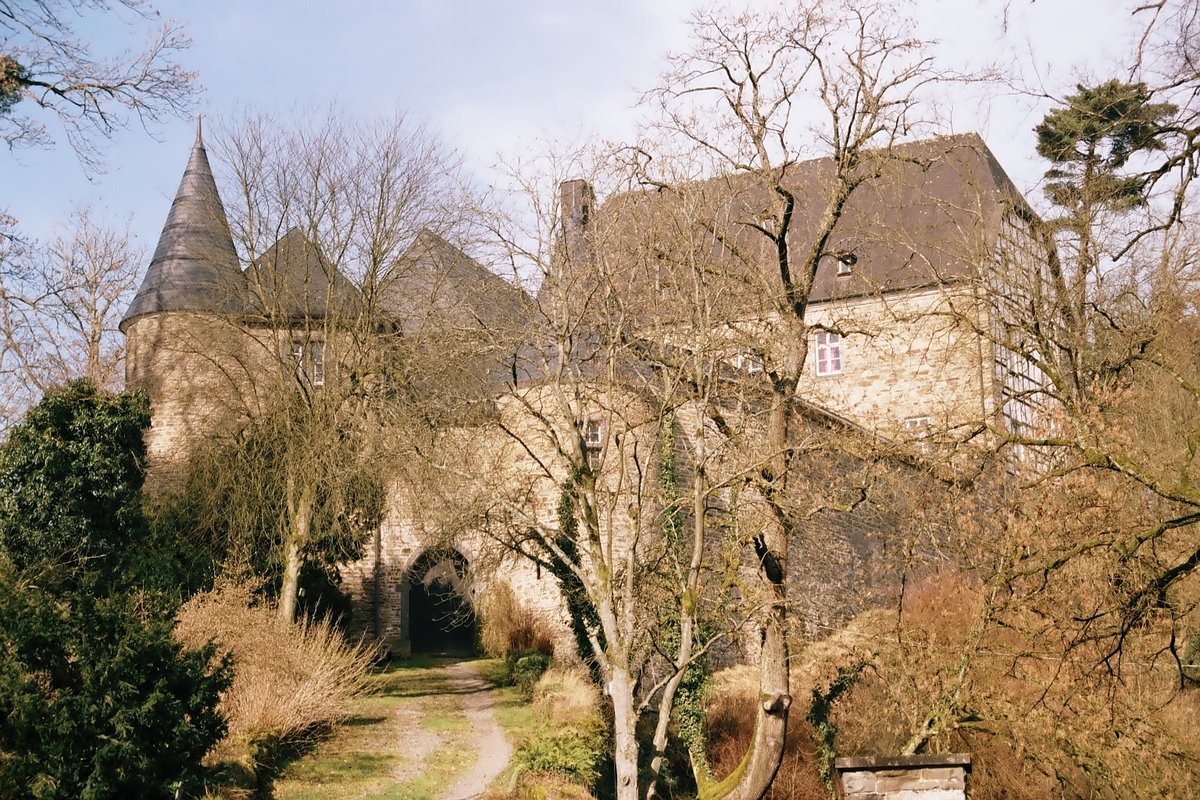
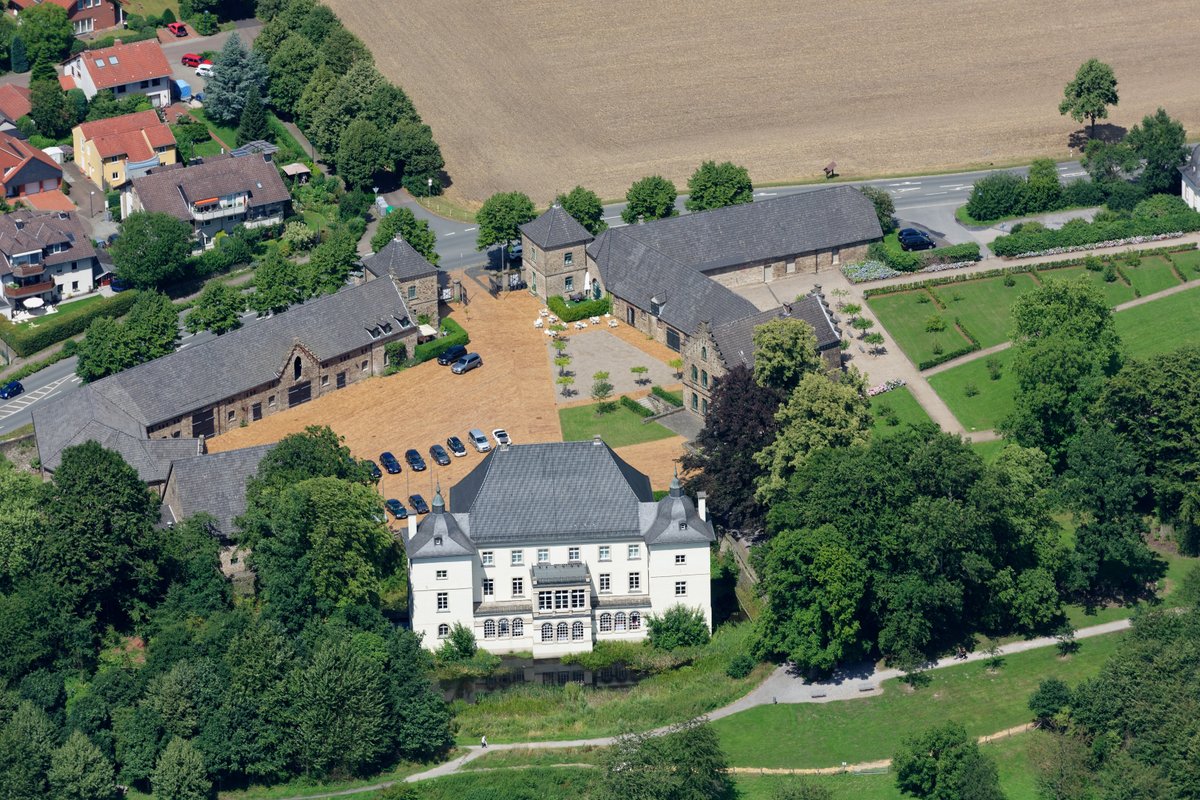
The gate tower stands as a silent sentinel over the valley, dominating the southern ascent. Born as a humble fortified house around 1300, it belonged to the Lords von Steyne. A contract from November 1370 first named the site huys zome Steyne. Count Wilhelm II von Berg granted the fief to Johann von Stein, sparking a journey through time.
Centuries of reconstruction added weight to this fortress. Ownership shifted to the Lords von Nesselrode in 1436. By the 19th century, the silhouette refined into a residence of stature. While cellar vaults and the northern curtain wall carry ancestral gravity, windows and roof lines hum with Baroque grace.
In 1826, Count Felix Droste became the universal heir to the Nesselrode-Reichenstein estate. His name merged with the previous line, creating the Droste zu Vischering von Nesselrode-Reichenstein lineage dwelling at Burg Herrnstein today. This castle serves as the seat of the Gräflich Nesselrodeschen Forstverwaltung.
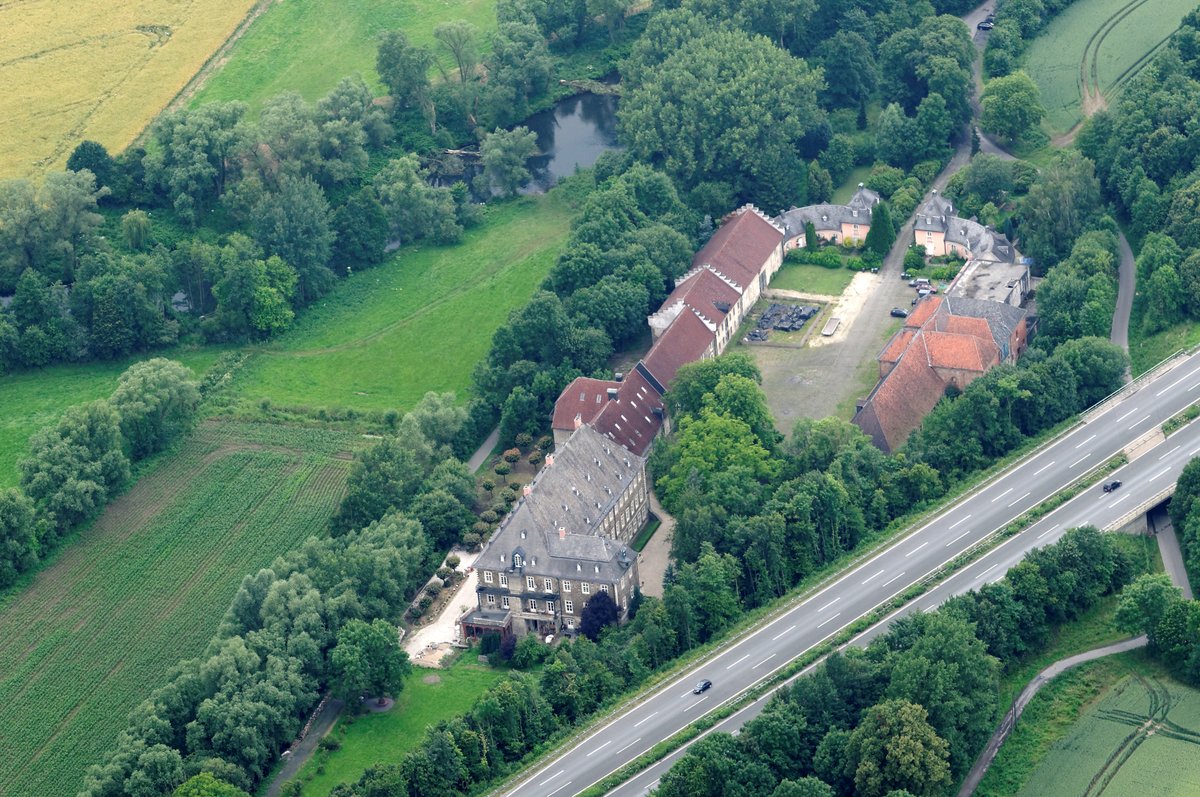
The east wing mirrors historical views from 1917, while the west wing followed in 1953. One gable wall features half-timbering to preserve the visual depth of the northern curtain and southern steps. At the hill's foot, a pond - an old arm of the Bröl river - remains as a watery ghost of former moats.
Inner rooms stay private, yet surrounding fields and a nearby hut received monument protection in 2010.
Sources: Wikipedia, OpenStreetMap, Wikidata, Wikimedia Commons

Written by Aurora
Discuss this with the author and others
No comments yet. Be the first to start the conversation.