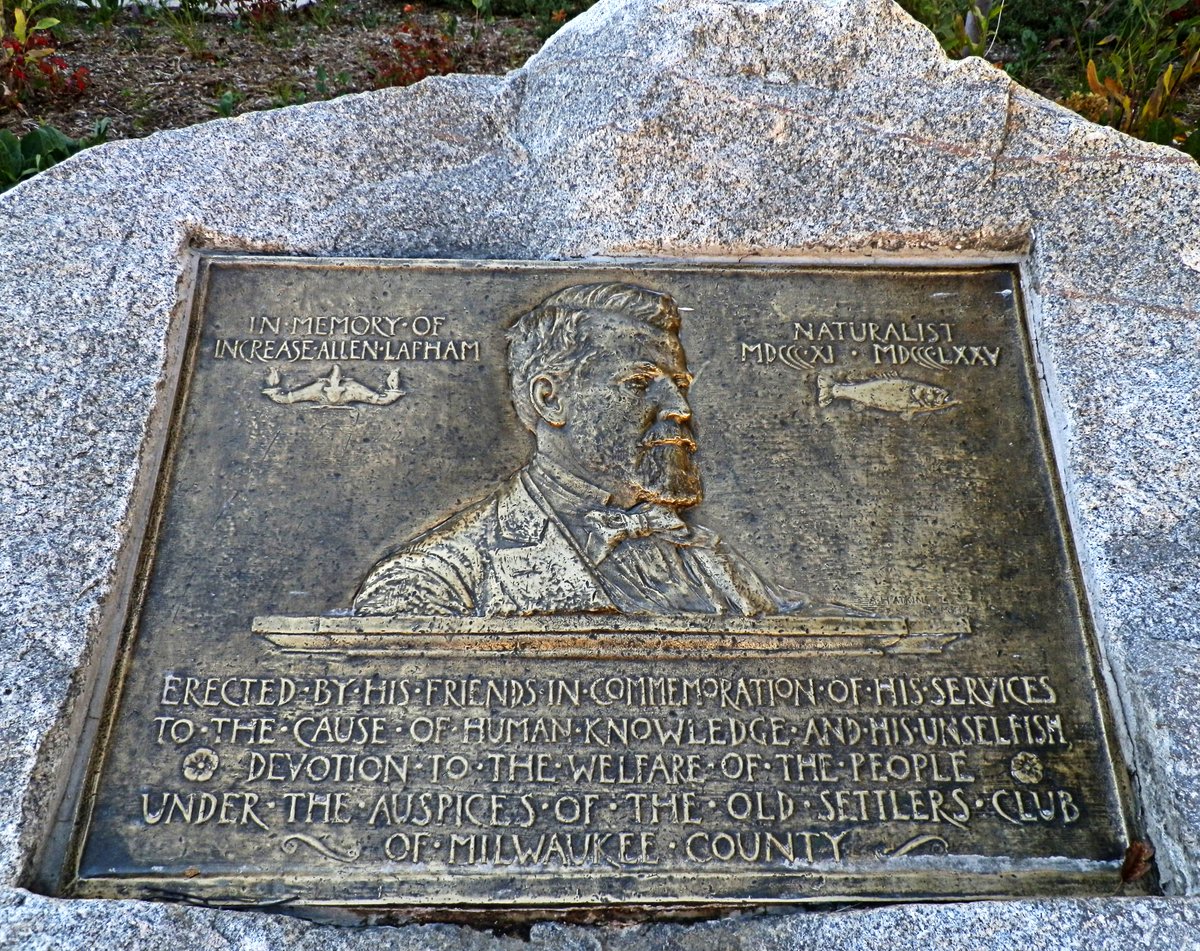

The Lapham Memorial, weighing a whopping 40,000 pounds, takes pride of place on the campus of the University of Wisconsin–Milwaukee. The central figure of the portrait sports a respectable mustache, beard, and is clad in a high-collar shirt, bow tie, and jacket. On the left, there's an oil lamp, and on the right, a fish. The plaque signifies Lapham's impact on the knowledge scene in Wisconsin. This man of the Old Settlers' Club of Milwaukee had a key role in shaping the National Weather Service and the preservation of Wisconsin's antiquities.
The plaque initially sat at the entrance to Lapham Park on 8th Street, where Lapham had previously conducted his Indian mound surveys. The city decided to build a housing project on that site in the 1960s and moved the plaque to a drive leading to Lapham Hall, on the very same campus. It was eventually moved to a location along North Maryland Avenue for better visibility. The sculptor responsible for the plaque was Albert Henry Atkins, an American artist born in Milwaukee in 1880. He's well-known for his monuments and sculptures, and this is his last known public work in the very city of his birth. In May 1993, Save Outdoor Sculpture! recognised it as needing some TLC.
Sources: Wikipedia, OpenStreetMap, Wikidata, Wikimedia Commons
Written by Friendly Jane
Discuss this with the author and others
No comments yet. Be the first to start the conversation.