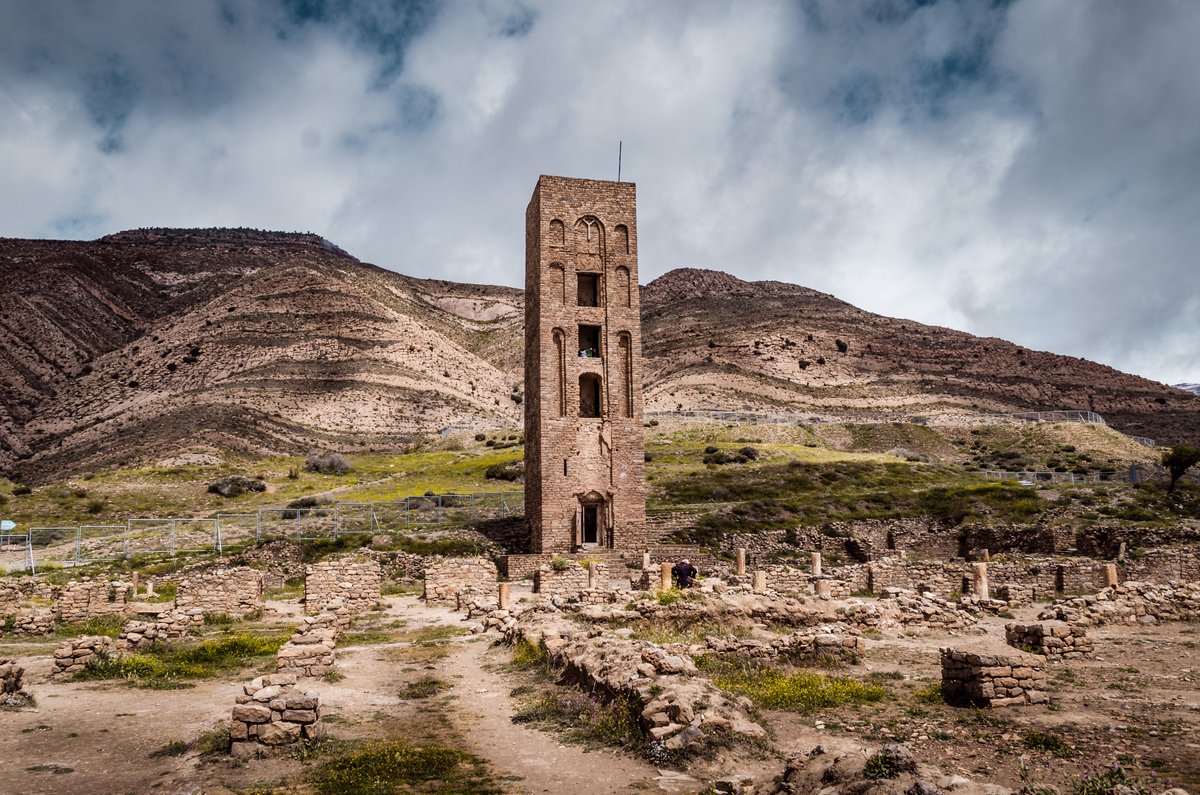

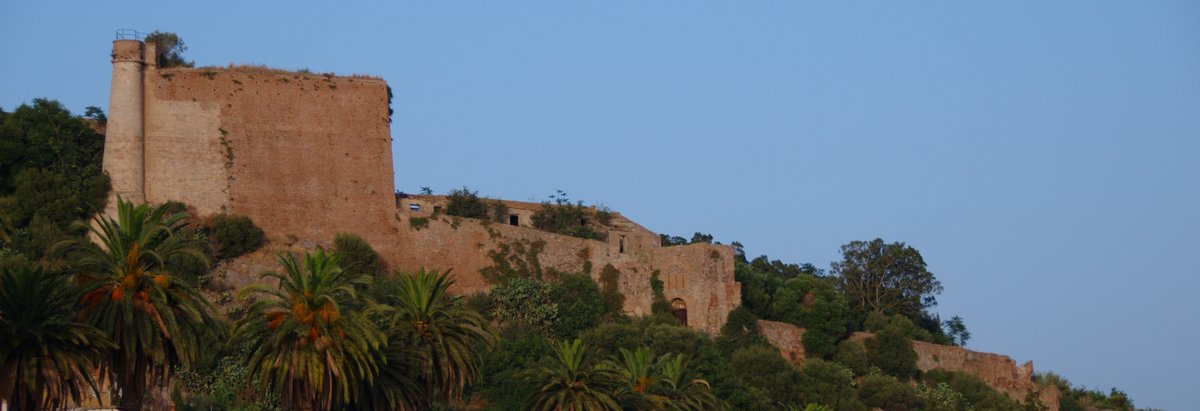
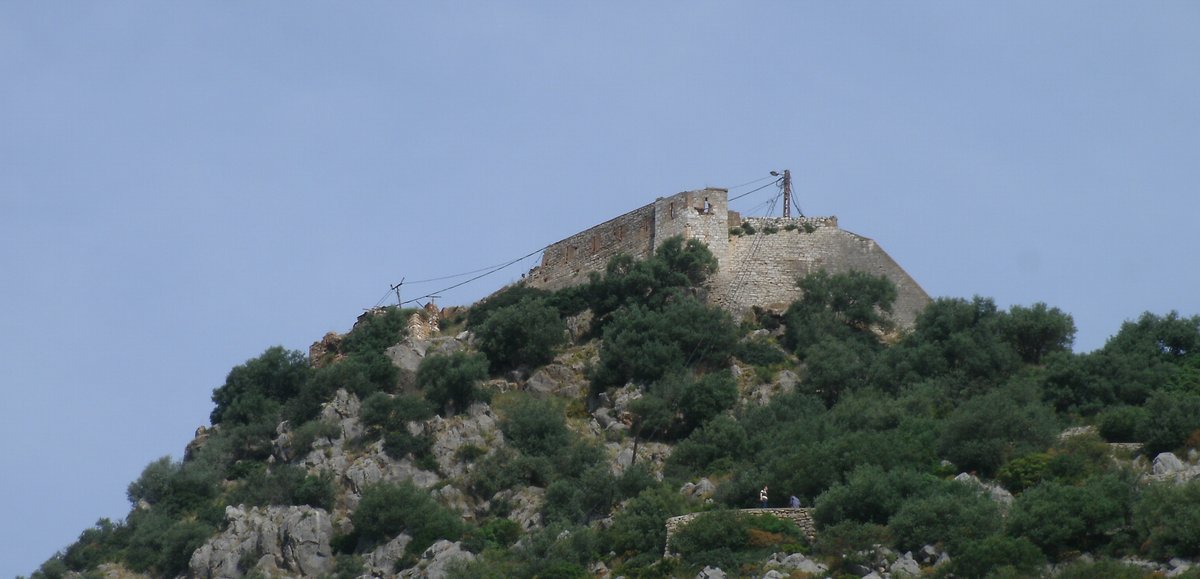
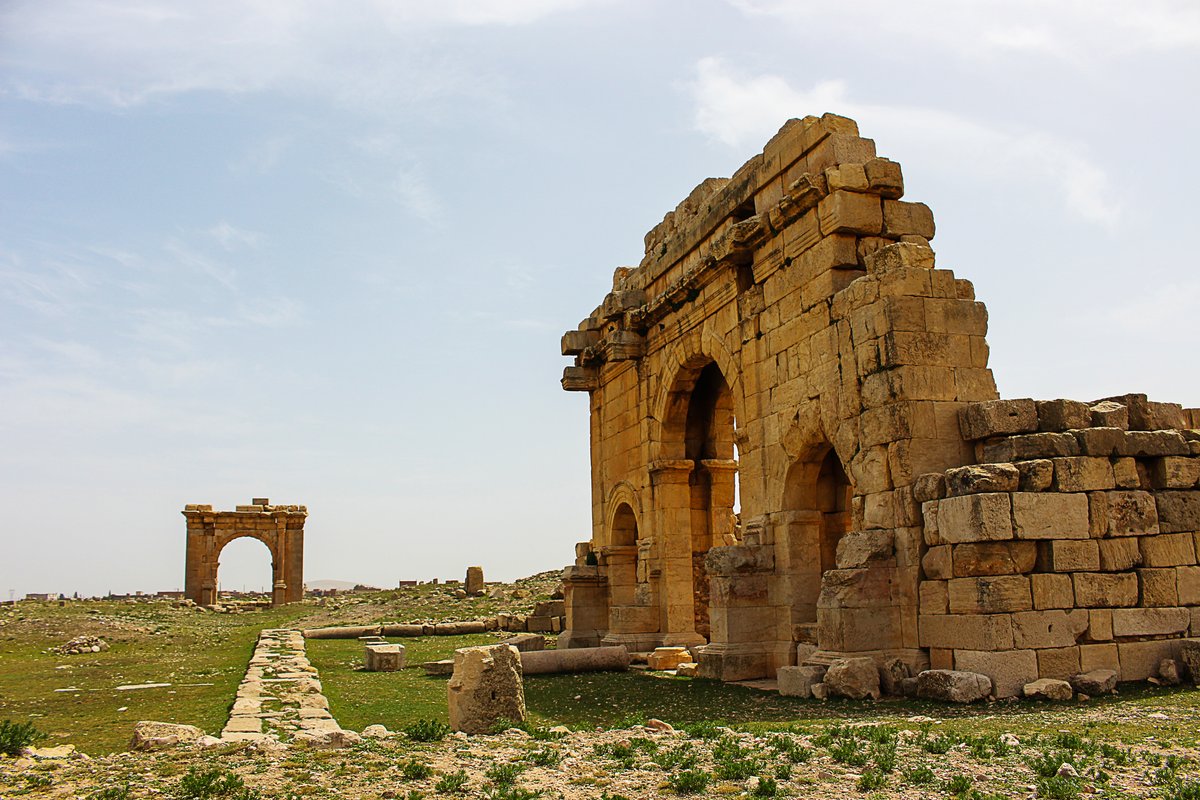
The Qal'at Bani Hammad is a fortified palatine city in the Hodna Mountains northeast of M'Sila, Algeria. Built in 1007 by Hammad ibn Buluggin, the son of Buluggin ibn Ziri and founder of Algiers, it served as the first capital of the Hammadid dynasty. Situated at an elevation of 1,418 metres, the site receives abundant water from the surrounding mountains and was described by Al-Bakri in the 11th century as a powerful military stronghold and a centre of commerce for caravans from across the Maghreb, Iraq, Syria, Egypt, and the Hejaz.
Inside the 7-kilometre long line of walls are four residential complexes and the largest mosque built in Algeria after the mosque of Mansurah. This mosque features a tall minaret, 20 metres high, with a design similar to the Grand Mosque of Kairouan. Excavations have revealed numerous terracotta, jewels, coins, and ceramics, as well as decorative fountains using the lion as a motif. The emir's palace, Dar al-Bahr, featured a rectangular pool measuring 67 by 47 metres with a ramp used to launch boats, surrounded by a portico and gardens that extended nearly 100 metres across the city.
The city was a hub for sciences, commerce, and arts, attracting poets, sages, and theologians. While it was abandoned in 1090 under the menace of the Banu Hilal and partly destroyed by the Almohads in 1152, its architecture remains significant. It contains some of the oldest documented fragments of muqarnas in the Western Islamic world. UNESCO inscribed the site as a World Heritage Site in 1980, describing it as an authentic picture of a fortified Muslim city.
Sources: Wikipedia, OpenStreetMap, Wikidata, Wikimedia Commons
Written by Mutabor
Discuss this with the author and others
No comments yet. Be the first to start the conversation.