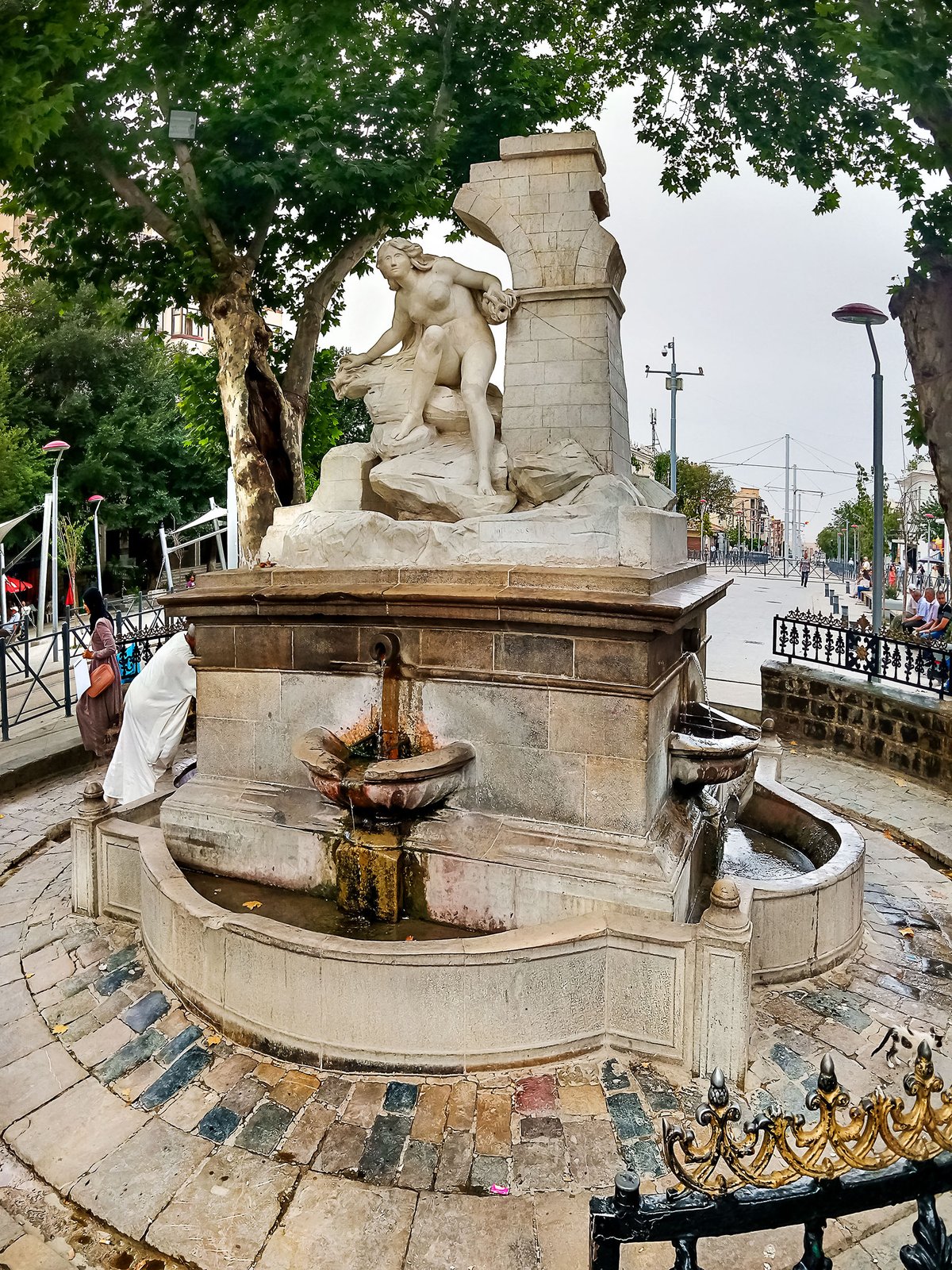

A white marble woman stands over a spring in Sétif, her body exposed to the Algerian sun. She is the Ain El Fouara, a figure whose arrival in this square is wrapped in the mist of old stories. Some say she is the ghost of a British queen - a secret lover of King Louis II who took her own life and was memorialized in stone. Others tell of a gift from the Louvre to a military governor, a trophy of victory moved across the sea to stand in Independence Square.
The fountain was built to mimic a Roman bath, drawing water from a spring associated with the source. For a long time, the square was a place of intricate zellige tiles and marble, a showcase of local skill that the French later claimed as their own. Now, the woman remains a polarizing spirit. To some, she is a blessing and a symbol of cultural resilience, a muse for poets and musicians. To others, she is an idol to be veiled or removed, a forbidden image that violates the sanctity of the faith.
History has been violent toward her. In 1997, during the country's Black Decade, a bomb shattered her marble limbs into a thousand pieces. The people were moved to outrage, and the statue was reassembled quickly. Today, she stands as a survivor of both war and ideology, a silent witness to the shifting winds of the city.
Sources: Wikipedia, OpenStreetMap, Wikidata, Wikimedia Commons
Written by Mutabor
Discuss this with the author and others
No comments yet. Be the first to start the conversation.