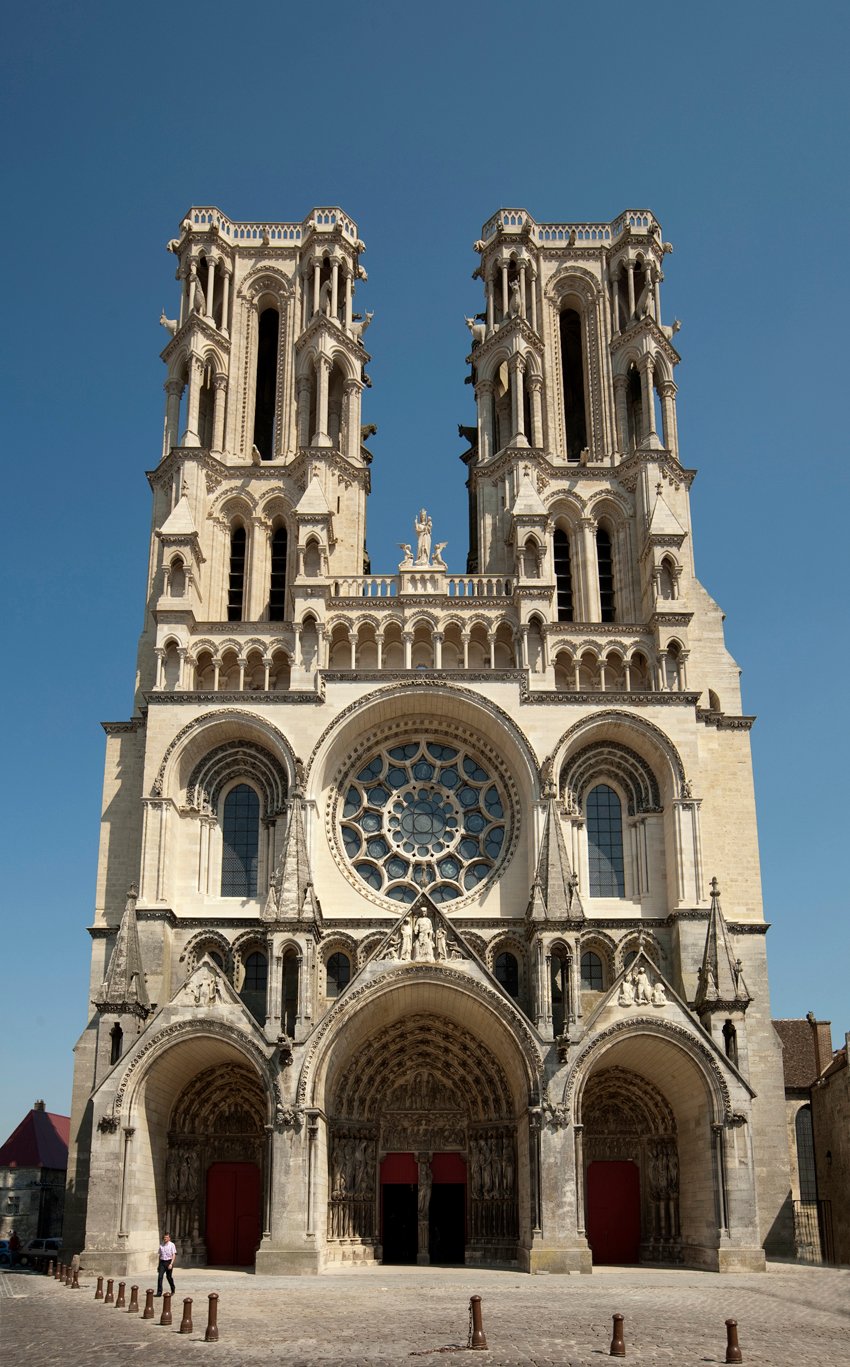

Erected in the 12th century, the Laon Cathedral serves as a remarkable exemplar of early Gothic architecture, despite its checkered past. In the year 1112, Laon was a hotbed of violence, with the town and the cathedral themselves ablaze, the bishop murdered, and the episcopal palace engulfed by flames. However, the church was rebuilt and consecrated merely three years later, receiving relics from various corners of France and England. Today, the Laon Cathedral is a veritable treasure trove of religious relics, containing some of the most significant artifacts from the Middle Ages and the French Revolution.
One can't help but wonder, what tantalizing secrets slumber within the cathedral's walls? The nave boasts twelve bays, and the ceiling utilizes a unique form of vaulting known as quadripartite vaulting. The church consists of four tiers, with passages on the middle levels encircling the entire structure. The cathedral's external appearance is notable, with three deep portals granting entry, and an arched passageway suspended over the three portals.
The west facade features a colossal arched tracery window, in lieu of a rose window in the south transept. The culmination of the church's longer, current choir is adorned with a rose window, save for the southern transept. Throughout its history, the cathedral has endured some damage, including during the French Revolution and the Franco-Prussian War of 1870. Yet, it survived both World Wars unscathed. Today, the Laon Cathedral stands as one of the most important and intriguing examples of early French Gothic architecture, providing a window into the past and the enduring power of religion, while subtly reminding us of its tumultuous history.
Sources: Wikipedia, OpenStreetMap, Wikidata, Wikimedia Commons
Written by Nicolo Ciampini
Discuss this with the author and others
No comments yet. Be the first to start the conversation.