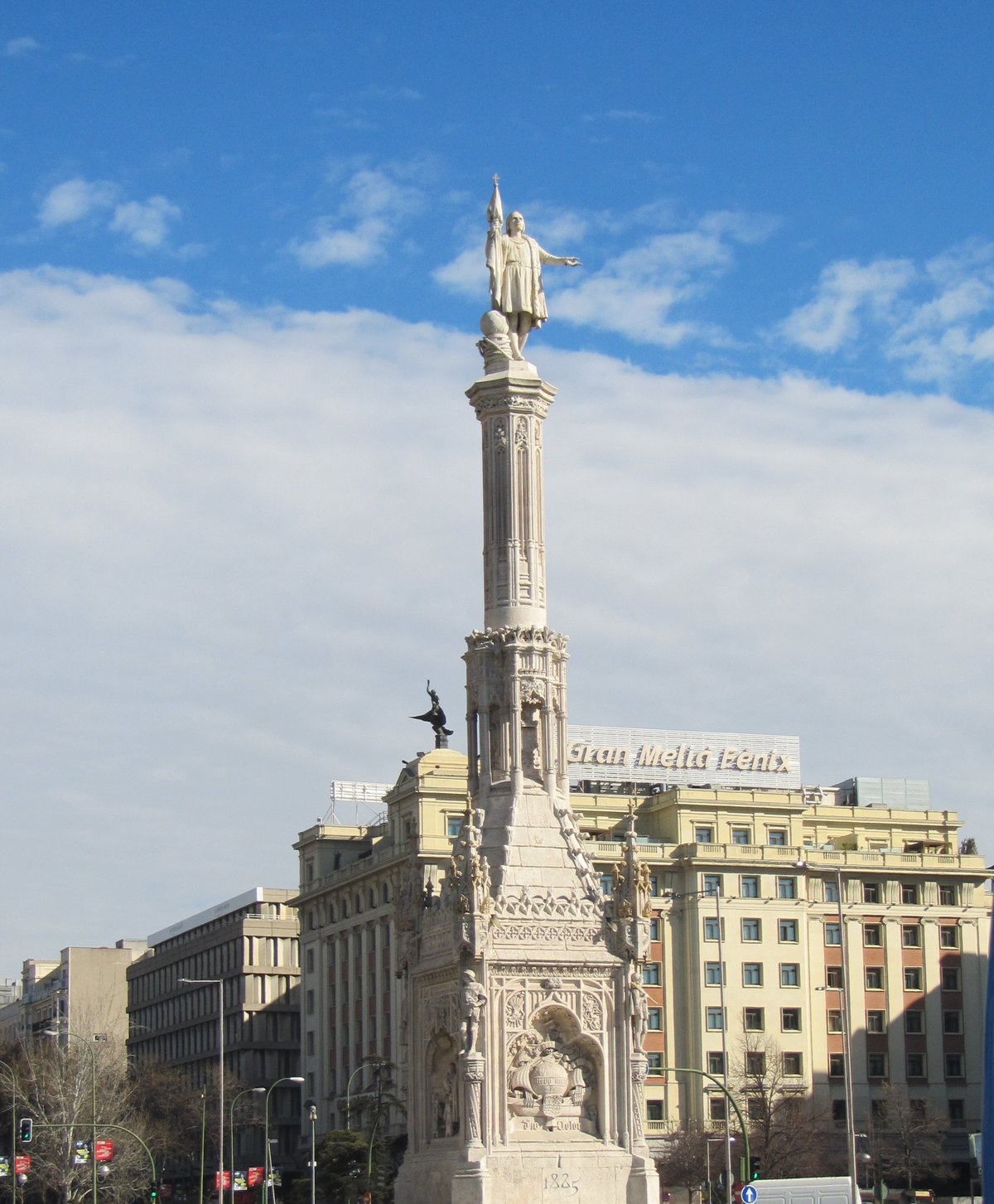

The Monument to Columbus lies in Madrid's Recoletos neighborhood, at the Plaza de Colón. The 20-meter-tall structure was the creation of Isabella II, who proposed the idea of a national monument to commemorate Christopher Columbus in 1864. This original idea was not realized, but it was revived with the upcoming marriage of Alfonso XII and María de las Mercedes in 1877. A public contest took place in 1877, and the winner was Arturo Mélida. Following the scrapping of an earlier draft, the 17-meter high Gothic Revival base for the monument was built from 1881 to 1885.
Jerónimo Suñol created the statue that would top it, a 3.30 m high Carrara marble work featuring Columbus holding a flag of Castile. The statue was delivered to the Ayuntamiento de Madrid in 1892. The Monument to Columbus's inauguration was scheduled for January 4, 1886, but the death of the monarch, Alfonso XII, aborted the event. The tower remained incomplete and overlooked by other attractions in the city for some time. The tower was eventually dismantled in 1976 and moved to a nearby location in the Jardines del Descubrimiento. It returned to its original location in 2009, as part of the renovation of the Prado–Recoletos axis.
Sources: Wikipedia, OpenStreetMap, Wikidata, Wikimedia Commons
Written by Nik Frost
Discuss this with the author and others
No comments yet. Be the first to start the conversation.