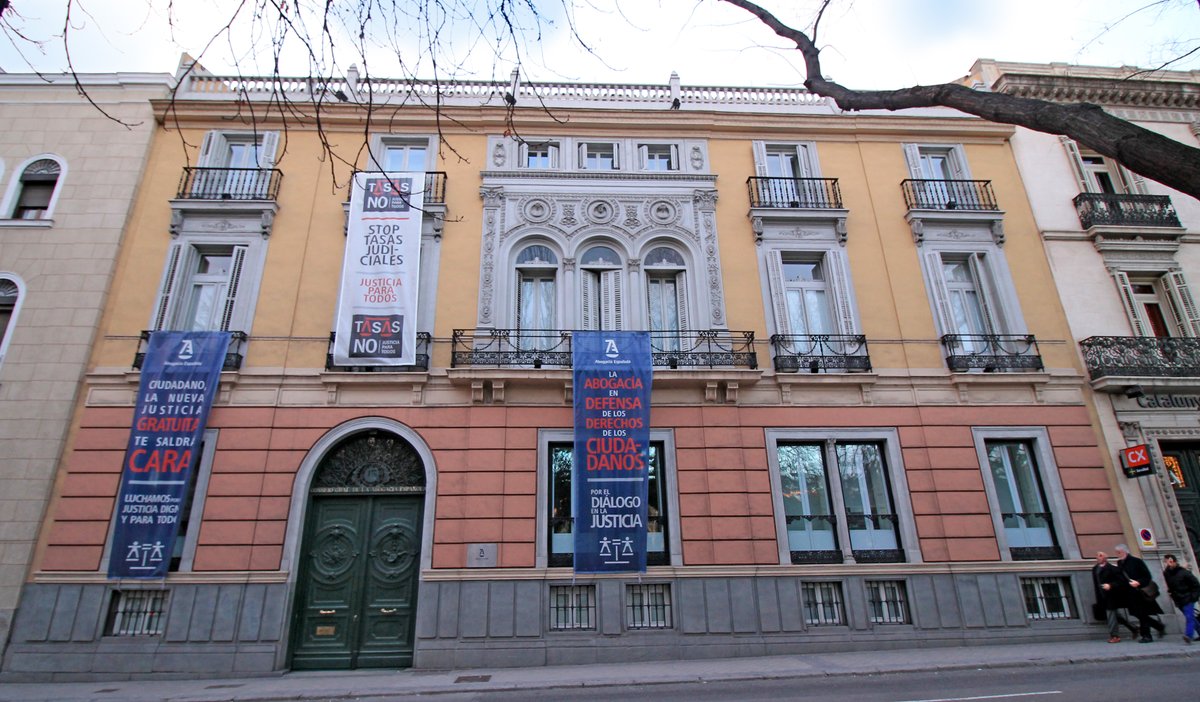

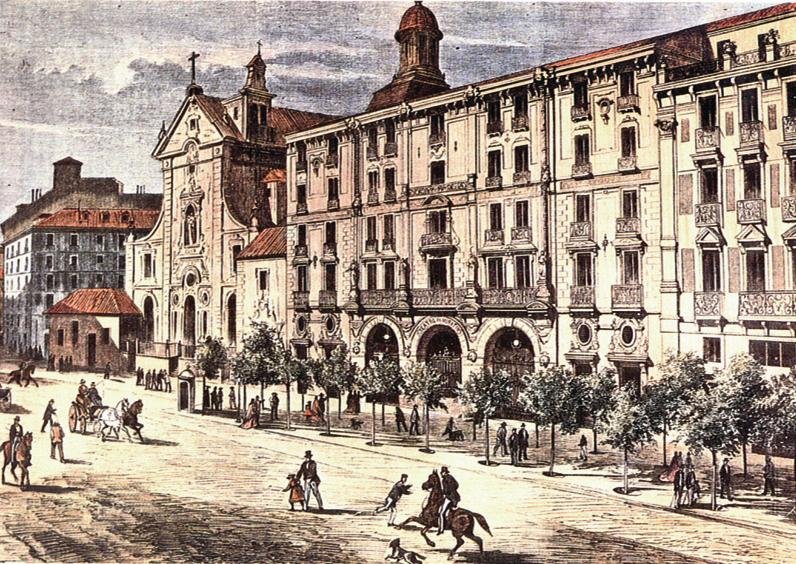
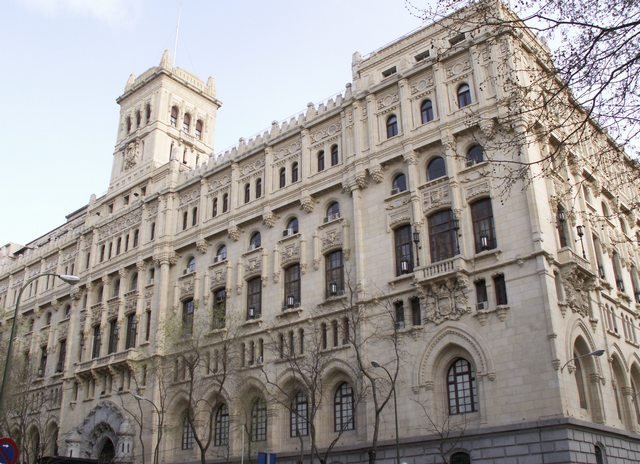
On the main floor of the Palacio del Marqués de Alcañices, a Bolognese logia features high-relief heads representing science, industry, and commerce. These figures highlight the rising values of the society during the 1860s. The building is a typical palatial residence of the high classes of the Isabeline era, composed of a ground floor, a main floor, and an upper floor topped with a balustrade.
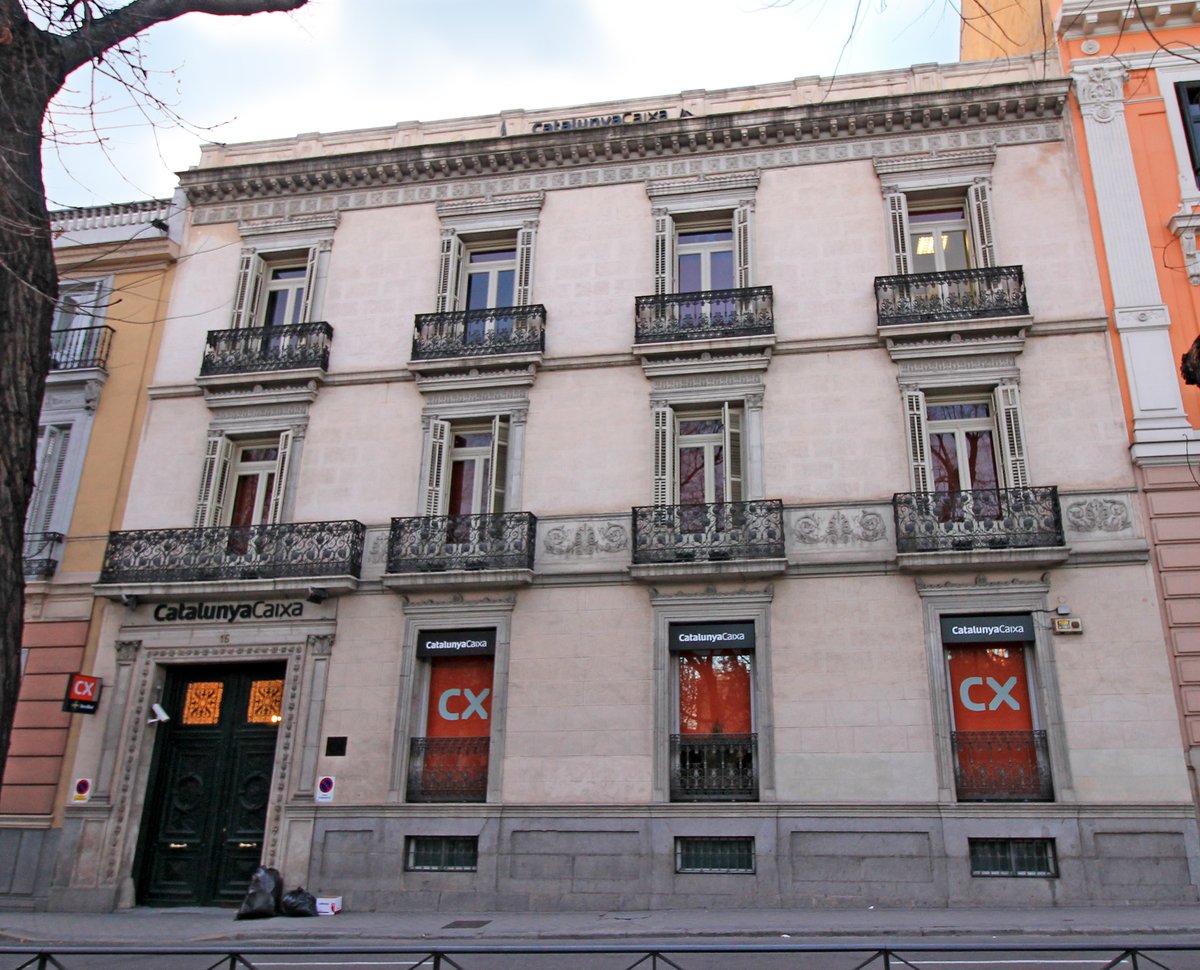
In 1865, the architect Francisco de Cubas designed this urban palace, which is situated between the Convento de San Pascual and the Palacio de López-Dóriga. Although a later renovation moved the main door to a side and replaced the windows of the top floor with balconies, the structure retains its original layout. The facade features ornamentation highlighting the values of that era, though busts that once adorned the balustrade were removed because they were not to the owners' taste.
The building's purpose has evolved from a private residence to its current role as the headquarters for the Consejo General de la Abogacía Española. It stands on the Paseo de Recoletos, across from the Palacio del Marqués de Salamanca. This site is distinct from the owner's previous palace on the Paseo del Prado, which was demolished in the late 19th century to make way for the expansion of the streets.
Sources: Wikipedia, OpenStreetMap, Wikidata, Wikimedia Commons
Written by Nik Frost
Discuss this with the author and others
No comments yet. Be the first to start the conversation.