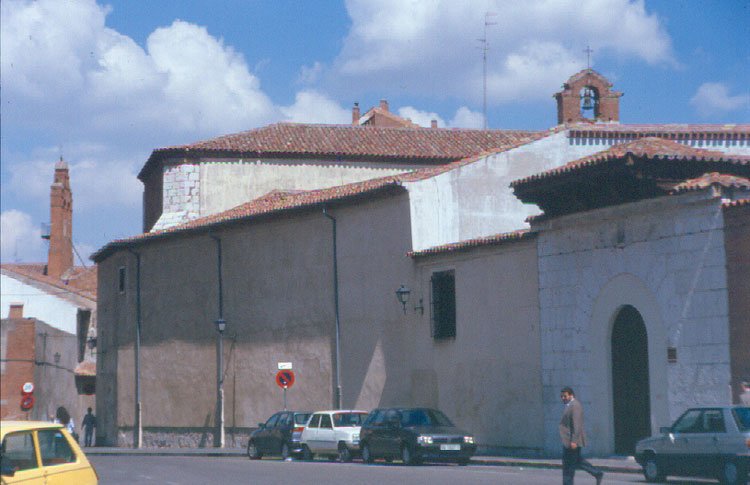

Founded by the Franciscan nuns in 1472, the Convent of Santa Isabel de Hungría stands in the heart of Valladolid. Granted authorization by Pope Innocent VIII in 1484, the church was built between 1506 and 1513 by Bartolomé de Solórzano. The Gothic structure is softened by Renaissance details. Its high choir, constructed following the monasterial typology, is the most significant. The chapel's main testero is covered with a retablo de escultura, based on the retablo mayor de la Colegiata de Villagarcía de Campos.
Commissioned in 1613, Juan Imberto created statues and reliefs of the retablo. However, a change occurred in 1621 when Gregorio Fernández was commissioned to create the relief depicting Santa Isabel, Queen of Hungary, offering alms to a poor person.
The cloister, built at the same time as the church, has Tuscan columns and houses seats of two Valasadolid cofradías: the Hermandad Penitencial de Nuestro Padre Jesús atado a la Columna and the Hermandad del Santo Cristo de los Artilleros.
Sources: Wikipedia, OpenStreetMap, Wikidata, Wikimedia Commons
Written by Nik Frost
Discuss this with the author and others
No comments yet. Be the first to start the conversation.