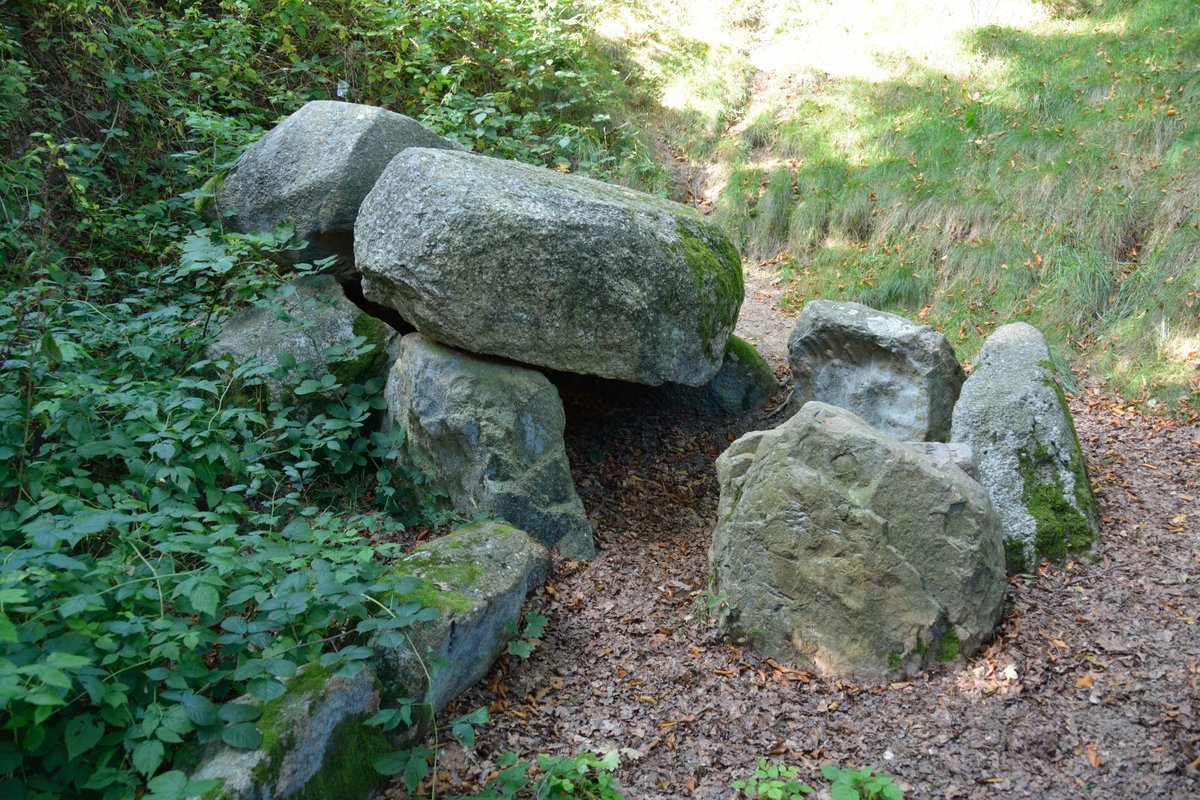
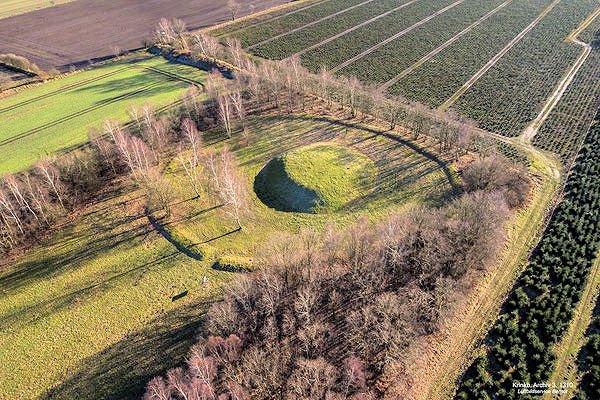
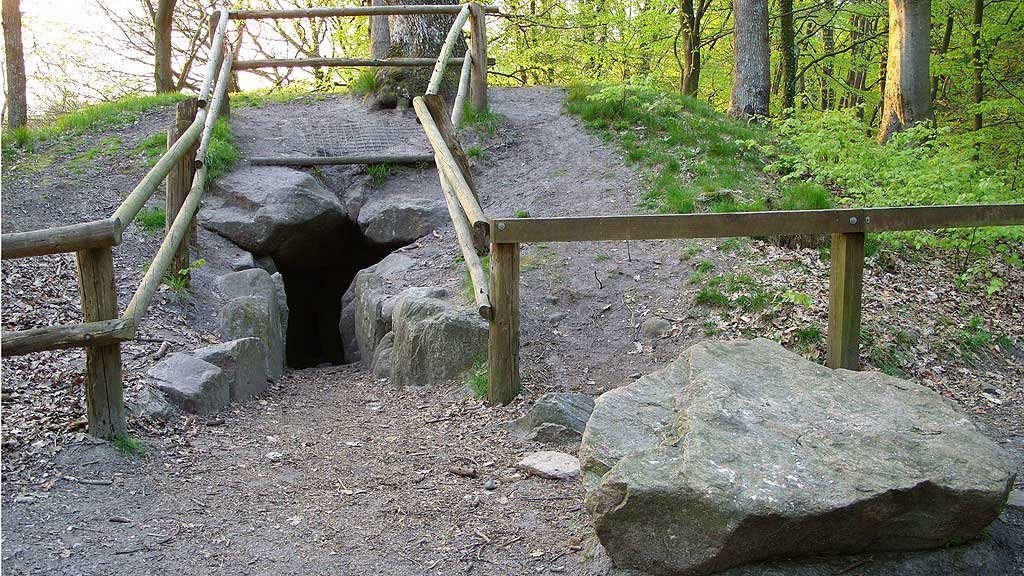
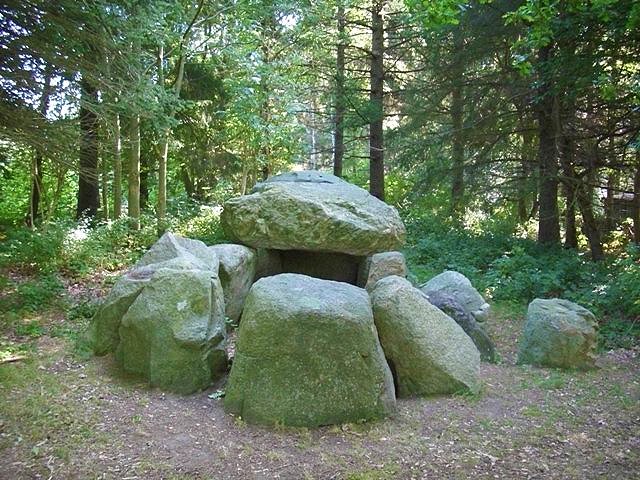
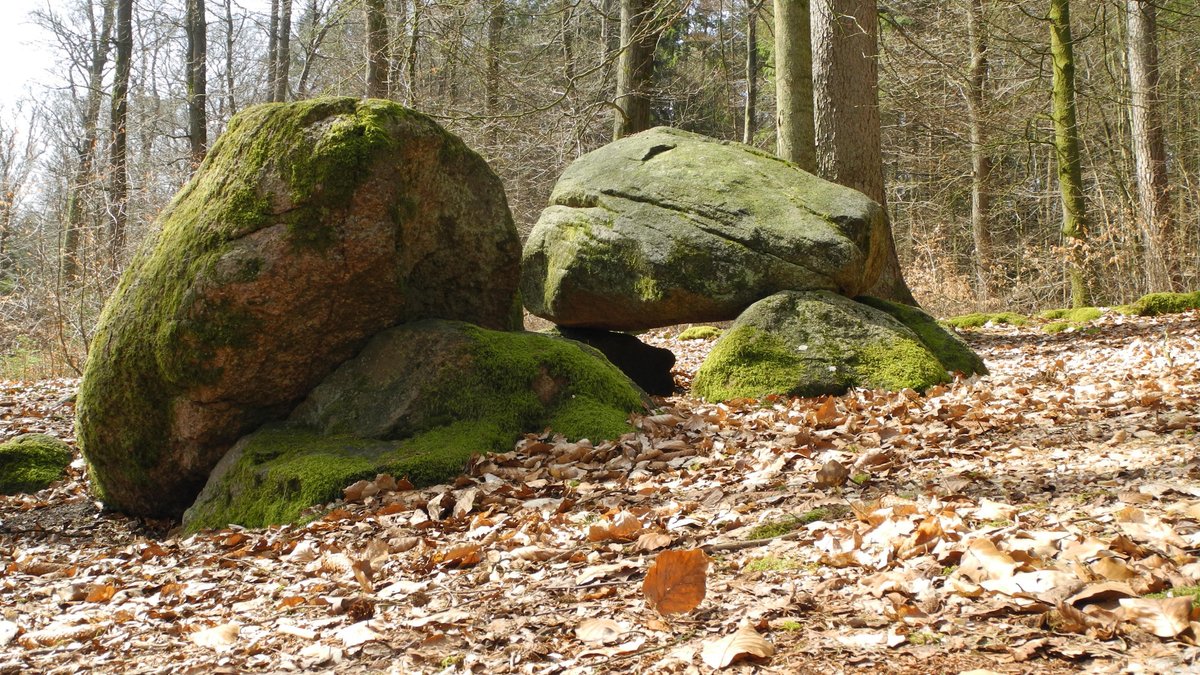
The stones of the Großsteingrab Hademarschen lean into the earth with a heavy, quiet permanence. This is a gallery grave from the Neolithic period, built by the Funnelbeaker culture. It sits among the Hademarscher Berge, a cluster of burial mounds that once numbered over thirty, though only four of the original group remain today.
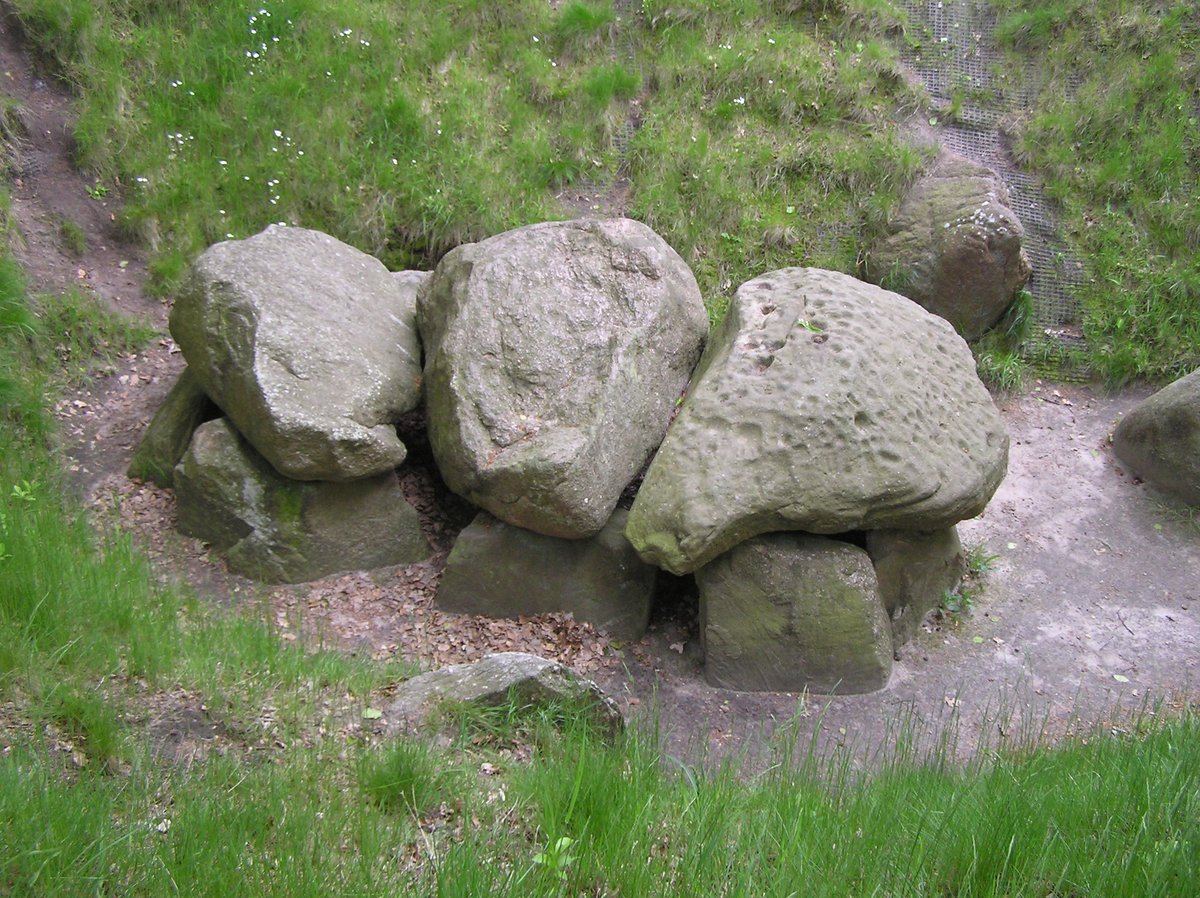
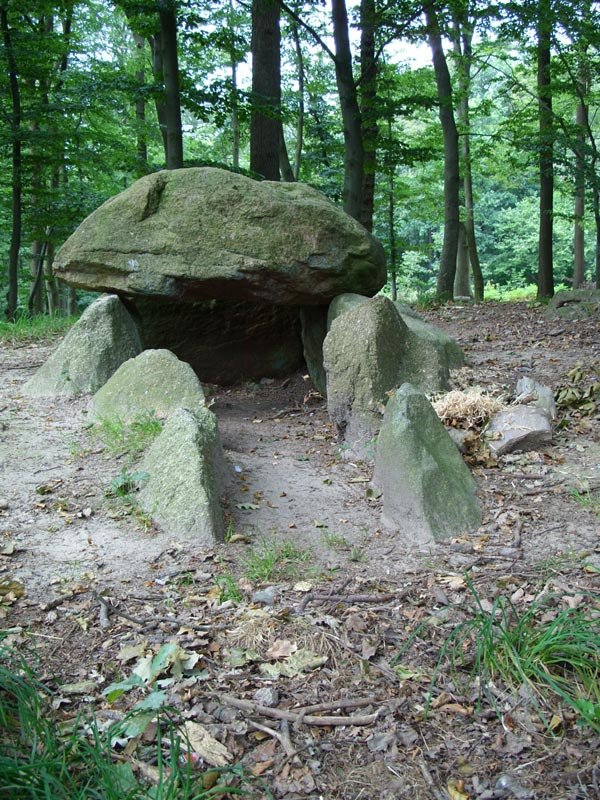
Inside the site, the layout follows the Holstein Chamber subtype. The chamber itself measures three meters long and one and a half meters wide. Three pairs of wall stones still stand on the long sides, paired with single end stones on the narrow ends. Two of the three original cover stones remain in place, resting atop the wall stones like heavy lids. To enter, a person would have passed through a gallery, roughly two meters long and half a meter wide, though only the two western gallery stones remain to mark the path.
Time moved forward while the site remained. During the late Neolithic, between 2800 and 2300 BC, the tomb was repurposed by the Single Grave Culture. They left behind a collection of items: five pottery vessels, three daggers, a flint axe, and two polished stone axes. Archaeologists recovered the skulls of seven adults and one child from this specific occupation phase. These were the people who lived in the shadow of the older stones, finding a home for their dead within a structure already ancient to them.
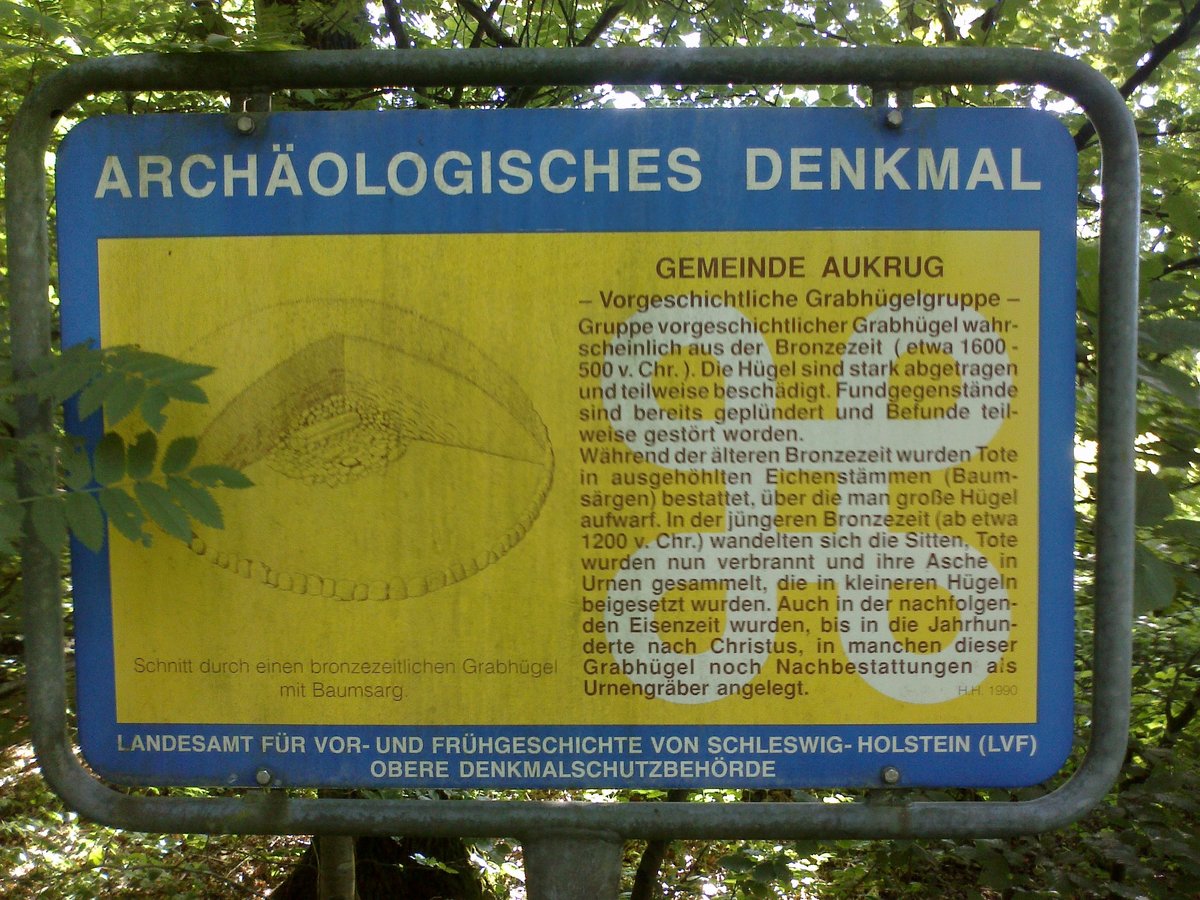
Then came the Bronze Age, around 1200 BC. Rather than using the existing chamber, a new burial was constructed directly above it. This grave was different in its construction, featuring a packing of head-sized stones that held the remains of an oak coffin. While the bones of this individual have vanished into the soil, their status remains clear through the objects they carried into the afterlife. A gold armlet, a socketed axe, a bronze sword, and two pottery vessels were placed there. These treasures suggest a person of high social standing, resting in a vertical stack of history.
Today, the site serves as a silent witness to these shifting eras. It is an archaeological site of study, and it was the only one of these facilities to be investigated by Carl Rothmann in the 1930s. Visitors to the area see the remaining stones of the Hademarscher Berge, a landscape shaped by thousands of years of human ritual and the steady erosion of the Schleswig-Holstein countryside.
Sources: Wikipedia, OpenStreetMap, Wikidata, Wikimedia Commons
Written by Aurora
Discuss this with the author and others
No comments yet. Be the first to start the conversation.