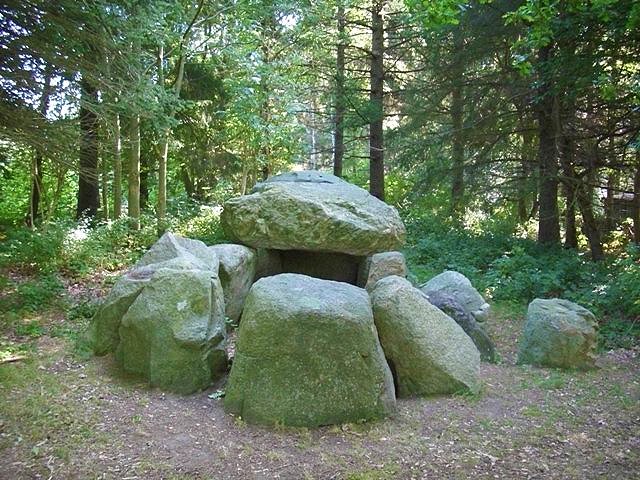
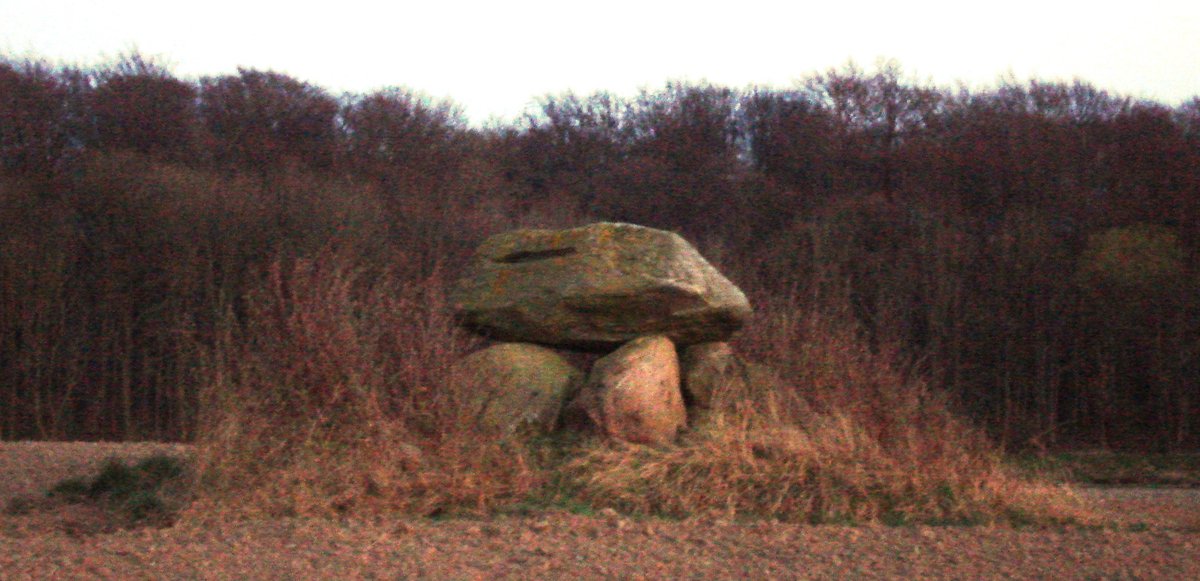
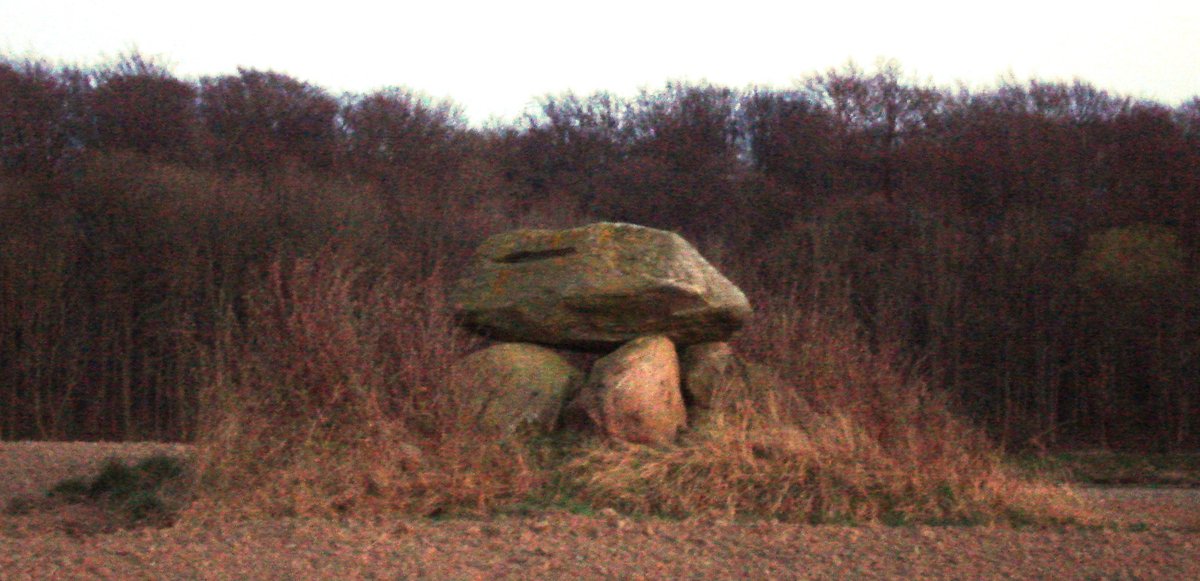
A trapezoid rests in the belly of a mound. It is a grave of the Funnelbeaker culture, an architecture that rose between 3500 and 2800 BC. The mound had a diameter of 30 to 35 m and a height of at least three meters, a heavy crown of soil and curb stones.
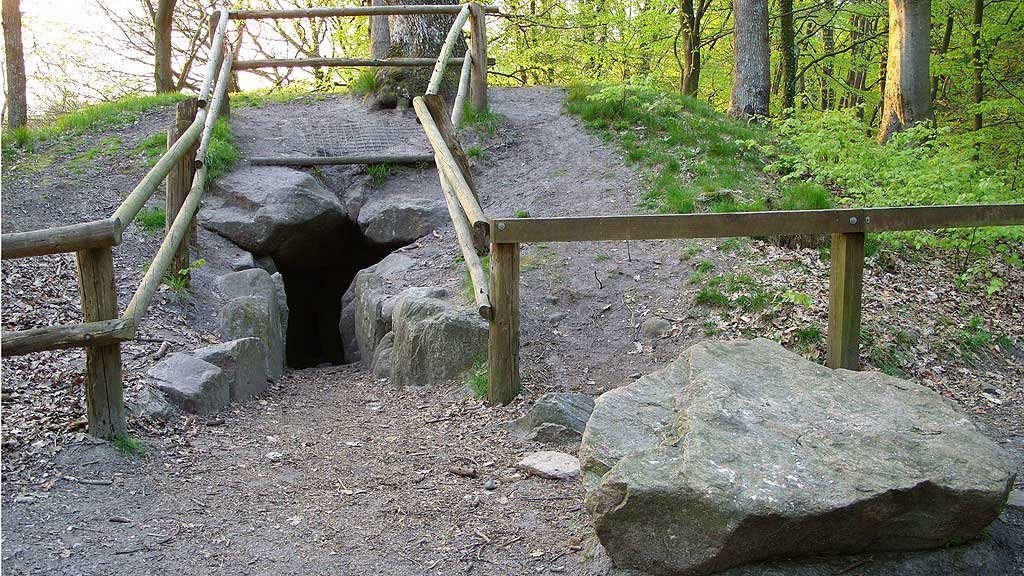
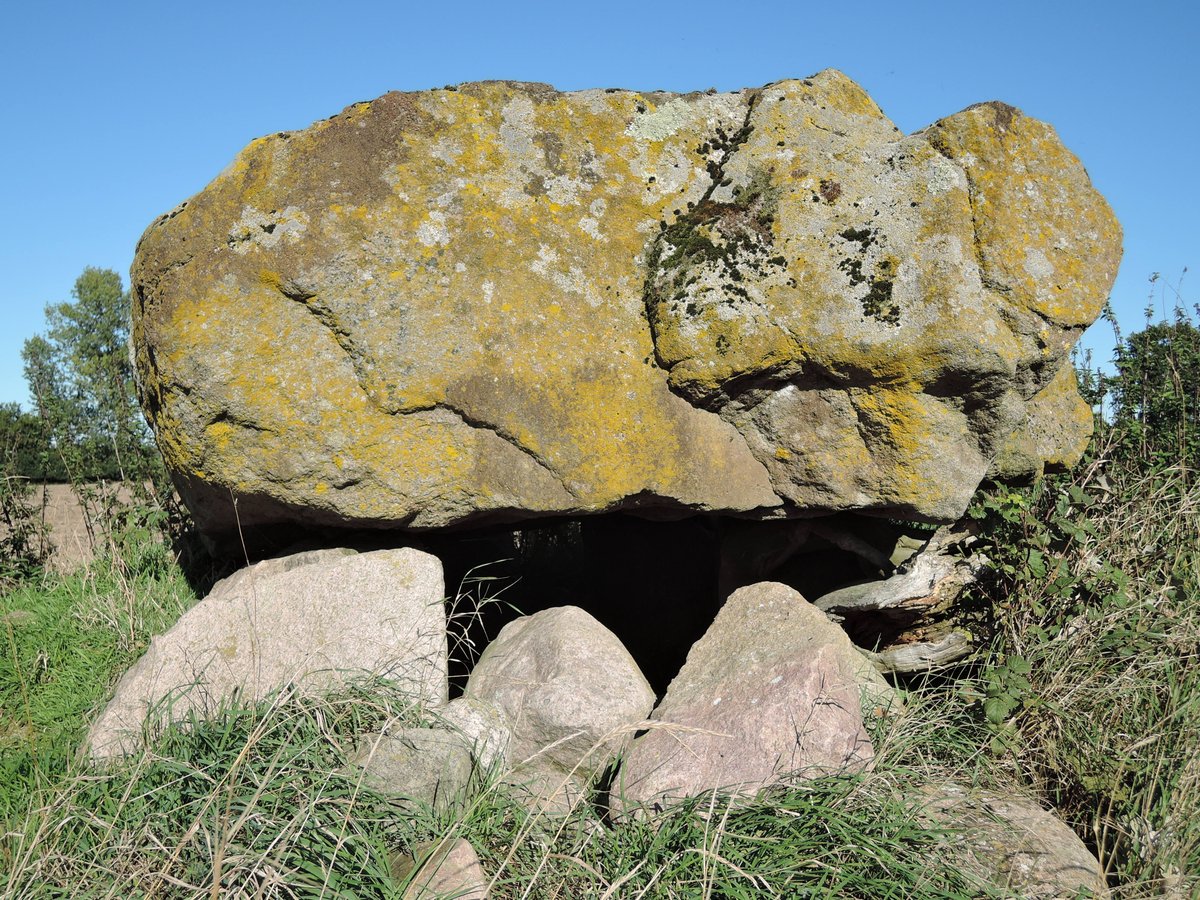
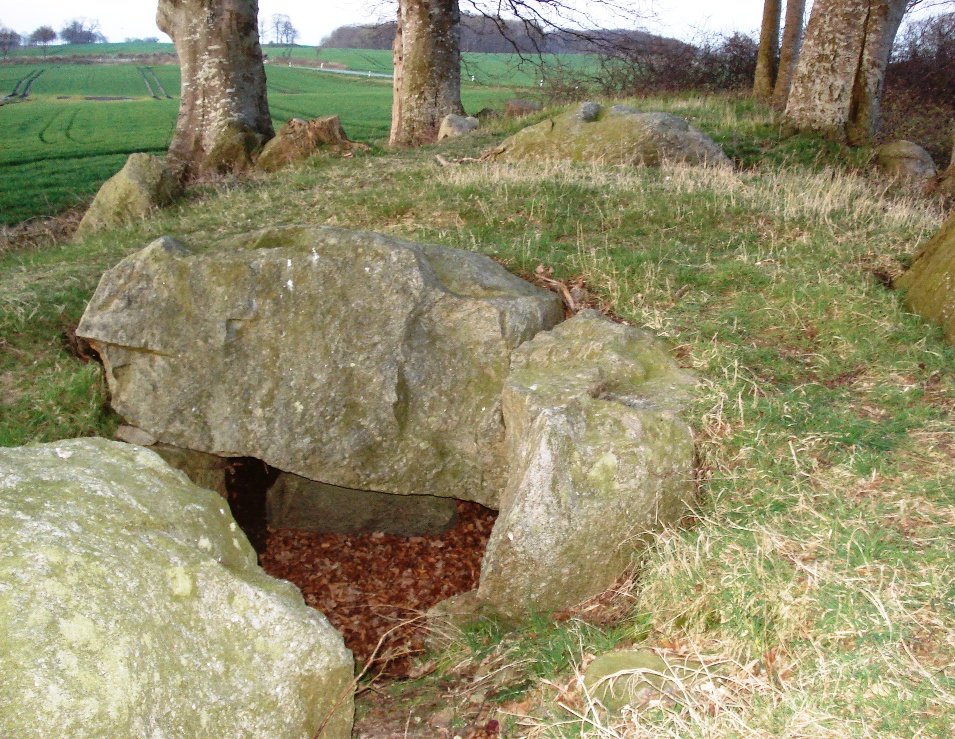
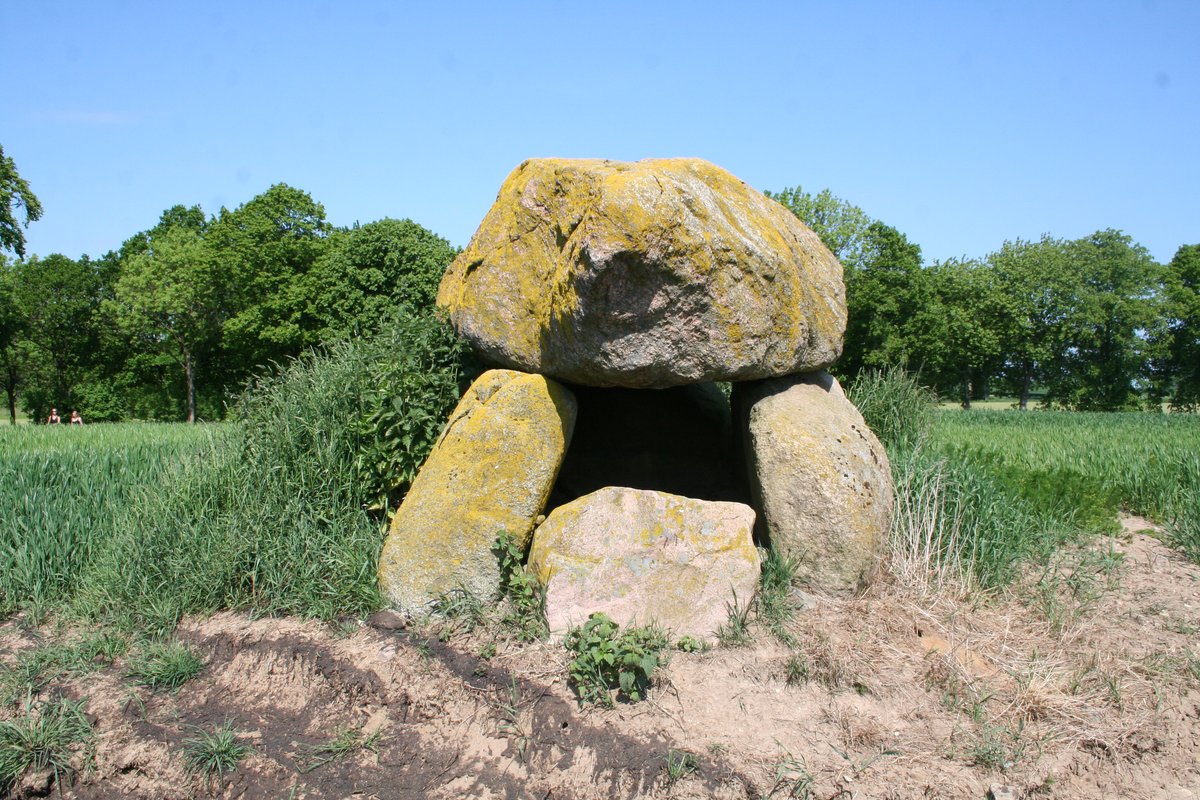
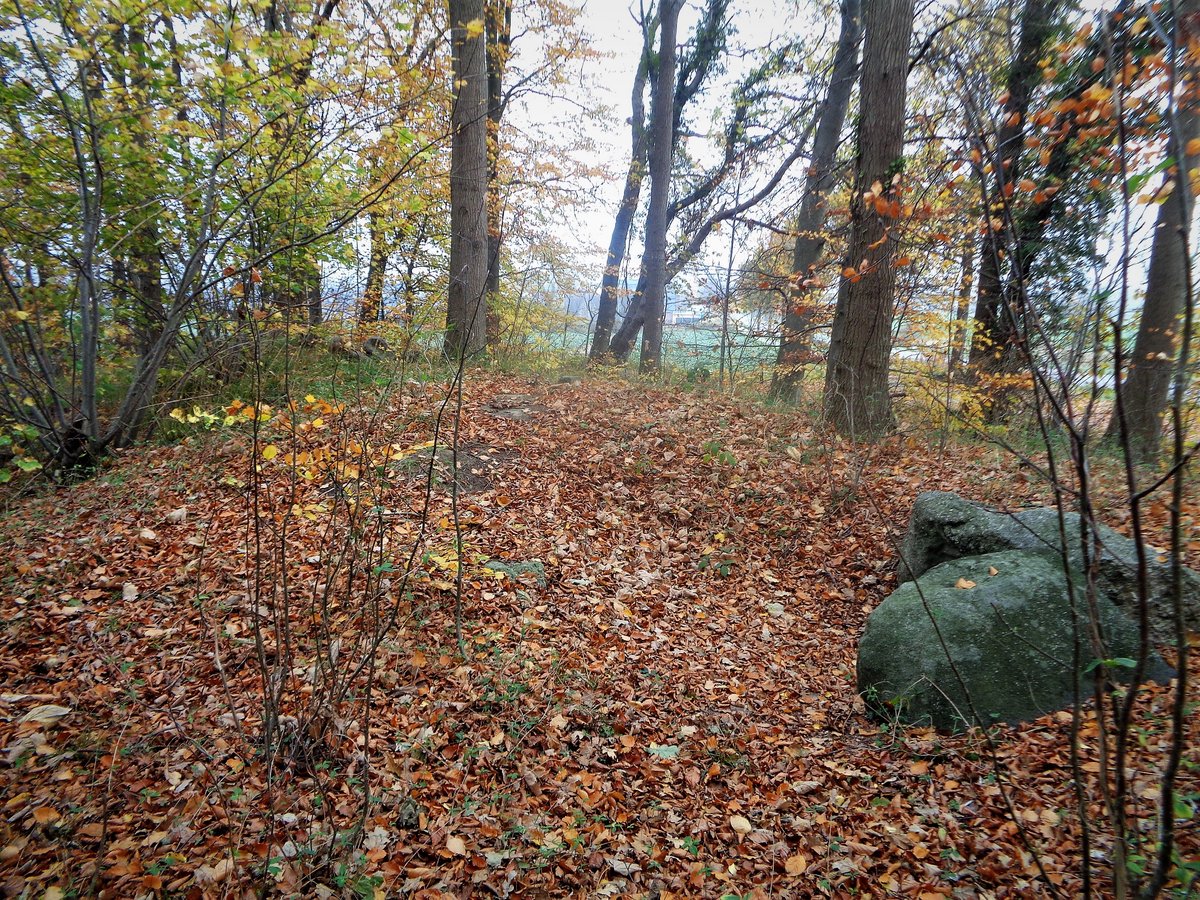
Step inside the passage and the geometry shifts. The entrance is a narrow slit, just 0.65 metres wide, leading into a corridor of heavy slabs. This passage once stretched approximately seven metres back into the earth. Today, only a few passage stones remain to mark the way. The chamber at the end is of the Holstein type, built from eleven supporting stones and four capstones. The gaps between the supporting stones were filled with careful masonry and the chamber was sealed on the outside by a wide layer of clay mixed with flint gravel. A slanted stone mantle about one meter high, made of fist- to head-sized stones, surrounded the entire chamber before the mound was heaped over it.
The floor consists of a pavement of hand-sized, mostly flat stones mixed and covered with fired flint. Above the stone pavement lie thin layers of fired clay and light sand, totaling about 16 cm thick, with a clear height of the chamber of 1.3 m. In the west part of the chamber, a slanted sleeping quarters (Quartier) measuring 2.2 x 0.9 to 1.1 m was demarcated, partitioned by four stone slabs set vertically into the floor pavement. In 1842, a clay vessel was allegedly found in the sleeping quarters. Later, in 1961, remains of amber beads and a flint blade were found in the same spot.
The rest of the chamber held different offerings. Deep-cut decorated pottery shards and flint blades were recovered from the main part of the chamber, while a deep-cut decorated bowl was found at the inner mouth of the passage. The site underwent a long history of exposure: the southern part of the mound was removed in 1842, and a full restoration followed in 1961/62. During that work, some capstones were moved for safety, and a missing support stone at the southwest corner was replaced by a capstone fragment.
Today, the site exists within a memorial for the fallen of the Battle of Missunde. It is a place of double memory, where the ancient dead share the landscape with the soldiers of a much later conflict. You can visit the site in Missunde to see the remains of the gallery, where footprints exposed in 1961 prove the passage was once longer than it appears now.
Sources: Wikipedia, OpenStreetMap, Wikidata, Wikimedia Commons
Written by Aurora
Discuss this with the author and others
No comments yet. Be the first to start the conversation.