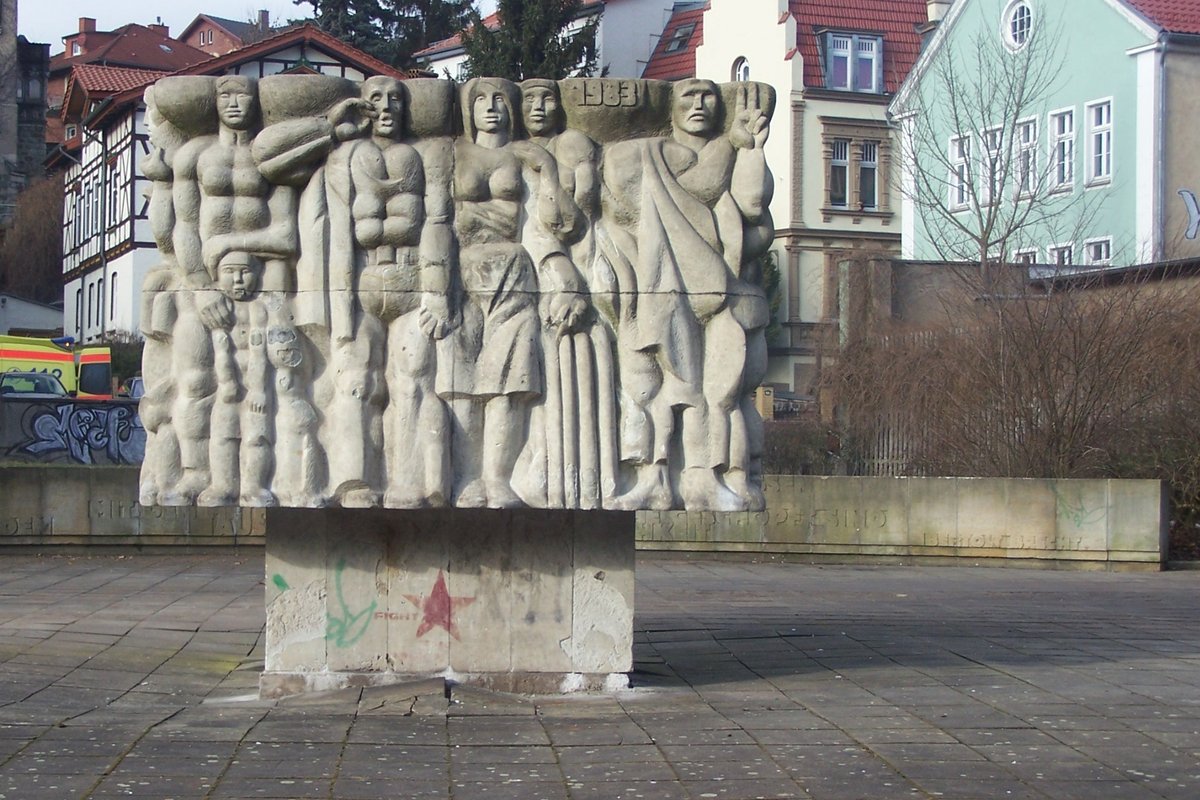
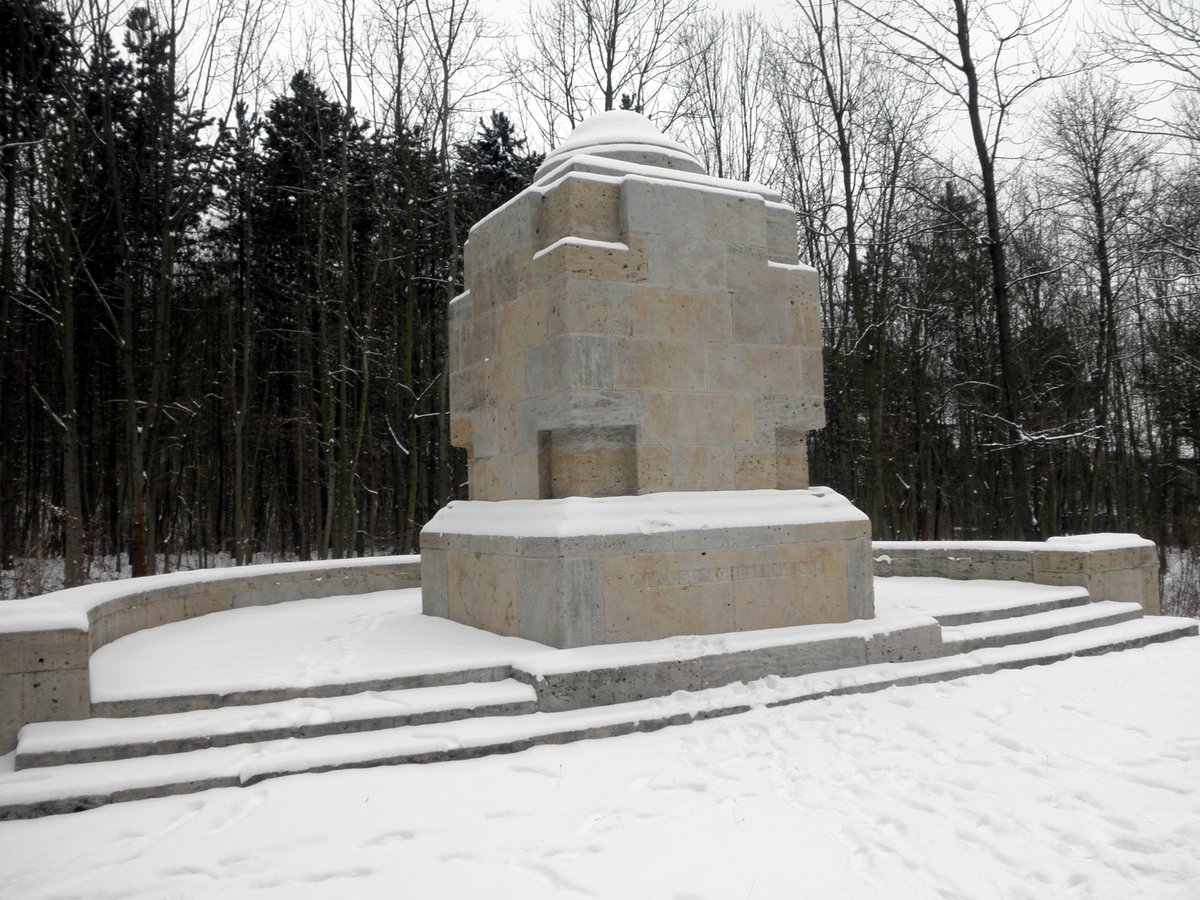
The monument to the German Workers' Movement rises in the Wartburgallee, a heavy presence of Cottaer sandstone. It was carved to serve as a cultural counterweight, a deliberate ideological anchor set against the backdrop of Eisenach's older, more imperial narratives. The government viewed the Eisenacher Parteitag 1869 memorial as a counterweight to events that did not align with SED ideology, seeking to elevate the 1869 founding of the Social Democratic Workers' Party.
In 1869, 264 delegates from 193 different locations across Germany, Austria, and Switzerland gathered in Eisenach. Led by August Bebel and Wilhelm Liebknecht, they organized what was then the largest congress in the history of the German workers' movement. The government eventually decided to move the memorial from its original site on Marienstraße because tourists were not noticing it, seeking a location that harmonized with the grandeur of the nearby Kartausgarten park and the Wandelhalle.
Construction began on August 1, 1982, under the design of Erfurt artists Anke and Siegfried Besser. They won a competition to create a work that wouldn't appear as a foreign body amidst the city's established architecture. The sculpture weighs 32 tonnes. Its four panels are arranged to be read clockwise, tracing a chronological path through history: the 1869 founding of the workers' party, the 1918 birth of the Communist Party of Germany, the 1946 founding of the SED, and finally, the 1983 inauguration of this very monument on the 100th anniversary of Karl Marx's death.
The site layout deliberately recalls Eisenach’s heyday as a residence city under Grand Duke Carl Alexander. About 100 metres south, a monument to that same Grand Duke still stands, a nod to the era of spas and hotels. The memorial plaza is held back from the green space by a low wall called a Schriftmauer. It is made of the same building material as the sculpture and features a relief of Bertolt Brecht's poem 'Lob der Partei'.
Today, the memorial remains a weathered witness to a departed state ideology. It sits in a quiet pocket of the South District, where the old spa atmosphere persists in the surrounding parks. A document box, containing daily newspapers and materials on the site's history, remains walled into the foundation, a hidden archive of the era that built it.
Sources: Wikipedia, OpenStreetMap, Wikidata, Wikimedia Commons
Written by Aurora
Discuss this with the author and others
No comments yet. Be the first to start the conversation.