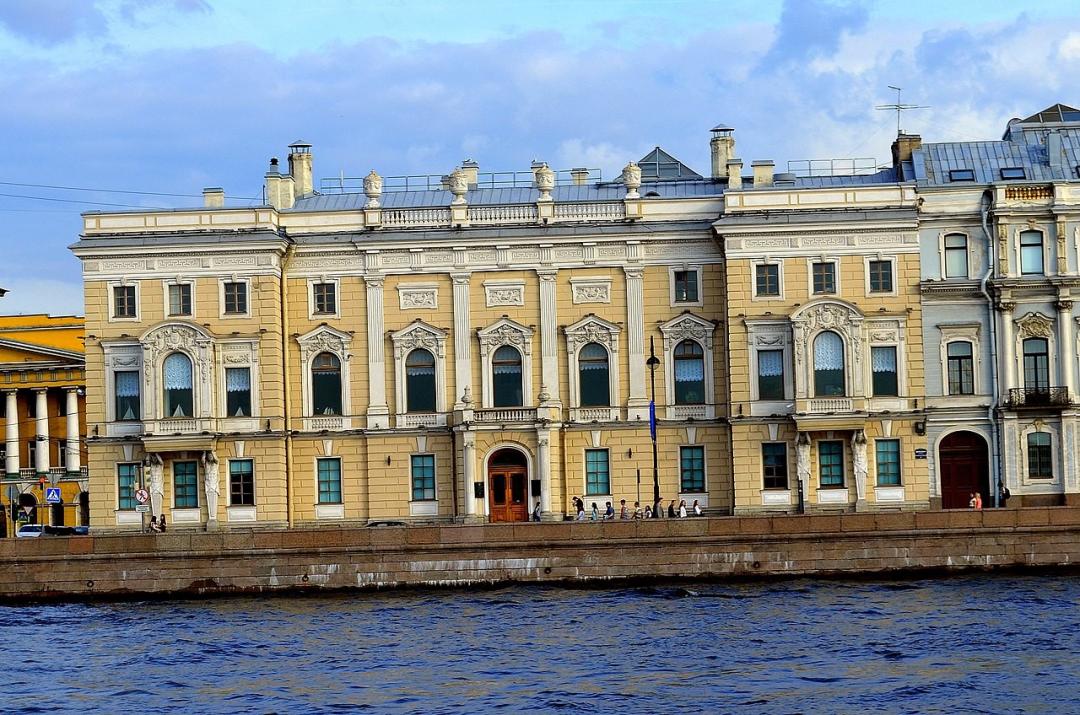
Great Architects: Bartolomeo Francesco Rastrelli

For Browsing

Count Bartholomew Bartholomeevich (Bartolomeo) Rastrelli; also Francesco Rastrelli, was born in 1700 in Paris. The date of Rastrelli's death and place of burial are unknown, but it is assumed that he died in Mitava in 1771 and was buried next to his wife Maria near the Reformed Church. This grave was lost during World War II. A Russian architect of Italian origin, an academician of architecture of the Imperial Academy of Arts. The name Rastrelli is practically synonymous with the Elizabethan style, as during the reign of Elizabeth I, Rastrelli led most of the major construction projects in Russia.

Vorontsov Palace

26 Sadovaya St., Building A, Saint Petersburg, Russia, 191023

A palace in the central part of Saint Petersburg, located on Sadovaya Street opposite Gostiny Dvor. It was built according to the project of architect Francesco Rastrelli between 1749 and 1758 for Chancellor Mikhail Vorontsov. The palace was distinguished by its rich, elegant facade decoration and lavish interior finishes, featuring more than 50 ceremonial halls and rooms. Due to the colossal expenses on construction, just a few years after completion, Vorontsov was forced to sell the palace to the treasury for 217,000 rubles. Under Paul I, the palace was given to the Maltese Order, during which the Maltese Chapel was built based on a design by Giacomo Quarenghi. In 1810, Emperor Alexander I placed the Page Corps in the palace, and the building belonged to it until the revolution. In the 20th century, the palace complex was occupied by various military schools. In 2019, the building was taken over by the Third Cassation Court of General Jurisdiction. In 2021, under the guise of major repairs, the institution initiated a tender for the demolition of three pre-revolutionary wings on the palace grounds.

Stroganov Palace

Nevsky Ave., 5m, Saint Petersburg, Russia, 191186

Built according to the project of architect Bartolomeo Francesco Rastrelli in 1753–1754 and rebuilt by Andrey Nikiforovich Voronikhin, it is one of the examples of the unique Rastrelli "Baroque-Rocaille style." Currently, it is a branch of the State Russian Museum, to which the building has belonged since 1988.

Church of the Holy Apostles Peter and Paul

Saint Petersburg Highway, 115, Saint Petersburg, Russia, 198517

The stone church was first erected on this site in 1767 by the architect Francesco Bartolomeo Rastrelli. And now, on the grounds of Znamenka, there is a unique feature, an architectural monument that has come down to us from the depths of the 18th century. The Peter and Paul Church is modest in size, concise, and elegant. It can rightfully be considered the oldest functioning church in Peterhof.

Grand Palace (Peterhof)

Razvodnaya St., Building 2, Saint Petersburg, Russia, 198516

The main building of the palace and park ensemble "Peterhof," located in the eponymous town on the southern shore of the Gulf of Finland in the Petrodvorets district of the federal city of Saint Petersburg. It was almost completely destroyed during World War II and restored in 1952.

Anichkov Palace is the oldest surviving building on Nevsky Prospect.

Nevsky Ave., 39, Saint Petersburg, Russia, 191023

The name of the palace and the nearby bridge comes from the **Anichkov Palace** and the **Anichkov Bridge** in Saint Petersburg, Russia. Both are named after Mikhail Anichkov, an engineer who supervised the construction of the first wooden bridge at this location in the early 18th century. The palace later took its name from the bridge and the area.

The Palace of Dmitry Cantemir (Gromov House)

Millionnaya St., 9, Saint Petersburg, Russia, 191186

A historic building in the center of Saint Petersburg, at the corner of Millionnaya Street and Mramorny Lane.

Travel Palace (Small Palace of Peter I)

2 Maksim Gorky Street, Saint Petersburg, Russia, 198515

The Travel Palace (Peter I's Small Palace) is the earliest building in the suburb of Strelna near Petersburg that has survived to this day from the Petrine era. The palace is located not far from the shore of the Gulf of Finland, in the southern part of the Neva Bay, on a low hill left after the retreat of glaciers, surrounded by ravines, near the Strelka River.

Grotto Pavilion

P97X+9C Pushkinsky District, Saint Petersburg, Russia

Grottos, decorated inside with shells and tuff, were an almost mandatory feature of large formal gardens in the 18th century. The pavilion was built during the reign of Elizabeth Petrovna in 1755–1756 according to a design by Chief Architect Bartolomeo Rastrelli. The construction and interior decoration were carried out by Court Councillor Ivan Rossi. The grotto became the first pavilion built on the shore of the Large Pond.

Hermitage Pavilion

Sadovaya St., 7, Saint Petersburg, Russia, 196601

The Hermitage is a park pavilion (belonging to the so-called hermitages (from French — "secluded corner")) in the Baroque style located in the Catherine Park in Tsarskoye Selo.

Rundāle Palace (in Latvian Rundāles pils, from the German Ruental, Schloss Ruhenthal, literally — "Valley of Tranquility")

Rundāle Palace, Pilsrundāle, Rundāle Parish, Bauska Municipality, LV-3921, Latvia

One of the most famous architectural monuments of the 18th century in Latvia. Built according to the design of the Russian architect of Italian origin Francesco Bartolomeo Rastrelli. The construction of the palace began in 1736 by order of Ernst Johann Biron – the favorite of Russian Empress Anna Ioannovna. However, after her death in 1740, Biron was exiled, and the construction of the palace was halted. It was only in the 1760s, upon Biron's return from exile, that construction was resumed and completed. Workers, craftsmen, and artists, mainly from St. Petersburg, as well as soldiers, participated in the construction of the palace. After the annexation of Courland to Russia, the palace came into the possession of Count Zubov and later became the property of the Shuvalov counts. In 1920, the palace was transferred to the Latvian state. In 1972, a museum was opened in the palace, and restoration work began, which continues to this day.

Mitava, or Jelgava Palace (German: Mitauburg, Latvian: Jelgavas pils)

Lielā iela 2, Jelgava, LV-3001, Latvia

The largest palace in the Baltic region in the Baroque style, built in the 18th century according to the design of Francesco Bartolomeo Rastrelli as the ceremonial city residence of the Dukes of Courland and Semigallia in their capital — Mitau (now Jelgava).

St. Andrew's Church in Kyiv: History and Legends

Andriivskyi Descent, 23, Kyiv, Ukraine, 02000

The St. Andrew's Church is often called the swan song of the outstanding architectural master Bartolomeo Rastrelli. It rises on one of the cliffs of the Old Kyiv Hill, on the site of the former bastion of the Old Kyiv Fortress.

Smolny Cathedral (Resurrection Cathedral of All Educational Institutions, Smolny Cathedral, Cathedral of the Resurrection of the Word of All Educational Institutions, Resurrection of Christ Smolny Cathedral)

4 Kvarengi Lane, Saint Petersburg, Russia, 191060

Smolny Cathedral (Resurrection Cathedral of All Educational Institutions of Smolny, Cathedral of the Resurrection of the Word of All Educational Institutions, Resurrection of Christ Smolny Cathedral) is an Orthodox church in the Central District of Saint Petersburg. It is part of the architectural ensemble of the Smolny Monastery. Historically, the Resurrection Smolny Cathedral has been the church of educational institutions of Saint Petersburg, a church for students; therefore, the main focus of the clergy and laity of the church is the spiritual and moral education of youth. From 1990 to 2015, it served as a concert venue for classical music.