Great Architects: Andrey Ivanovich Stakenschneider

For Browsing

Andrey Ivanovich Shtakenshneider was born on February 22 [March 6], 1802, in the Shtakenshneider estate, Gatchina district, Saint Petersburg province. He died on August 8 [20], 1865, in Moscow. A great Russian architect who built imperial residences and grand ducal palaces in Saint Petersburg and its suburbs. A prominent representative of the first generation of eclectic architects in Russia. Professor of the 2nd degree at the Imperial Academy of Arts, actual state councilor.

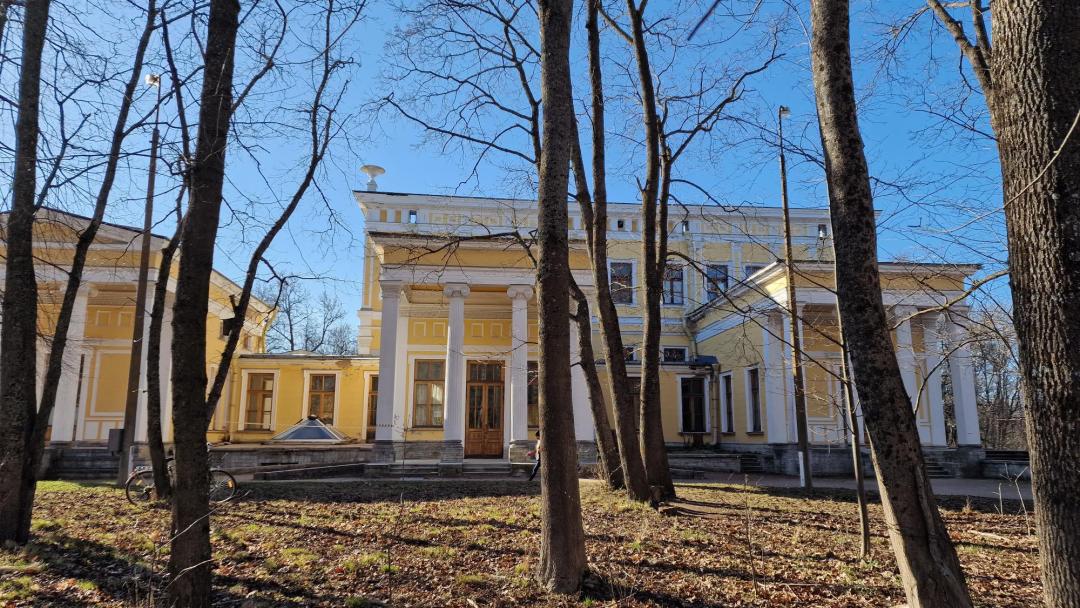
Alferaki Palace

41 Frunze St., Taganrog, Rostov Region, Russia, 347900

The Alferaki Palace (now the building of the historical and local history museum) is located in the historic center of Taganrog. It is a magnificent mansion distinguished by its rich decorative design and reminiscent of the palaces of Russian nobles of the late 18th century.

Renella Pavilion (Tea House or Gothic Cottage)

VXM4+Q3 Petrodvortsovy District, Saint Petersburg, Russia

The Renell Pavilion, or as it was sometimes called, the Tea or Gothic House, is one of the many diverse park pavilions that appeared in Peterhof during the reign of Nicholas I. "During the Empress's stay in Palermo (the wife of Nicholas I), she liked a Gothic house with multifaceted pointed towers at the corners of an elongated quadrangle. Rough sketches of this building made on the spot were sent to St. Petersburg with the order for Stakenschneider to build the Renell Pavilion according to them in Znamenka, on the shore."

Farmer's Palace, Alexandria Park

Alexandria Park 19, Saint Petersburg, Petrodvorets, Saint Petersburg, Russia, 198510

The Farmer's Palace is the only one in Russia created specifically for Alexander II. Later, the palace became the true family residence of the emperor. All renovations and reconstructions were carried out exclusively under his supervision.

Olga's Pavilion

Samsonievskaya St., 7, Saint Petersburg, Russia, 198510

The Olgin Pavilion is a gift from Emperor Nicholas I to his daughter, Grand Duchess Olga Nikolaevna, on the occasion of her marriage to Prince Karl of Württemberg. The pavilion is built in the style of country villas of the island of Sicily, whose capital, Palermo, was where the marriage of the Grand Duchess was decided. The Olgin Pavilion was constructed between 1846 and 1848, designed by architect Andrey Ivanovich Stakenschneider.

Tsaritsyn Pavilion

Klenovka, Borodayova St., 36, Saint Petersburg, Russia, 198510

The Tsaritsyn Pavilion was built by architect Stakenschneider in 1842-1844 for Empress Alexandra Feodorovna during the landscaping of the area south of the Upper Garden. The first of these was designed by the architect in the then-fashionable "Pompeian style." It was meant to reproduce the appearance of ancient Roman houses uncovered during the excavations of Pompeii. Unlike the buildings of the previous century, it introduced a "romantic note into the architectural symphony of Peterhof." Alexandra Feodorovna loved to rest here from the exhausting palace ceremonies.

Water pumping station – Shtakenshneider water-lifting machine

VRXW+M6 Petrodvortsovy District, Saint Petersburg, Russia

Near the shore of the bay, between the palace meadow and the mouth of the Kristatelka River, in its steep bend, there is a picturesque clearing where, among apple trees, stands a red brick ruin with a long chimney protruding upwards. This is all that remains of the palace water pumping station after the destruction of the Great Patriotic War. Although the Sergievka park was outside the occupied territory, within the Oranienbaum bridgehead, the ensemble was heavily damaged by shells.

Palace (Estate) of the Leuchtenberg Family

Leuchtenberg Palace, Oranienbaum Highway, 2, Saint Petersburg, Russia, 198504

The Leuchtenberg Palace is an estate located on the crest of a coastal bluff in the northeastern part of the "Sergievka" park on the western outskirts of Peterhof. The building was constructed by architect Andrey Ivanovich Stakenschneider for Maria Nikolaevna, daughter of Nicholas I, and her husband Maximilian, Duke of Leuchtenberg.

Elizabeth Petrovna’s Own Dacha

Sobstvenny Ave, 84, Saint Petersburg, Russia, 198504

The Private Dacha (until 1740 — the Seaside Dacha) is a palace and park ensemble in Old Peterhof near Saint Petersburg, belonging to Empress Elizabeth Petrovna. It belongs to the type of small travel palaces. The private nature of the palace was emphasized by the fact that no one was admitted there without a report.

Church of Saint Catherine or "The Chapel"

Oranienbaum Highway, Building 2, Block 4, Saint Petersburg, Russia, 198504

In Sergievka Park behind the Leuchtenberg Palace, on the other side of the long palace meadow, among the bushes, one can notice the ruins of a small cubic red-brick building. It seems to be the remains of some kind of wing or a gatehouse. Hardly anyone today would guess in these ruins the skeleton of the Orthodox estate church of Saint Catherine. Meanwhile, it is exactly that. Closing the perspective of the palace meadow, it compositionally echoed the cubic volume of the main part of the palace.

The Church of the Holy Trinity at His Imperial Majesty's Private Dacha

Petergof, Saint Petersburg, Russia, 198504

The Church of the Holy Trinity is an Orthodox church in Peterhof near Saint Petersburg, built between 1858 and 1860 on His Imperial Majesty's Own Dacha. It is affiliated with the Church of St. Seraphim of Sarov of the Saint Petersburg Diocese of the Russian Orthodox Church.

Belvedere Palace

1, Parnas industrial zone territory, St. Petersburg, St. Petersburg, Russia 194292, St. Petersburg, Russia, 188501

Crowning the composition of Meadow Park, at the highest point of the Peterhof surroundings – Babigon Hill – stands the building of the Belvedere Palace. From the upper gallery of the Belvedere, endless views of the surroundings and the Gulf of Finland open up. The pavilion was erected on the site of the previously existing Rural Office House – essentially a small wooden palace in the "Russian" style.

The History of Stakenschneider's Pink Pavilion

VV7X+92 Petrodvortsovy District, Saint Petersburg, Russia

On March 26 (March 14 old style), 1845, the Peterhof Palace Administration received an order to begin the construction of the "Ozerki" pavilion in the Meadow Park. The order stated: "His Majesty the Emperor, having approved the plan, facade, and estimate for the construction of the pavilion by the lock of the Samsonievsky Canal in Peterhof, has most graciously commanded that this construction be carried out under the supervision of architect Stakenschneider."

Konstantinovsky (Admiral’s) House

VXM2+8W Petrodvortsovy District, Saint Petersburg, Russia

In Alexandria Park, near the Cottage Palace, a whole royal dacha settlement has formed with numerous residential and service buildings. Elements of neo-Gothic architecture are used in their design.

Lost Estates - The Tragic Fate of Andrey Ivanovich Shtakenshneider's Estate in Pudost

Gatchinskaya Mill, 2, Myza-Ivanovka, Leningrad Region, Russia, 188352

In addition to his own house on Millionnaya Street, they also described Andrey Ivanovich's estate in the Pudost area, called the Ivanovka Manor — a carved wooden house near a ruined mill, the "pink dacha" on the fast-flowing Izhora River. Listed in directories and tourist maps, this estate unfortunately no longer exists today.

Cottage Palace

VWHW+95 Petrodvortsovy District, Saint Petersburg, Russia

The Cottage Palace (English: cottage) is the central architectural structure of the palace and park ensemble of Alexandria, built using elements of the Neo-Gothic style in 1826–1829 for the family of Emperor Nicholas Pavlovich according to the design by architect Menelas, with an extension by Shtakenshteider. In the film *The Adventures of Sherlock Holmes and Dr. Watson*, the Cottage "played" the role of Milverton's mansion.

Colonist Park and Olgin Pond with islands

Colonists' Park, Krasnoprudsky Lane, Saint Petersburg, Russia, 198510

Colonists' Park is a 29-hectare landscape park in Peterhof. Colonists' Park was created based on a design by architect A. I. Stackenschneider during the reign of Nicholas I. A special role in the creation of the park was played by the chief gardener of the Peterhof Palace Administration, P. I. Erler. The boundaries of Colonists' Park are: to the south — Erler Boulevard, to the east — Borodacheva Street, to the north — the embankment of Olgin Pond, and to the west — Samsonievsky Pond-Canal.

Church in the name of the Holy Martyr Queen Alexandra

VV7J+6J Petrodvortsovy District, Saint Petersburg, Russia

This church was built by A. Stakenschneider in 1854 at the behest of Nicholas I. This church is the last structure erected during the lifetime of Nicholas I in Peterhof. On August 11, 1851, the foundation of the church was laid, during which gold and silver coins were placed in a stone bowl, and on the gilded lid was inscribed: "By the order of Emperor Nicholas I, a church was laid on Babigony, near Peterhof, in the name of the Holy Right-Believing Queen Alexandra, year 1851, August 11." For the foundation of the temple, stone specially brought from the banks of the Jordan was used. Concluding the laying of the church, Nicholas I, with tears in his eyes, said: "I thank the Lord that He has granted me to complete the laying of this temple. God knows if I will live to see it finished."

Lion Cascade (Hermitage)

VWQ3+23 Petrodvortsovy District, Saint Petersburg, Russia

The idea behind the design of the Lower Park was based on the principle: each palace should correspond to a cascade of fountains. In 1721, the construction of the "Hermitage" pavilion began, and an alley leading to it was laid out. The cascade project, referred to as the "Moses Cascade" in Peter's sketches, was prepared by the architect Nicolo Michetti, but the original plan was not realized. Initially, statues of Hercules and Flora were used as sculptural decoration, but a year later they were replaced by bronze figures of lions, made based on Prokofiev's models. The cascade, named the Hermitage Cascade by its location, received its second, more famous name "Lion's" – after its decoration.

Mikhailovsky Palace

4 Inzhenernaya St., Saint Petersburg, Russia, 191186

The palace of Grand Duke Mikhail Pavlovich, the fourth son of Paul I and Maria Feodorovna, and the younger brother of Emperors Alexander I and Nicholas I. A historic building in Saint Petersburg, constructed between 1819 and 1825 according to the design of architect K. I. Rossi, located in the city center on a square that was named Mikhailovskaya Square in 1834 (since September 26, 1940 — Arts Square). A monument of late Classicism architecture, or Russian Empire style. Since 1898, the building housed the "Russian Museum of Emperor Alexander III," and since 1917 — the State Russian Museum.

Mariinsky Palace

Isaakievskaya Square, 6, Saint Petersburg, Russia, 190107

The palace in Saint Petersburg on Isaakiyevskaya Square is named after the daughter of Emperor Nicholas I, Maria, to whom it was intended as a wedding gift on the occasion of her marriage to Duke Maximilian of Leuchtenberg. It was built between 1839 and 1844 according to the design of Andrei Stackenschneider and is considered the architect's finest work. In the 1880s, the palace was sold to the treasury and became the residence of the State Council; in the 1890s, it was renovated and partially rebuilt under the direction of architect Ludwig Peterson. In 1906, under the leadership of Leonty Benois, a separate wing was added for the Large Assembly Hall. Since the late 19th century, alongside the Winter and Tauride Palaces, the Mariinsky has been one of the three "political" palaces of Petersburg. After the February Revolution of 1917, it housed the Provisional Government, and after the October Revolution, it was handed over to the Supreme Council of the National Economy. From 1945, the Leningrad Soviet convened in the palace. During the August Coup of 1991, the Mariinsky became the center of resistance to the State Committee on the State of Emergency (GKChP) in Leningrad. In 1994, after the dissolution of the Leningrad Soviet, the palace was occupied by the Legislative Assembly of Saint Petersburg.

Novo-Mikhailovsky Palace

Palace Embankment, 18, Saint Petersburg, Russia, 191186

A federal architectural monument, the Grand Duke’s Palace, located in the center of Saint Petersburg at 18 Palace Embankment and 19 Millionnaya Street (Stallmeister Corps). The architect was Andrey Ivanovich Stakenschneider. The palace is considered the third major grand ducal residence built according to the architect’s design. It was constructed between 1857 and 1862 specifically for Grand Duke Mikhail Nikolaevich, son of Emperor Nicholas I. The palace’s construction is linked to the prince’s marriage to Princess Cecilie Auguste of Baden. Since there was already one Mikhailovsky Palace in the city, the residence for Mikhail was decided to be named Novo-Mikhailovsky. Currently, the palace houses several institutions of the Russian Academy of Sciences. The palace is designed in a style defined as early eclecticism, expressed through numerous stylistic references to different eras. Although the palace does not hold active urban planning significance, being just one building among a series of Petersburg palaces and mansions, it stands out noticeably in the cityscape of the area due to its lavish, ornate facade decoration and large scale.