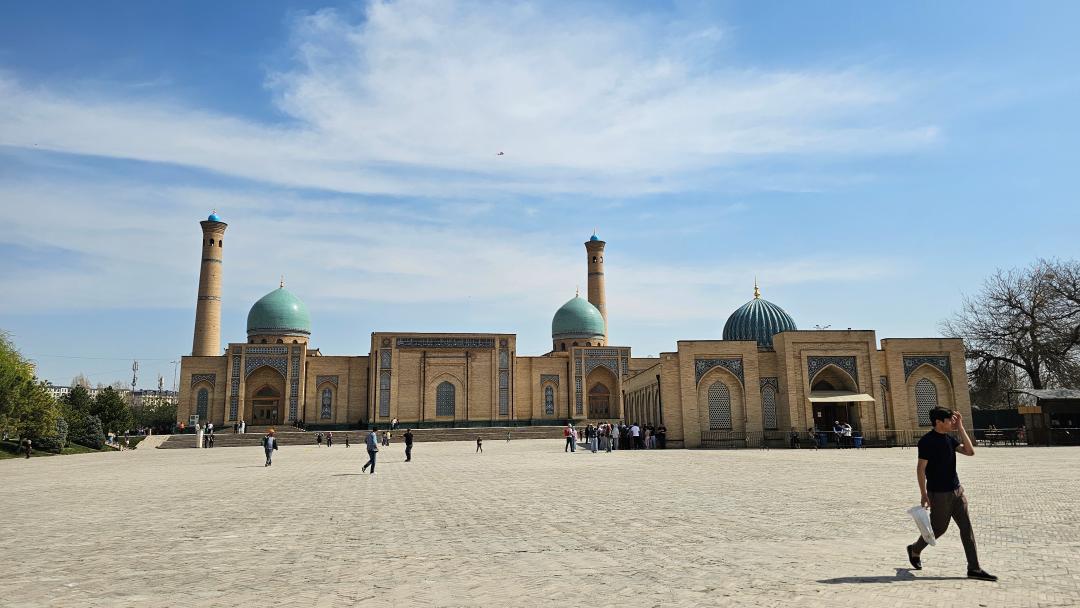
Tashkent: Legends and Stories

Для чтения

Tashkent, like any ancient city, is shrouded in legends and tales. One of the most famous legends is connected to its name, which, according to one version, translates as "Stone City" (from the Uzbek word "tosh" - stone). There are also several legends about the origin and history of Tashkent related to the various names the city has borne during different periods of its history, such as Yuni, Chach, Shash-Tepe, and Binkent. According to one version, the name Tashkent comes from the word "Toshkent," which in Turkic means "Stone City." There are legends about ancient rulers and events that took place in the territory of modern Tashkent, connected with the periods when it was part of the states of Kangyui, Chach, as well as during the times of the Arab conquests. In Tashkent, there are several sacred places about which legends and tales are told, associated with Islamic saints and ascetics.

The Quran of Uthman (Usman), the Samarkand Kufic Quran, or the Samarkand Codex

86QQ+3X8, Qorasaroy Street, Tashkent, Tashkent, Uzbekistan

In Tashkent, the oldest manuscript of the Quran is kept, known as the Quran of Uthman (or the Samarkand Kufic Quran). It is housed in the Muyi Mubarak Madrasa, located within the Hazrati Imam complex. It is believed that this manuscript was written in the 7th century, and some traditions claim that it is stained with the blood of the third caliph Uthman.

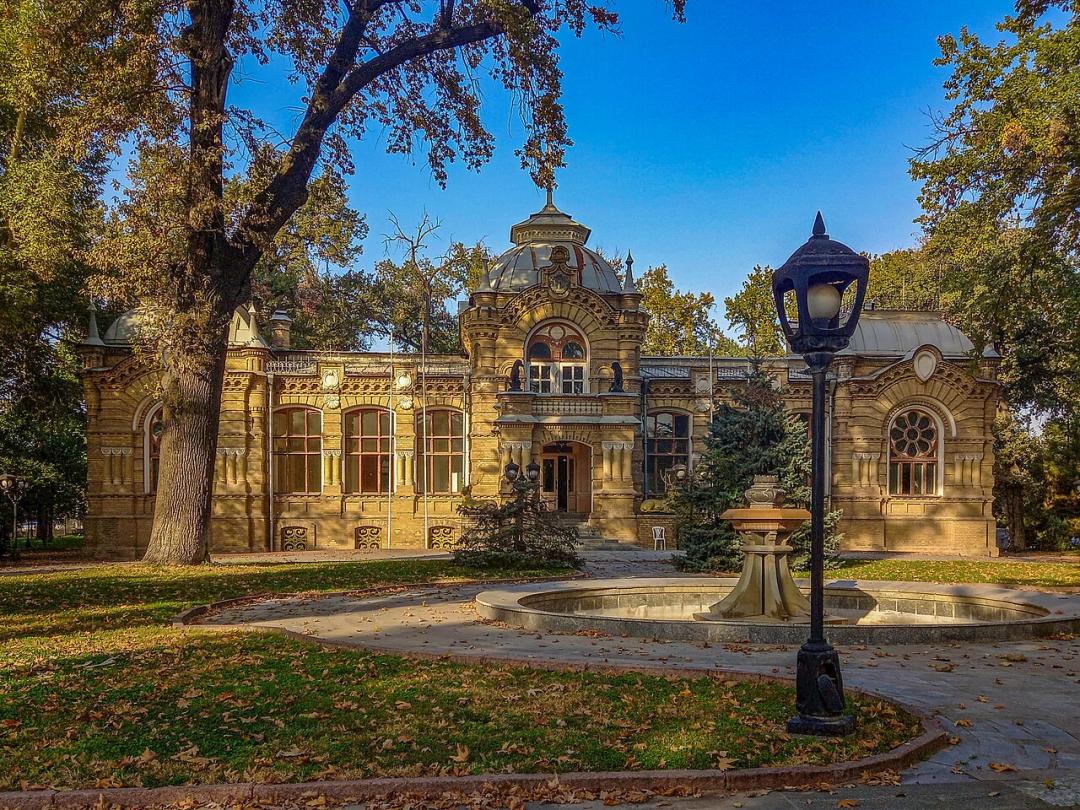
Tashkent Residence of Romanov: The Story of a Scandal in the Imperial Family and the Palace of Grand Duke Nikolai Konstantinovich

877C+P63, Sharof Rashidov Shoh Street, Tashkent, Tashkent, Uzbekistan

One of the most captivating places in Tashkent, shrouded in an aura of mystery. Palace chambers, cast-iron spiral staircases, vibrant wall colors, exquisite stained glass, delicate wrought-iron grilles, tall spires of decorative towers – it seems that this gem of 19th-century architecture was hosting lavish balls not long ago. Despite the restricted access to the territory, which is assigned to the Ministry of Foreign Affairs for receptions, it is worth taking some time to walk around it and examine the architecture unusual for Asia. This place breathes history, and that history is astonishing and unique.

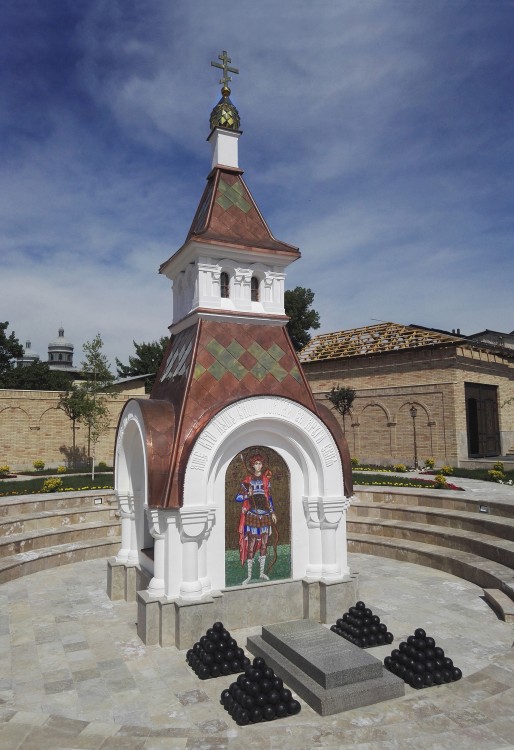
Chapel of Saint George the Victorious in Tashkent
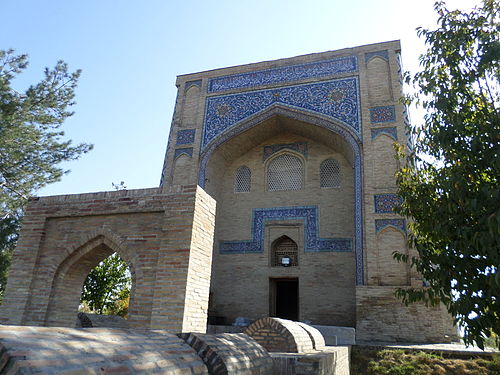
Kkamolon 138, Tashkent, Tashkent, Uzbekistan

A monument of pre-revolutionary Russian architecture in Tashkent, a chapel over the mass grave of soldiers who died during the conquest of Tashkent by the Russian Empire.

Mausoleum of Kaffal Shashi

86QQ+76M, Almazar, Tashkent, Uzbekistan

Abu Bakr Muhammad ibn Ali ibn Ismail Al-Kaffal Al-Kabir ash-Shashi lived on the planet more than a thousand years ago. But there is no person in modern Tashkent who does not know the respectful title "Hazrati Imam" (Holy Imam), by which the townspeople named him back in the 10th century. Over the ten centuries that have passed, in the syllable-swallowing Tashkent dialect, "Hazrati Imam" came to sound like "Hast-Imam" and even "Hastimom."

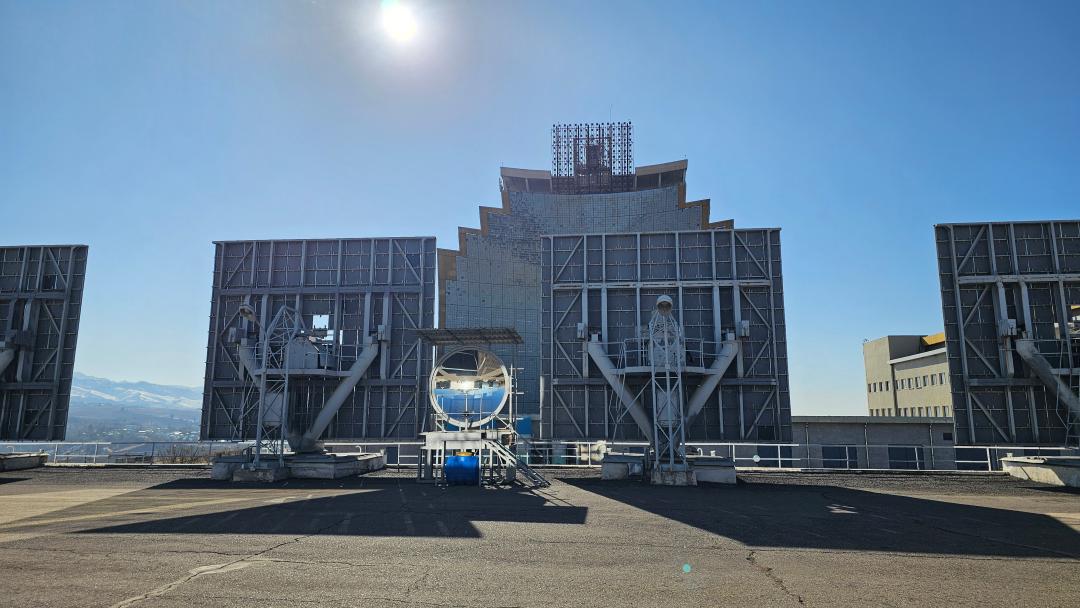
Institute of the Sun: History and Modernity

8P7R+R9V, Changikhisarak, Tashkent Region, Uzbekistan

"What has been done in Parkent amazes even the most sophisticated imagination. Architect Viktor Zakharov and his colleagues managed to design a complex that, in the unity and integrity of form and content, can be considered unsurpassed. A verbal portrait, no matter how detailed, cannot replace the immense impression from the sight of the grandiose structures of the complex with fantastic shapes, erected on the ancient land of Uzbekistan," — thus described the impressions of the heliocomplex "Sun" by cosmonaut Vladimir Dzhanibekov in the magazine *Architecture of the USSR*. This unique structure, built in the mountains near Tashkent, became one of the last grand construction projects of the Soviet era.

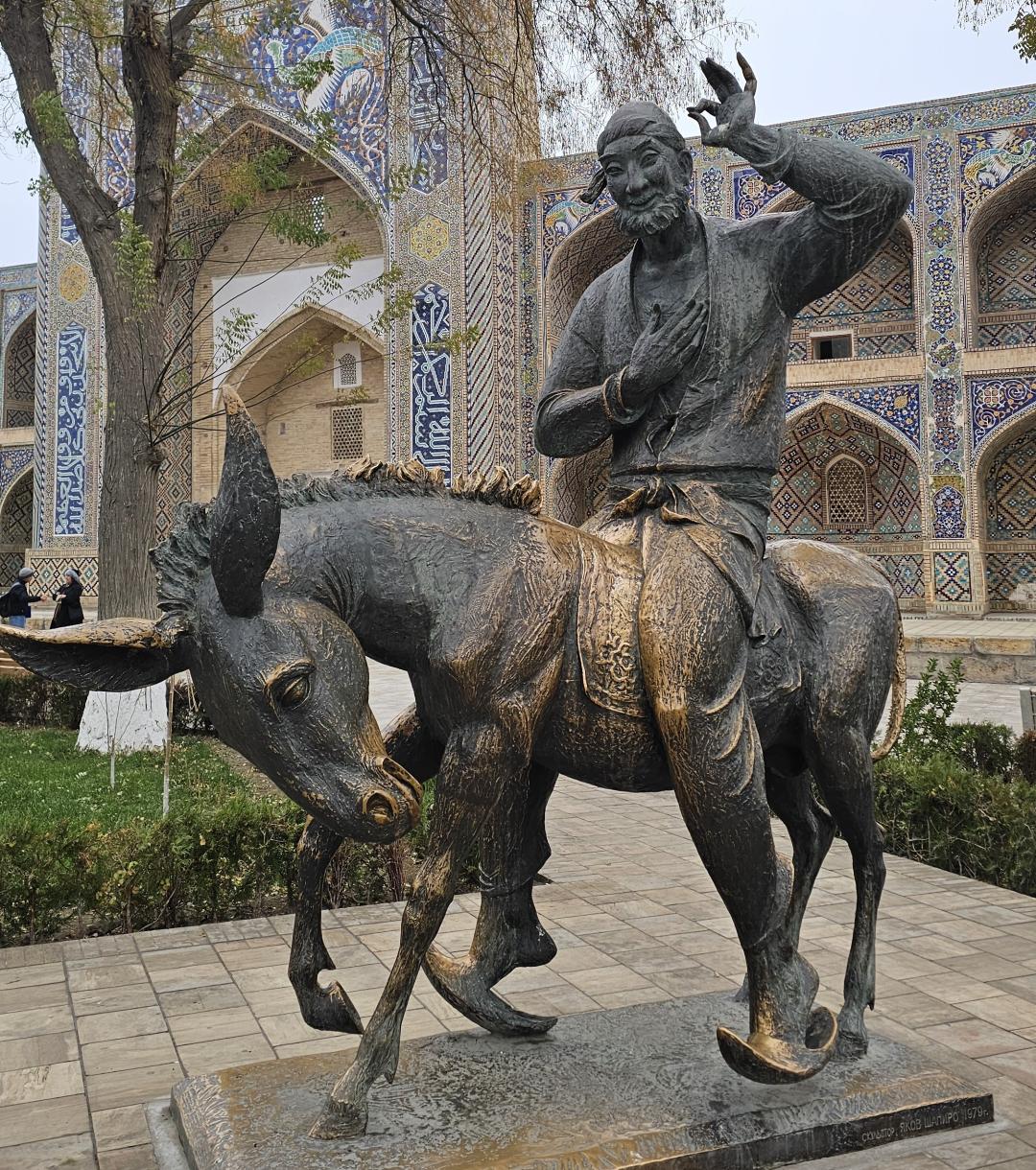
Памятник Ходже Насреддину у Ляби хауса

QCFC+5FM, Бухара, Узбекистан

Ходжа Насреддин поднял руку, призывая к тишине и вниманию. — Вы собрались оплакивать меня, о жители Благородной Бухары! Да разве не знаете вы, что я — бессмертен! Я Ходжа Насреддин, сам себе господин, И скажу — не совру — никогда не умру! Нищий, босый и голый, я — бродяга весёлый. Буду жить, буду петь и на солнце глядеть, Сын народа любимый и судьбою хранимый, Я смеюсь над султаном, над эмиром и ханом!

Monument to Khoja Nasreddin near Lyabi House

QCFC+5FM, Bukhara, Uzbekistan

Khoja Nasreddin raised his hand, calling for silence and attention. — You have gathered to mourn me, oh people of Noble Bukhara! Do you not know that I am immortal! I am Khoja Nasreddin, master of myself, And I say — not lying — I will never die! A beggar, barefoot and naked, I am a cheerful wanderer. I will live, I will sing, and look at the sun, Beloved son of the people and protected by fate, I laugh at the sultan, at the emir, and the khan!