
The conquest of Tashkent became a turning point in the Russian-Kokand war (1850-1868), marking the beginning of the Russian Empire's expansion into Central Asia. The first attempt to storm the city, which was then part of the Kokand Khanate, was made by a relatively small detachment under the command of General Chernyayev on October 1, 1864. The defenders of Tashkent, numbering about 15,000 people, successfully repelled the attack. Chernyayev's forces, consisting of about 1,500 soldiers and 12 cannons, were forced to retreat.
Before launching the second assault, Chernyayev needed to capture the Niyazbek fortress, which controlled the city's water supply. This strategic move allowed the Russian army to besiege Tashkent, weakening its defenses. On May 9, 1865, the ruler of the Kokand Khanate, Mulla Alimkul, was mortally wounded in a clash with the Russian army. His death led to the dispersal of the external defenders of Tashkent, but the city refused to surrender.
The second attempt by Chernyayev to capture Tashkent began on June 15, 1865. This time he used a cunning tactic, bypassing the city from the southwest and entering the Kamolon gates under the cover of night. The ensuing street fighting lasted almost three days, and thousands of defenders swore to die for their faith and city. Chernyayev was forced to set fire to the houses near the Kamolon gates to protect his troops.
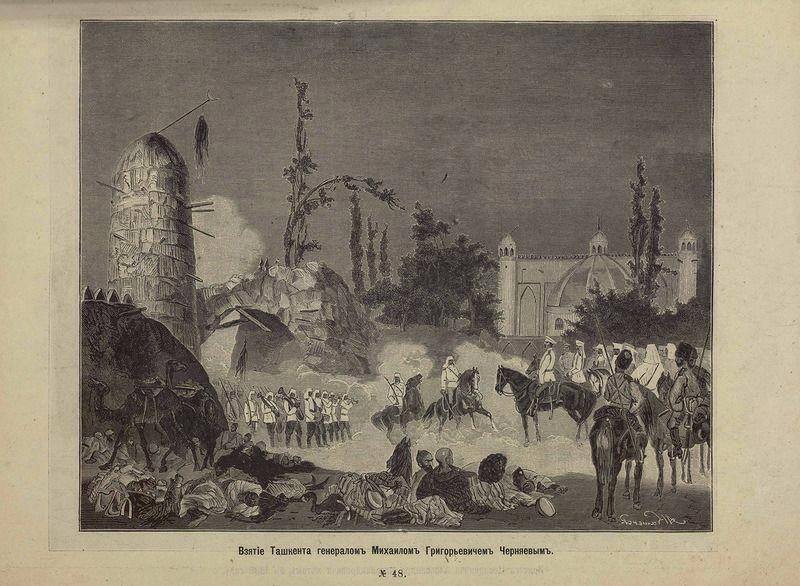
Two days later, the city was completely under Russian control. On June 30 (June 18 old style), 1865, representatives of the Tashkent nobility handed Chernyayev 12 golden keys to the gates of Tashkent. This marked a logical conclusion to the war and the beginning of a new stage of interaction between the peoples of Central Asia and Russia.
A year after the conquest, on August 17, 1866, the Orenburg Governor-General Kryzhanovsky visited Tashkent and accepted the city's request to join the Russian Empire. The residents of Tashkent were granted Russian citizenship, marking the beginning of a new era in the city's history.
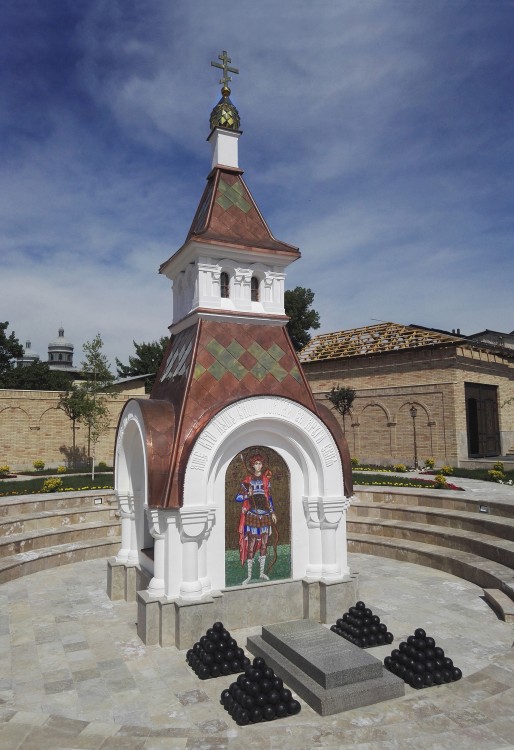
The chapel was built in 1886 over the mass grave of 24 Russian rank-and-file soldiers who died during the storming of Tashkent in a residential mahalla near the Kamolon gates of Tashkent (no longer preserved). To the original 24 buried under this chapel, all those who died in other places during the capture of Tashkent were brought. By the time the chapel was erected, the number had reached 65. Historian Evarnitsky copied all the surnames from the marble plaque into his guidebook. Hence the discrepancy in the number of buried: some sources say 24 (those who died near the Kamolon gates), others more.
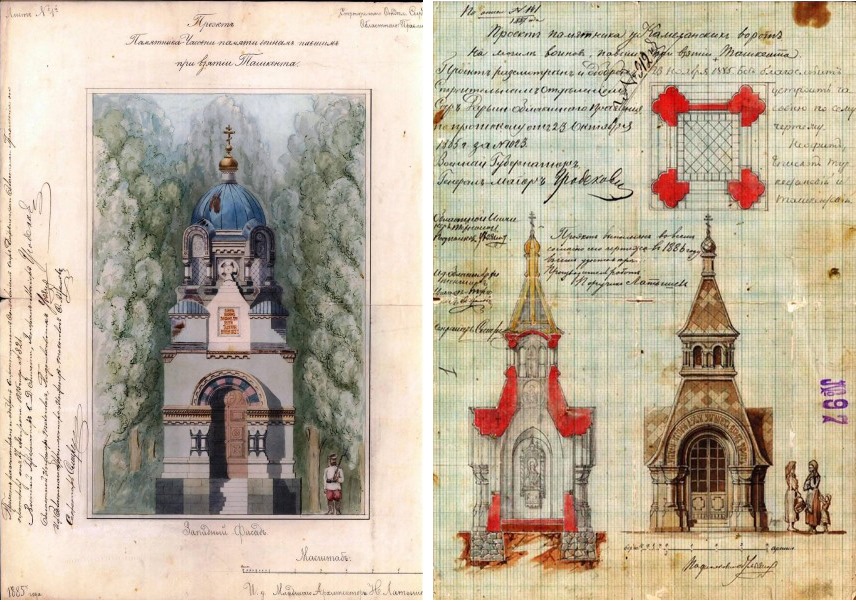
The project was designed by the well-known engineer of the time, Nikolai Fedorovich Ulyanov.
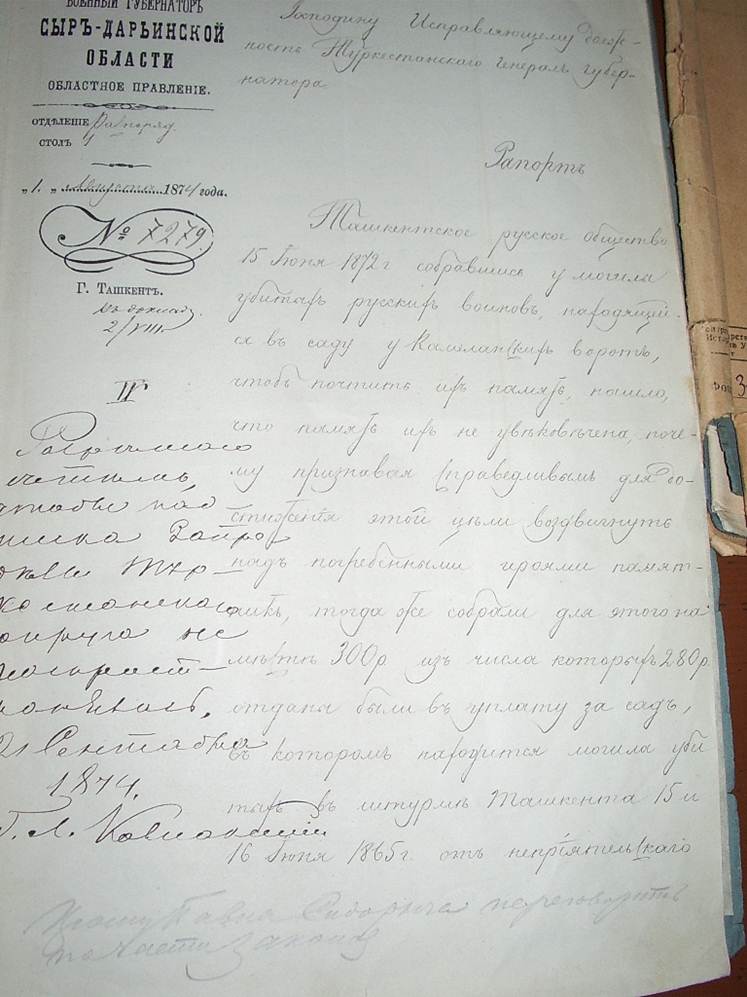
The funds for construction were collected by the townspeople themselves.
The chapel was consecrated in honor of Saint George the Victorious. The burial site was chosen deliberately, as near the chapel there is the Kamolon Muslim cemetery, where hundreds of Tashkent defenders are buried. Despite the complicated history between conquerors and the conquered, the local residents have always treated the chapel and its significance with deep respect.
Evgeny Markov in his book "Russia in Central Asia" describes it as follows: “There is a deep tragedy in this fraternal neighborhood of enemy graves. Former rivals seem to have remained in their places where they stubbornly fought each other, if not on the earth, then at least in its depths, neither side yielding an inch. But Mother Nature — all-good as its creator — covered the dust of all her rebellious sons with the same mantle of love, not distinguishing their clothes or language, and on her peaceful bosom made them brothers again, created from the same dust and returned to the same dust.
And over the slain Muslims, as over our Orthodox soldiers, the young green grass also waves, and spring flowers look out from it with their cheerful multicolored eyes, and the fruitful sun shines in majestic grandeur, flooding the abyss of the sky with fiery streams of radiance. Here too lie honest hearts and heroic souls. And to them, just as to their victors, the word of the Teacher of truth is addressed, in whose eyes there were no Greeks or Jews: ‘Greater love hath no man than this, that a man lay down his life for his friends.’”
In 1865, a tombstone with the inscription "For their friends" was placed over the mass grave, and a monument was erected: four pyramids made of mortar shells. In 1886, a chapel was built, which according to Orthodox custom was decorated with Slavic inscriptions from the Old and New Testaments. In the middle of the chapel was a prism: on one side of the prism was an icon, on the other — inscriptions from the Testament, and on the third — the names of the fallen soldiers.
Near the chapel was a small park with a church entrance, crosses, and a beautiful cast-iron fence. Disabled war veterans who were paid a salary took care of the monument. Every year, on June 15, the Day of the Capture of Tashkent, a procession with banners and church chants was held along the central streets of pre-revolutionary Tashkent.
The complex existed until the October Revolution of 1917, after which it was looted and destroyed by the Bolsheviks. In 1949, the plot of land where the monument was located was given to an Uzbek family, who built a house nearby. Thanks to their efforts, the chapel “survived” to this day.
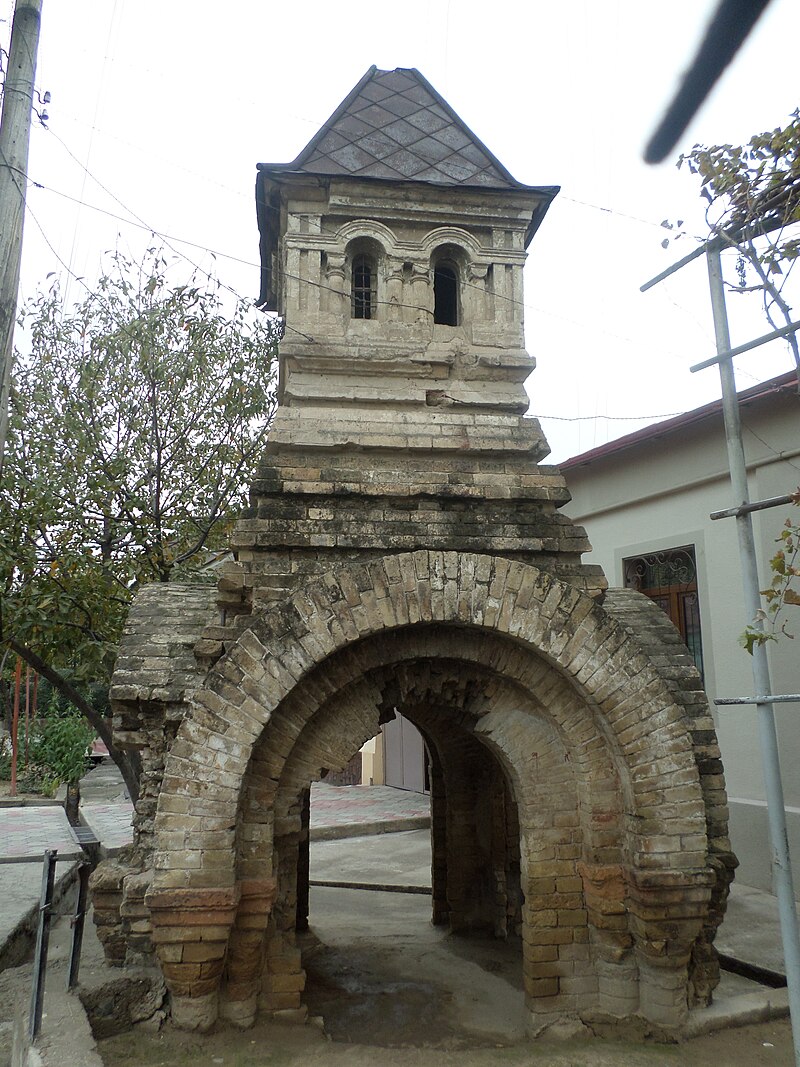
There is a story about how an excavator that came into the mahalla intended to demolish this strange half-ruined brick building. But the old man, the owner of the house, seeing this, ran out into the street and did not allow it...
By Easter 2020, the chapel was fully restored according to the original project by engineer Ulyanov. Limestone brought from Bukhara was used for finishing, and the cross was made of brass. A mosaic of Saint George is laid out on one of the facades.
Sources:
https://mytashkent.uz/2015/03/08/chasovnya-v-mahalle-kamalon/
https://ru.wikipedia.org/wiki/Часовня_Святого_Георгия_Победоносца_(Ташкент)
https://eurasia.travel/ru/uzbekistan/tashkent/nevsky-chapel/st-georges-chapel/