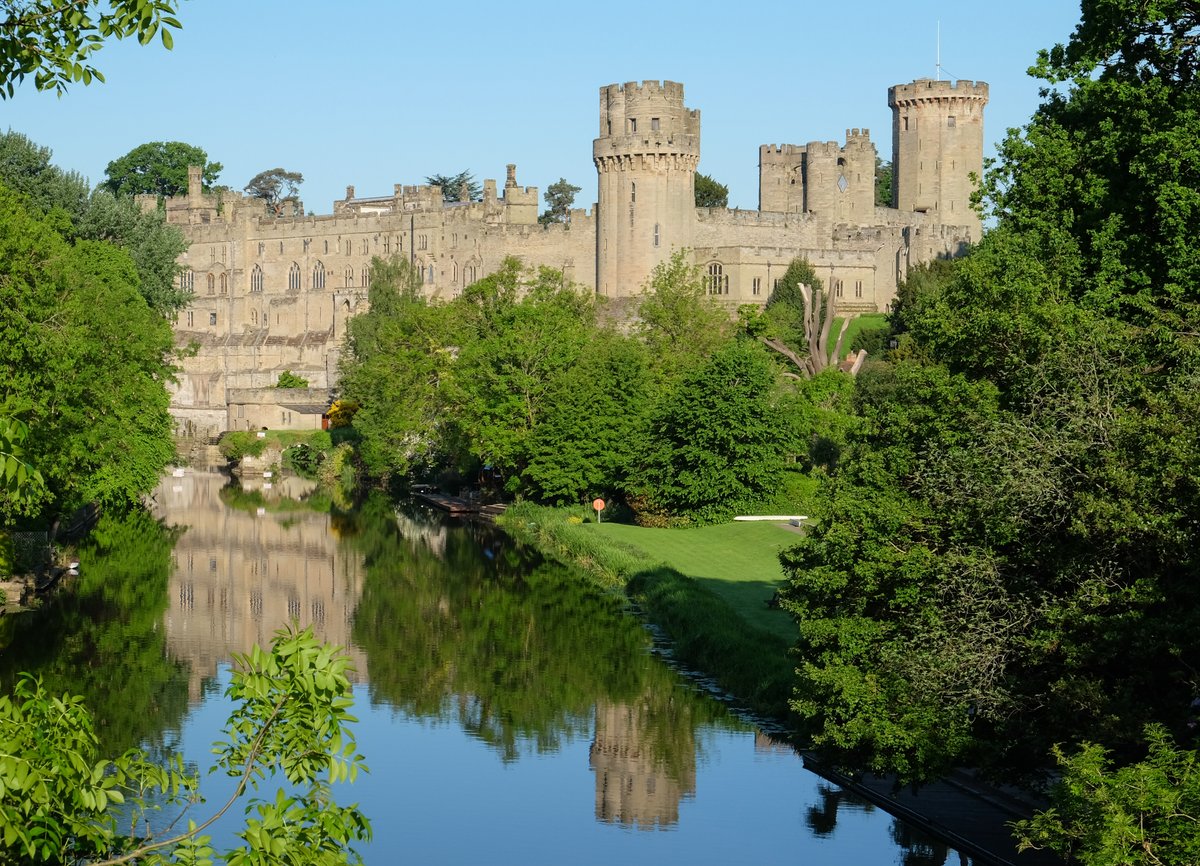

Warwick Castle sits on a sandstone bluff where the River Avon has spent centuries carving out a natural cliff. William the Conqueror started the work in 1068, knocking down four houses belonging to the Abbot of Coventry to make room for a wooden motte-and-bailey. The castle's position was strategically important in safeguarding the Midlands against rebellion.
By the 12th century, the wood gave way to stone. Henry de Beaumont, the first Earl of Warwick, founded the Church of All Saints inside the walls by 1119. However, the Bishop of Worcester believed that a castle was an inappropriate location for a church and had the building removed between 1127 and 1128.
In 1153, the castle was surrendered only after Gundreda de Warenne was tricked into believing her husband, Roger de Beaumont, 2nd Earl of Warwick, was already dead. According to a 12th-century text, he actually died upon hearing the news that his wife had handed over the castle.
Today, you can see the 14th-century military architecture that makes the place so recognisable. It transitioned from a war machine to a country house in 1604 before becoming a major tourist destination. The school just across the river is arguably the oldest boys' school in the country, and you can still see it from the towers.
Sources: Wikipedia, OpenStreetMap, Wikidata, Wikimedia Commons
Written by Nicolo Ciampini
Discuss this with the author and others
No comments yet. Be the first to start the conversation.