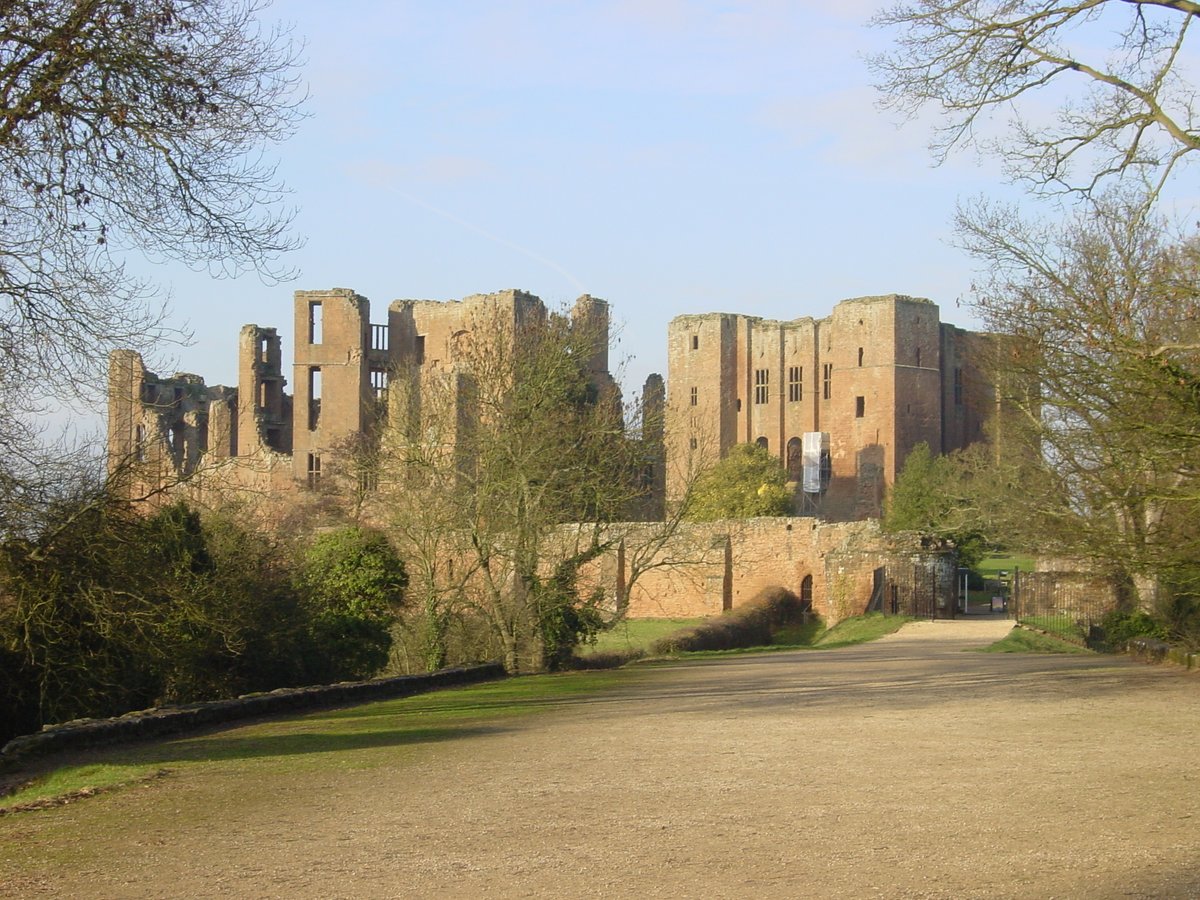

Kenilworth Castle in Warwickshire is a masterpiece of water-based defense, described as one of two major water-castles in Britain. To create its fortifications, builders dammed local streams to produce a system of pools, including the Lower Pool and the Great Mere. A 152-metre-long narrow walled-causeway, known as the Tiltyard, was constructed to act as both a dam and part of the barbican defences, leading from the Brays to the main castle.
The site played an important historical role, serving as the scene for the six-month-long siege of 1266 - thought to be the longest siege in medieval English history. It was later the scene of the removal of Edward II from the English throne and the base for Lancastrian operations in the Wars of the Roses. In 1575, the Earl of Leicester hosted a lavish reception for Elizabeth I, having expanded the castle into a fashionable Renaissance palace.
Although now ruined due to slighting by Parliamentary forces in 1649, the castle illustrates five centuries of English architecture built from local New Red Sandstone. The inner court exploits a natural knoll to house a great tower with walls five metres thick and towers thirty metres high. The northern part of the inner bailey was built by John of Gaunt between 1372 and 1380, creating a semi-royal palace significant for its scale, form, and quality of workmanship.
Sources: Wikipedia, OpenStreetMap, Wikidata, Wikimedia Commons
Written by Nicolo Ciampini
Discuss this with the author and others
No comments yet. Be the first to start the conversation.