

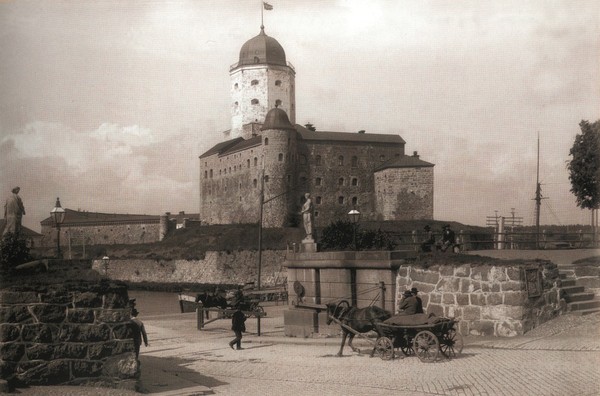
The Vyborg Castle is the only castle in Russia built in the best Western European military traditions of the Middle Ages. The castle, also known as the Holy Fortress, is a grand structure under whose walls an entire city grew. Throughout its centuries-long history, it repeatedly passed from one warring side to another, often finding itself at the epicenter of events. Swedish chronicles testify that Vyborg Castle was founded in 1293 at the place where the Vuoksi River flows into the Vyborg Bay. This was the time of the Third Crusade, when the Swedes managed to take part of the Karelian lands from the Lord of Great Novgorod. The castle was founded by Torgils Knutsson, who at that time was effectively the ruler of Sweden. The Vyborg fortress is first mentioned in 1295: in a letter from King Birger to the city council (rat) of Lübeck, it is said that the castle was built "in the name of the Almighty and the Most Holy Virgin."
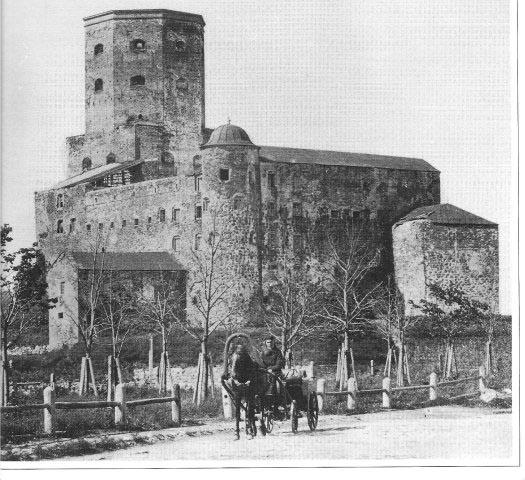
The fortress was originally built in the best traditions of medieval defensive architecture. On Castle Island, along the perimeter of its highest part, a stone wall with battlements appeared. The foundation of the building consisted of fragments of huge boulders. The main material of the walls is granite; only the top of the St. Olaf Tower is made of brick. The first and main building in the fortress was named the St. Olaf Tower in memory of the Norwegian king who established Christianity in Scandinavia.
The Shoemaker’s Tower was built on the northeast side of the island to protect the bridge. It was an irregular quadrilateral structure. Today, it is buried under a mound by about six meters, created later — in the 17th-18th centuries.
On the southeast side, to protect the castle from the city side, is the Paradise Tower. It adjoins the Main Building at the junction of the eastern and southern wings. Many centuries ago, in the rich chambers near the Paradise Tower, Karl Knutsson held lavish celebrations and balls. The new governor, Erik Axelsson Tott, sought to protect not only the Castle but also the city that appeared on the peninsula — he built a stone wall with 10 towers.
Since the main threat came from the sea, a kind of "dam" was arranged in the strait: piles were driven into the bottom, "and around Castle Island stone quays were built, to which floating logs or barriers were fastened with iron chains to prevent the enemy from landing." For the same purpose, "three stone boxes each 8 Swedish fathoms deep" were lowered into the strait between the castle and the city.
A new phase of work began after the Swedish king visited the castle in 1556. At that time, due to tense relations with Russia, King Gustav Vasa of Sweden, together with his son Johan, went to Finland in 1555. Visiting Vyborg, he found that "no one cares about construction in the castle. Therefore, most houses and rooms stand without roofs, all in such decay that it is impossible to ensure the defense of the castle." (A. Hakman). At the king’s initiative and by his orders, reconstruction of old and construction of new fortifications began in the castle, continuing under his sons, Swedish kings Eric XIV and Johan III. The main tower was extended to 7 floors — this appearance it has retained to this day. At the end of the 16th and beginning of the 17th century, several ponds appeared on the island, one of which even had a fountain. In 1608, the Fire Tower and the gatehouse at the entrance to Castle Island were combined, extended, and turned into a residential house for the governor and his family. In 1634, due to administrative reform in Sweden, the house became the governor’s residence. Also, until the end of the 18th century, the provincial chancellery was located in the lower courtyard of the castle. In 1617, when by the Treaty of Stolbovo the entire coast of the Gulf of Finland remained with Sweden, Vyborg ceased to be a border fortress for many years, and the castle lost its military purpose; "its buildings began to deteriorate, no measures were taken to strengthen them. In letters from governors ... to the state chancellor, complaints about the poor condition of the castle and city ramparts are repeated," with reports of wall and rampart collapses. From time to time, only minor selective repairs were carried out in the castle. For example, the St. Olaf Tower and several other buildings and rooms were whitewashed (1620), roofs on the tower and the castle church were repaired (1641). Some rooms were converted into warehouses: the "old scribe’s hut" was turned into a grain warehouse (1641), and the church building in the lower courtyard (1668), the queen’s hall was "turned into an ordinary government warehouse," and the "former flour storage" — into a powder magazine (1678). At the end of the 17th century, warehouse buildings (zeughouses) were added inside the castle’s outer defensive wall. During his travels, King Gustav II Adolf of Sweden visited Vyborg Castle three times.
The Commandant’s House (Governor’s House) was built in 1606–1608 at the entrance to the fortress. Previously, there was a gate combat tower with a drawbridge at this site. Now the new building became part of the fortress wall. The Governor’s House was very much liked by Peter I. During his visits, he stayed here. Contemporaries even called the building the Tsar’s House. A new period in the Castle’s life began after Peter I’s victory, who stormed and captured the city in 1710. In the 18th century, the Horn Fortress and the Annen Fortifications were built, while the military significance of the castle rapidly diminished.
At the end of the 19th century, the main building of the castle and the St. Olaf Tower underwent significant reconstruction. The cause was a devastating fire on August 26 (September 7), 1856. On that ill-fated day, during a fireworks display for the opening of the Saimaa Canal, the tower dome caught fire. The entire tower burned out from the inside, and the fire spread to the main building: beams burned, ceilings and walls collapsed. For 35 years, the main building was abandoned, and what the fire did not destroy was ruined by time. Restoration and reconstruction of the castle were carried out in 1891–94 by the Russian Military Engineering Department under the leadership of engineer-colonel Lezedov. The external outlines of the castle changed little, but the internal layout of its rooms was altered: pointed and semicircular vaults were replaced by beam ceilings, new window openings appeared, but without medieval stone benches in the niches, different floor levels and walls without fireplaces and hearths. A granite porch was built at the tower entrance, and inside the tower — a metal staircase to the observation deck. The castle has survived to this day in this form. Now one can only speak of the preserved external appearance of the building. As for the internal walls and rooms, they mostly have the appearance they received during the restoration work. The inter-floor ceilings in the tower were not restored.
The last irreparable loss of the old castle is the fragments of medieval buildings in the Blacksmith’s Yard and the 14th-century wall that framed this yard. Almost everything was destroyed by mass events held in the early 2000s.
Sources:



Written by Jermaine
Discuss this with the author and others
No comments yet. Be the first to start the conversation.