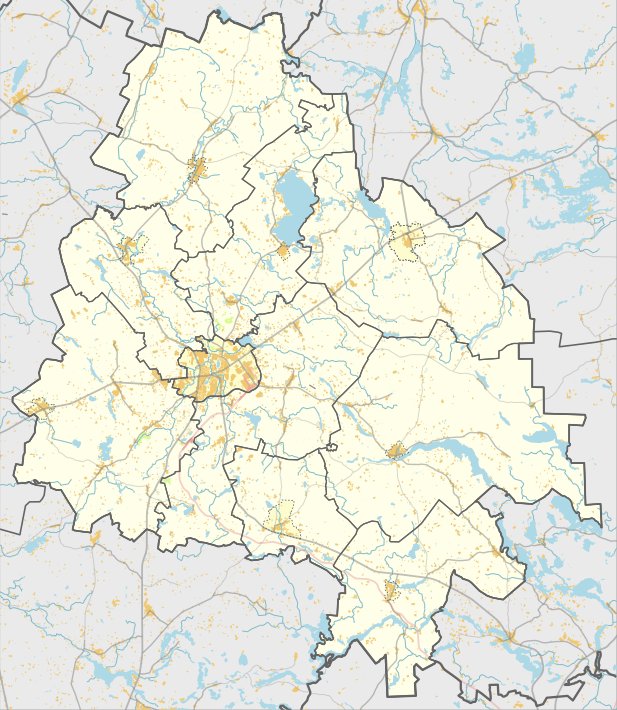

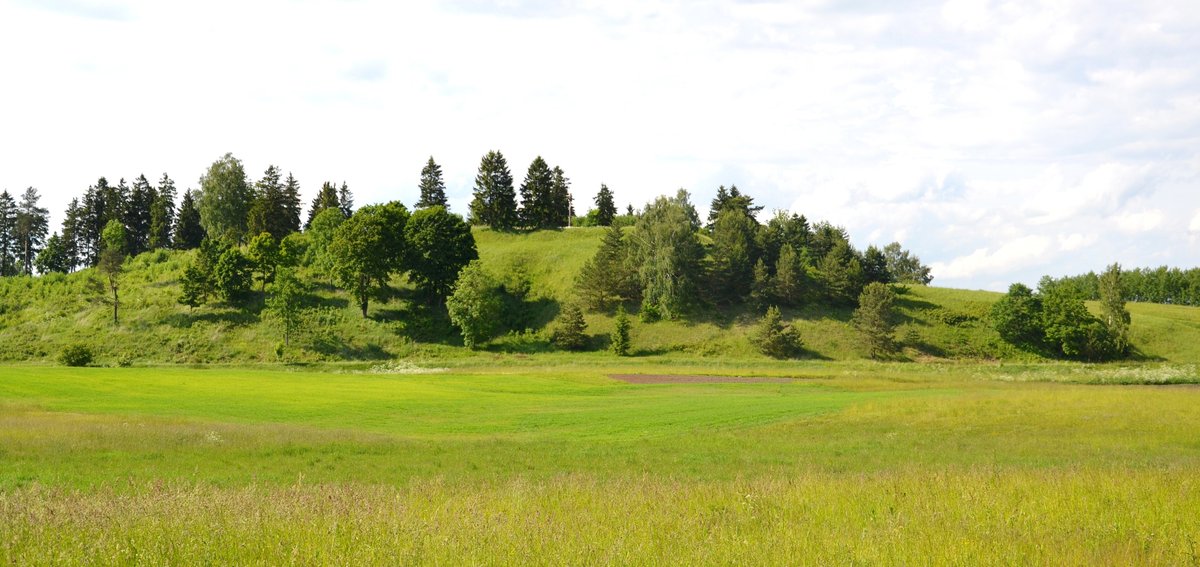
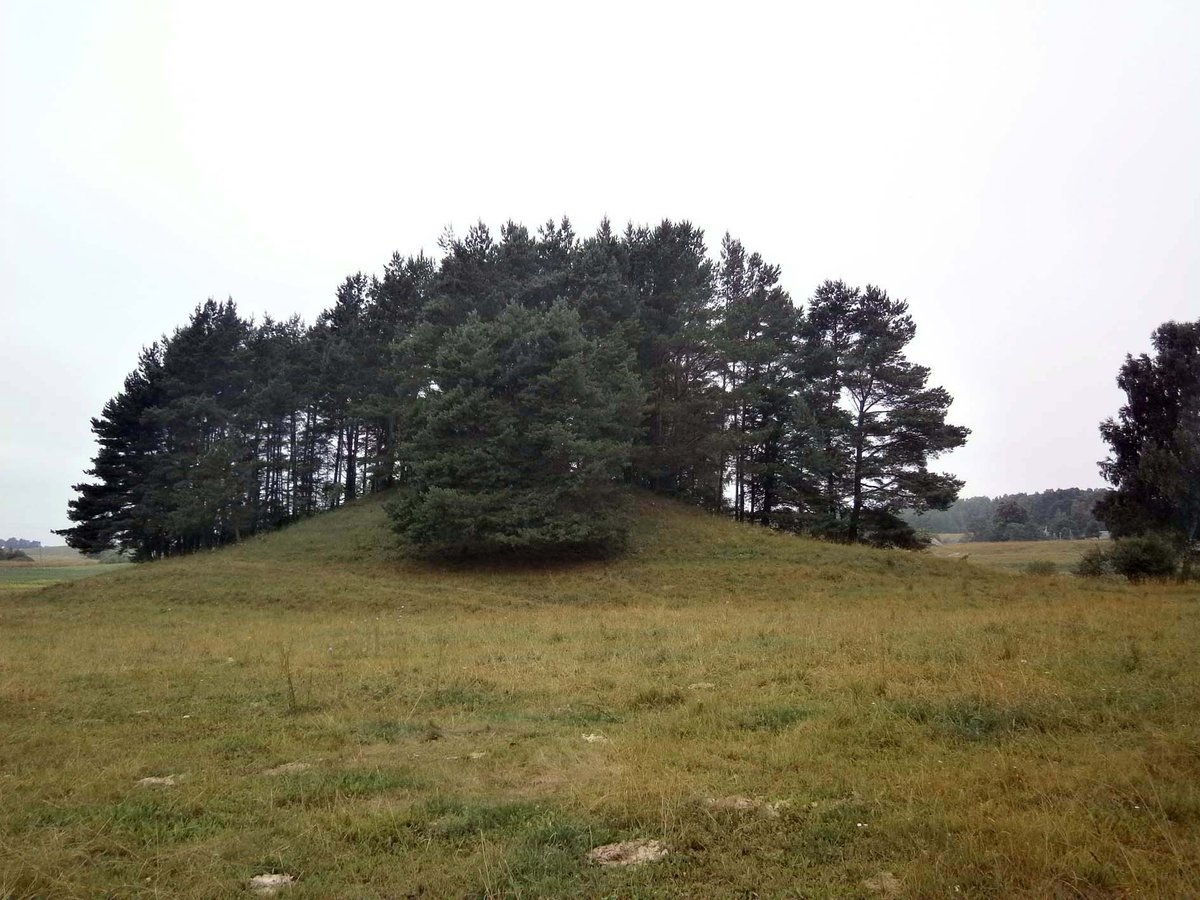
In the village of Vitkūnų, Leliūnų eldership, lies Vitkūnų hill fort - a registered archaeological site. This site features a settlement on a 6-hectare area and a hill fort with a rectangular clearing measuring 17x15 metres. The settlement's cultural layers are intense. The hill fort is located in the western, highest part of a long hill, with its clearing spanning from the southwest to the northeast.
The northern, northwestern, and southwestern sides of the clearing were fortified with three ramparts and trenches, mostly arranged in the slopes. On the northeastern edge, a rampart 1.3 metres high and 8 metres wide features an outer slope of 4 metres high, descending into a 3.5 metres wide, 0.5 metres deep trench. Behind this lies a second rampart measuring 1.5 metres high and 6 metres wide, with an excavated trench 2.5 metres wide and 0.3 metres deep. A third rampart, 1.3 metres high and 4 metres wide, is protected by an outer slope 2.6 metres high.
On the southwestern edge, a rampart 2 metres high and 12 metres wide features a 5-metre high outer slope leading into a 3 metres wide, 0.2 metres deep trench, followed by a second rampart 0.5 metres high and 4.5 metres wide with a 3-metre high outer slope. The northwestern side has a rampart 0.2 metres high and 3 metres wide. The northern, northeastern, and southwestern slopes feature trenches and ramparts joined by terraces 4-6 metres wide. The slopes are stable and reach heights of 17-18 metres.
Sources: Wikipedia, OpenStreetMap, Wikidata, Wikimedia Commons
Written by Nicolo Ciampini
Discuss this with the author and others
No comments yet. Be the first to start the conversation.