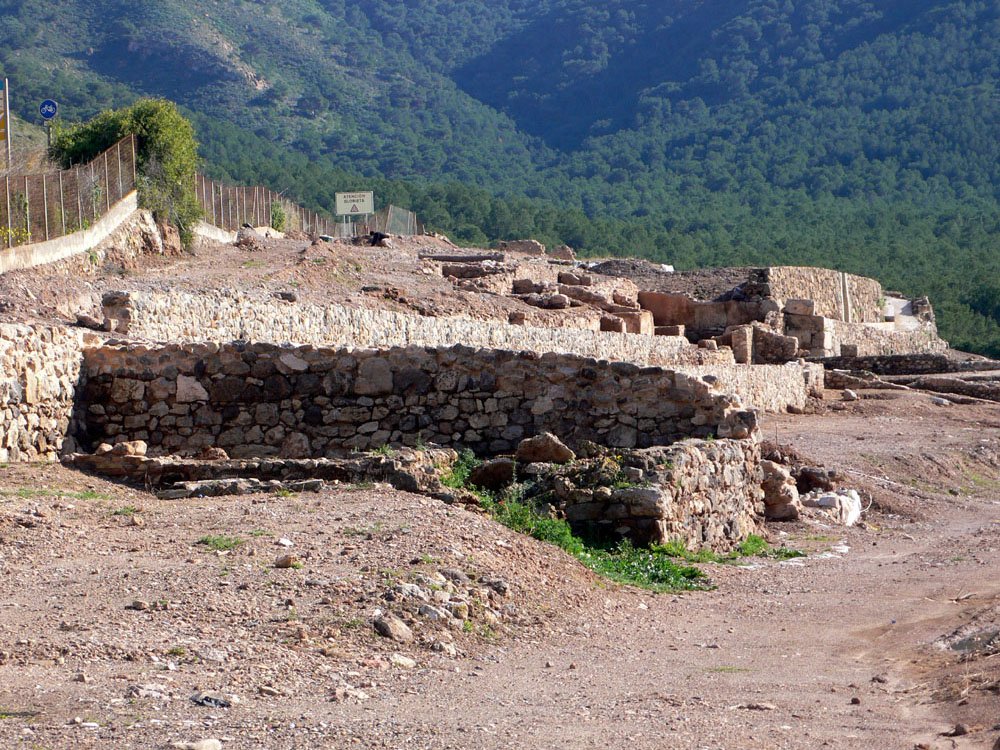

The Villa Romana del Paturro is an archaeological site situated in the Sierra Minera de Cartagena-La Union, near the village of Portman, in the Region of Murcia, Spain. The villa was unearthed in 1969 and has been the focus of numerous archaeological research projects. The site consists of two distinct areas: one showcasing luxurious housing quarters and the other dedicated to industrial activities.
The villa reveals two periods of occupation. The first, dating to the Republican era, is linked to the extraction of silver, lead, and other minerals from the mines of Carthago Nova. The second period, between the 1st and 2nd centuries AD, is associated with the production of garum (fish sauces) and other industrial activities. By the 3rd century AD, the occupancy of the villa had diminished. Remains of painted plaster, coverings, and architectural elements made from various types of marbles have also been unearthed.
The spectacular polychrome mosaic, along with some other relics from the excavations, are housed in the Archaeological Museum of La Union, located in the town of Portmán, while the remaining artifacts are distributed between the archaeological museums of Cartagena and Murcia.
Sources: Wikipedia, OpenStreetMap, Wikidata, Wikimedia Commons
Written by Nicolo Ciampini
Discuss this with the author and others
No comments yet. Be the first to start the conversation.