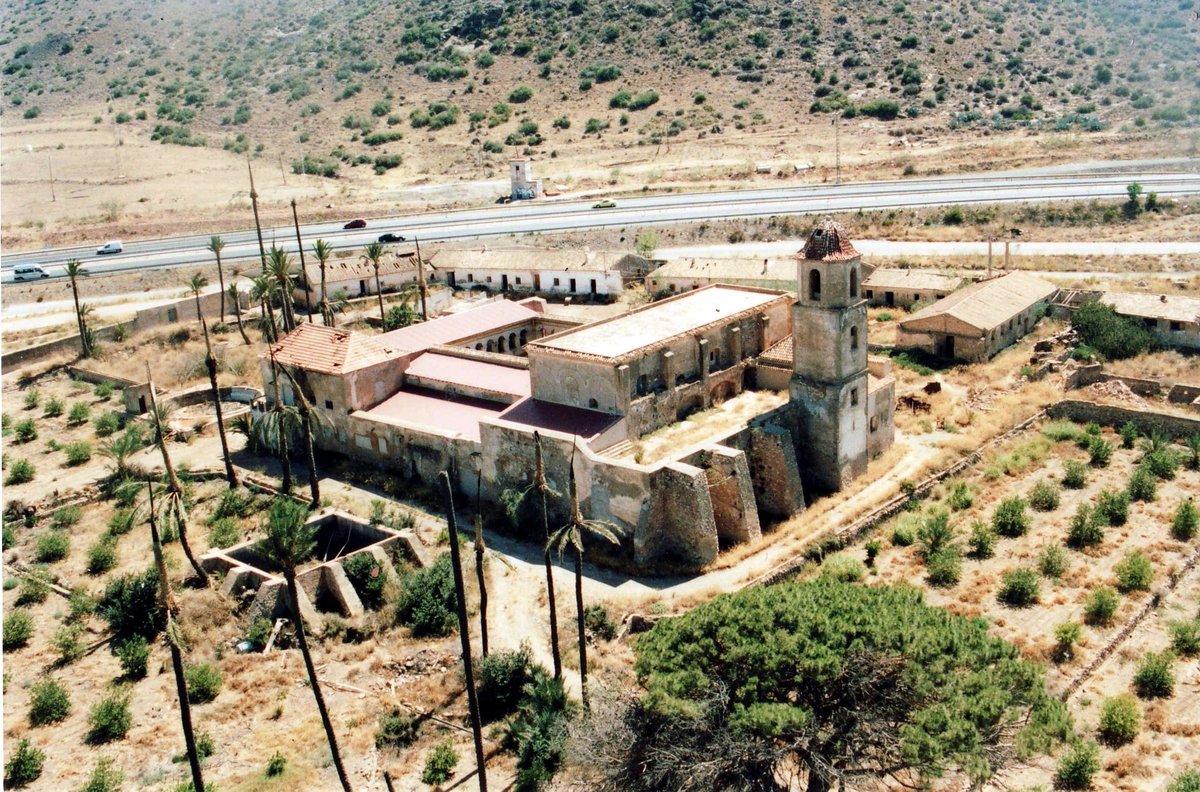

The Monastery of San Ginés de la Jara is a significant historical monument located on a hilltop near Cartagena, close to the Mar Menor lagoon in Spain. Originally dating back to the 3rd to 8th centuries, it was the Franciscan Order, under the patronage of the Marquess of the Vélez, who rebuilt the current structure in the 16th century. The monastery's architecture seamlessly blends Renaissance and Baroque styles, featuring a Renaissance façade adorned with the coats of arms of the Franciscans and the Vélez.
The church has a single nave and six lateral chapels. The monastery complex also includes a claustro, a tower, several ermitas, and various annex buildings. The monastery's lush gardens and orchards were famously celebrated by the writer Francisco Cascales. The monastery was built to honor San Ginés de la Jara, a Frenchman who after a shipwreck swam ashore at Cabo de Palos, becoming the patron saint of sailors, vintners, agricultural laborers, and invoked against hernias and storms. In 1541, Pope Paul III canonized San Ginés de la Jara, cementing the monastery's religious importance.
Sources: Wikipedia, OpenStreetMap, Wikidata, Wikimedia Commons
Written by Nicolo Ciampini
Discuss this with the author and others
No comments yet. Be the first to start the conversation.