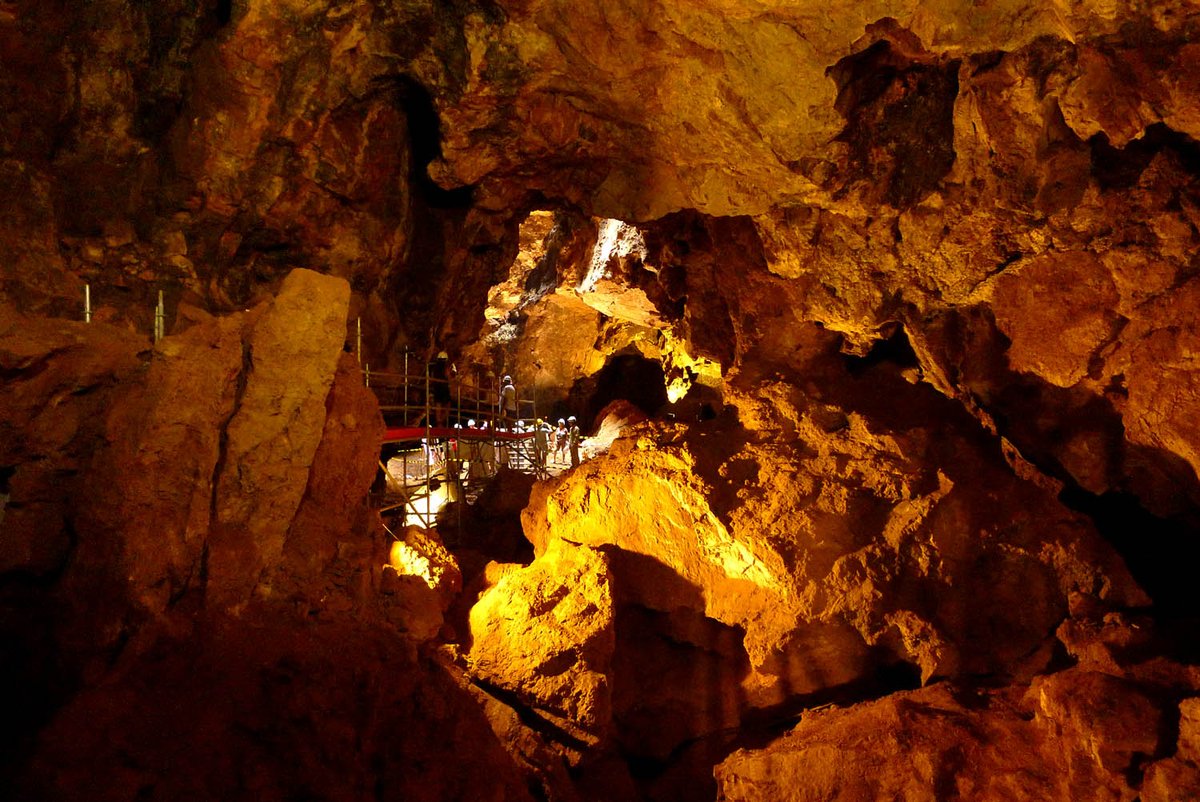

Cueva Victoria is a paleontological site located in Cartagena, Spain. It is a karstic site that during the Pleistocene inferior functioned as a hyena den (Gibert et al, 1992). Josep Gibert i Clols excavated Cueva Victoria. Fossils of abundant fauna, including Hippopotamus antiquus, Canis etruscus, Mammuthus meridionalis, Equus granatensis, Stephanorhinus etruscus, Homotherium crenatidens, Megantereon, Pachycrocuta brevirostris, and Theropithecus oswaldi, an african cercopitécido, have been found at Cueva Victoria.
Cueva Victoria is declared as 'Lugar de interés geológico español de relevancia internacional' (Geosite) by the Instituto Geológico y Minero de España. The fossil remains most significant from Cueva Victoria are small ones identified as human remains by professor Gibert and dated to 1,200,000 years. If confirmed to be human, the human remains from Cueva Victoria and Venta Micena (Granada, Spain), potential painted as 'H. erectus', would be the first humans to pass the Strait of Gibraltar and colonize Europe.
Sources: Wikipedia, OpenStreetMap, Wikidata, Wikimedia Commons
Written by Nicolo Ciampini
Discuss this with the author and others
No comments yet. Be the first to start the conversation.