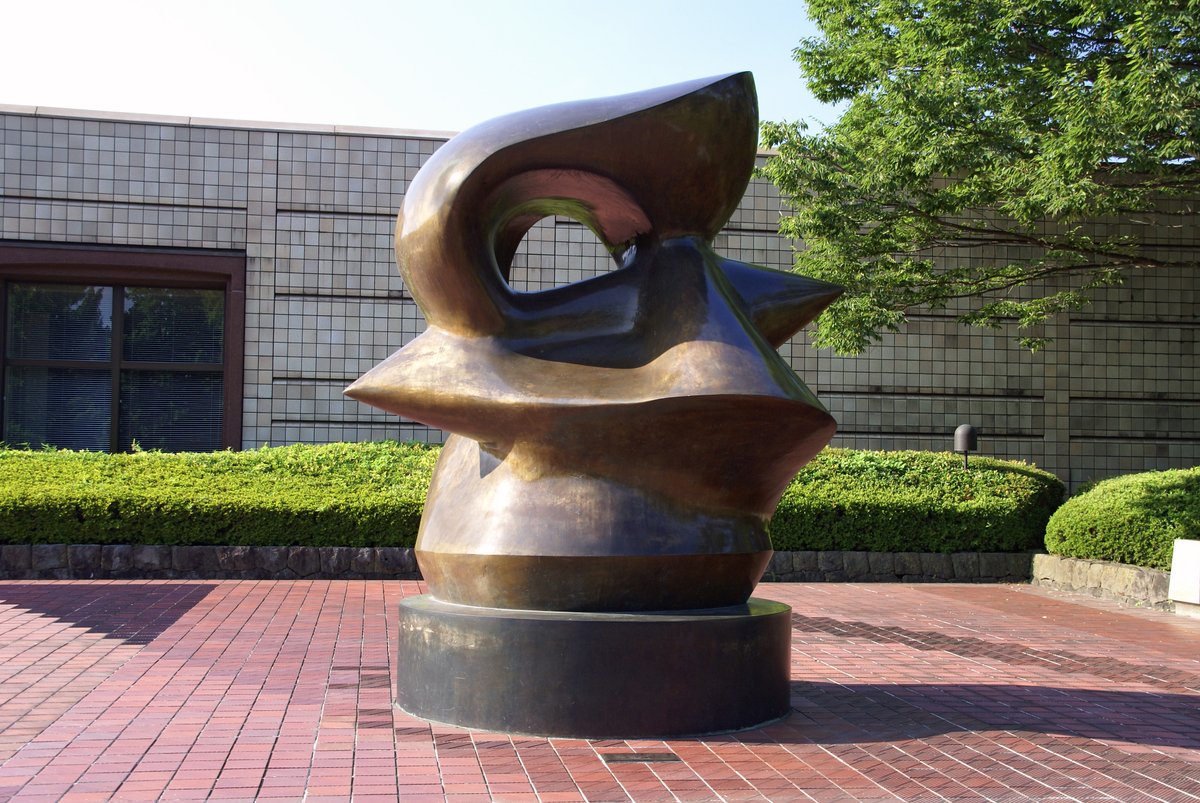
The bronze sculpture is an amorphous twisting flowing form, pierced by a hole, with a point bursting out from each side. Moore wanted to capture movement. He drew inspiration from a detail of Michelangelo's painting on the ceiling of the Sistine Chapel, where God's hand reaches towards Adam's finger. He said the painting is two points just about to meet; in his version, the fingers go out instead of in.
Moore found a piece of flint near his home in Hertfordshire and cast that shape in clay. He also revisited his 1939 work called Three Points. That old piece had points used to give action inwards, but in this work, the points give action outwards. It is a study in opposing directions.
Moore made several versions of this idea. He started with a small plaster maquette cast in bronze in 1968. He grew it into a bronze working model. He created the Large Spindle Piece in 1974, which stands 3.35 metres high. He made a massive travertine version in 1981 known as The Spindle. It weighs about 70 tons and was dropped in Italy, requiring extensive repair before being shipped to the US.
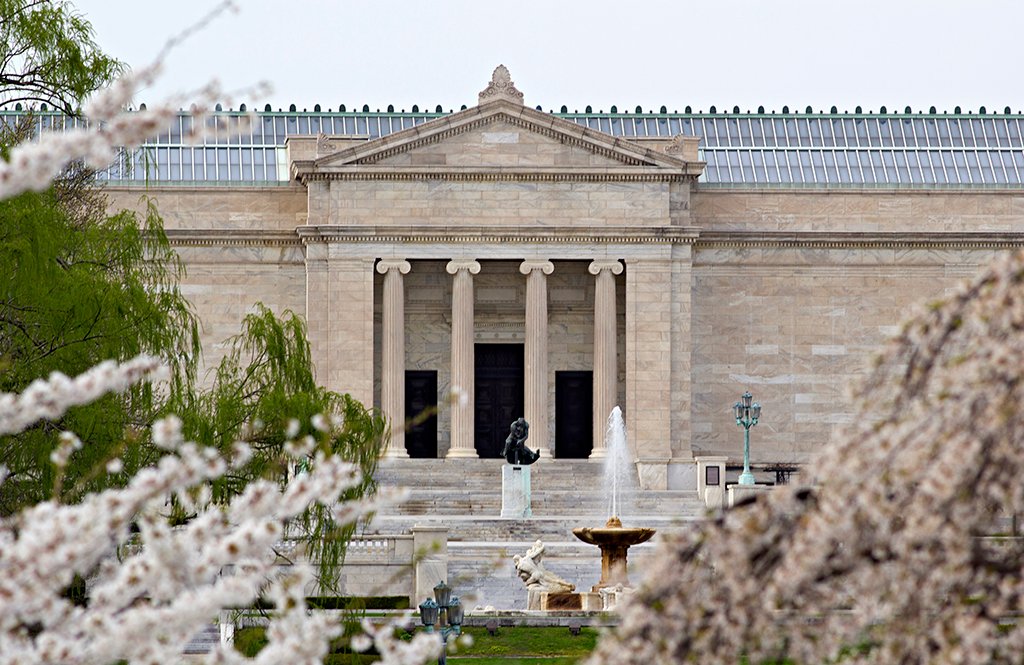
You can see the 1974 bronze cast here. It sits in public space as a heavy, flowing weight. It is one of several large versions scattered across the globe, including locations in Ohio, Texas, Saudi Arabia, Japan, and North Carolina.
Sources: Wikipedia, OpenStreetMap, Wikidata, Wikimedia Commons
Written by Leroy
Discuss this with the author and others
No comments yet. Be the first to start the conversation.