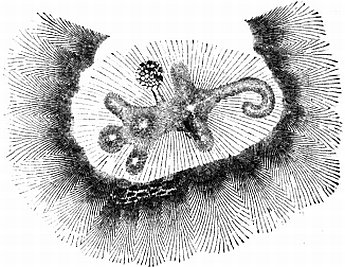

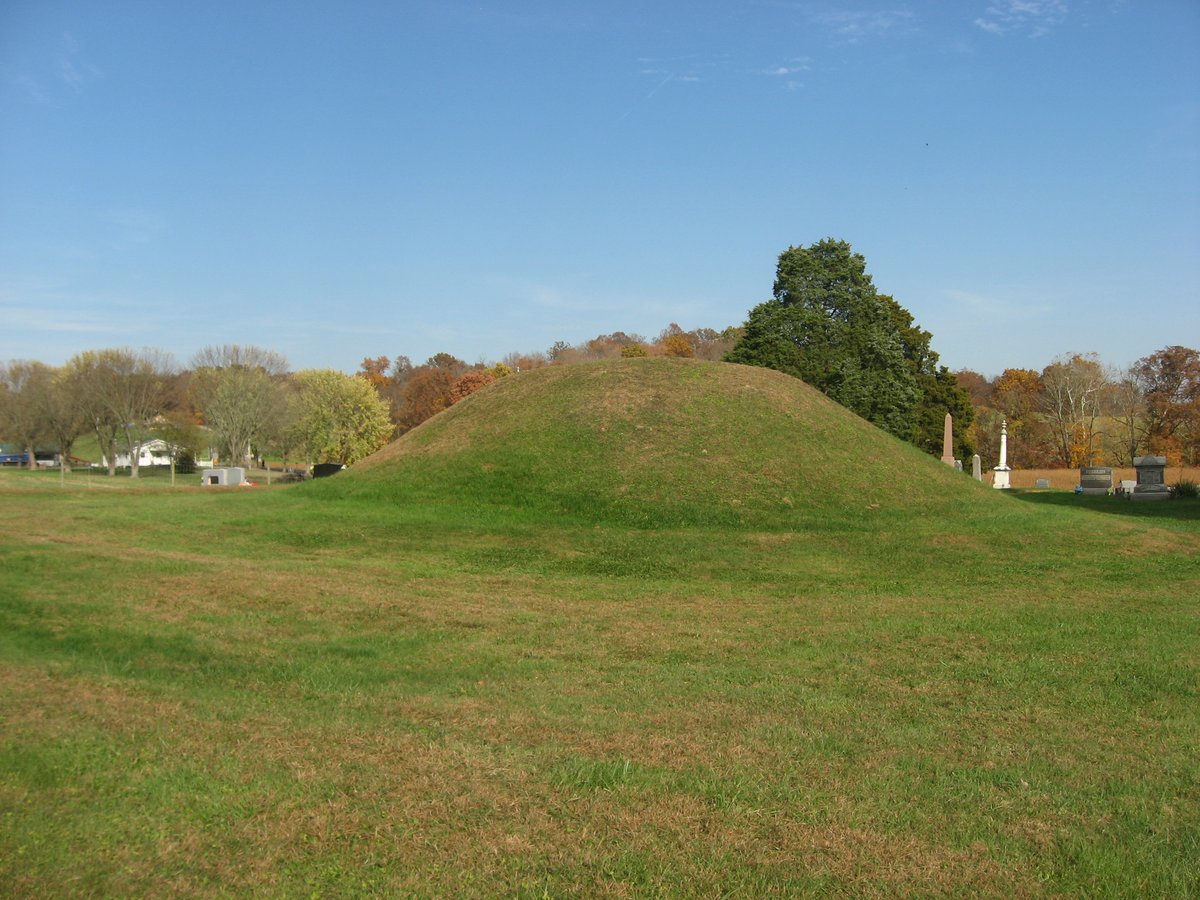
The Alligator Effigy Mound is an archaeological site in Granville, Ohio, built between AD 800 and 1200 by people of the Fort Ancient culture. It is one of two extant effigy mounds known in the present-day state of Ohio, along with the Serpent Mound in Adams County. The mound was likely a ceremonial site, as it was not used for burials.
Archaeologists Squier and Davis first surveyed the site in 1848, describing the work as totaling 250 feet in length from head to tail. While locals called it the alligator, the figure bears as close a resemblance to the lizard as any other reptile. The mound has a height ranging from four feet to six feet, with the head, shoulders, and rump being higher than the rest of the body. Investigators noted a small mound in the middle of the effigy, believed to have been an altar, covered with stones that showed marks from being lit on fire.
A graded way, ten feet wide, was made from the altar to the top of the effigy. A 1999 investigation used radiometric dating on charcoal to estimate the construction to about AD 950. While early settlers may have interpreted descriptions of a fierce water creature as an alligator, some modern researchers suggest the mound may actually represent an underwater panther, a powerful figure in Native American myth.
Sources: Wikipedia, OpenStreetMap, Wikidata, Wikimedia Commons




Written by Friendly Jane
Discuss this with the author and others
No comments yet. Be the first to start the conversation.