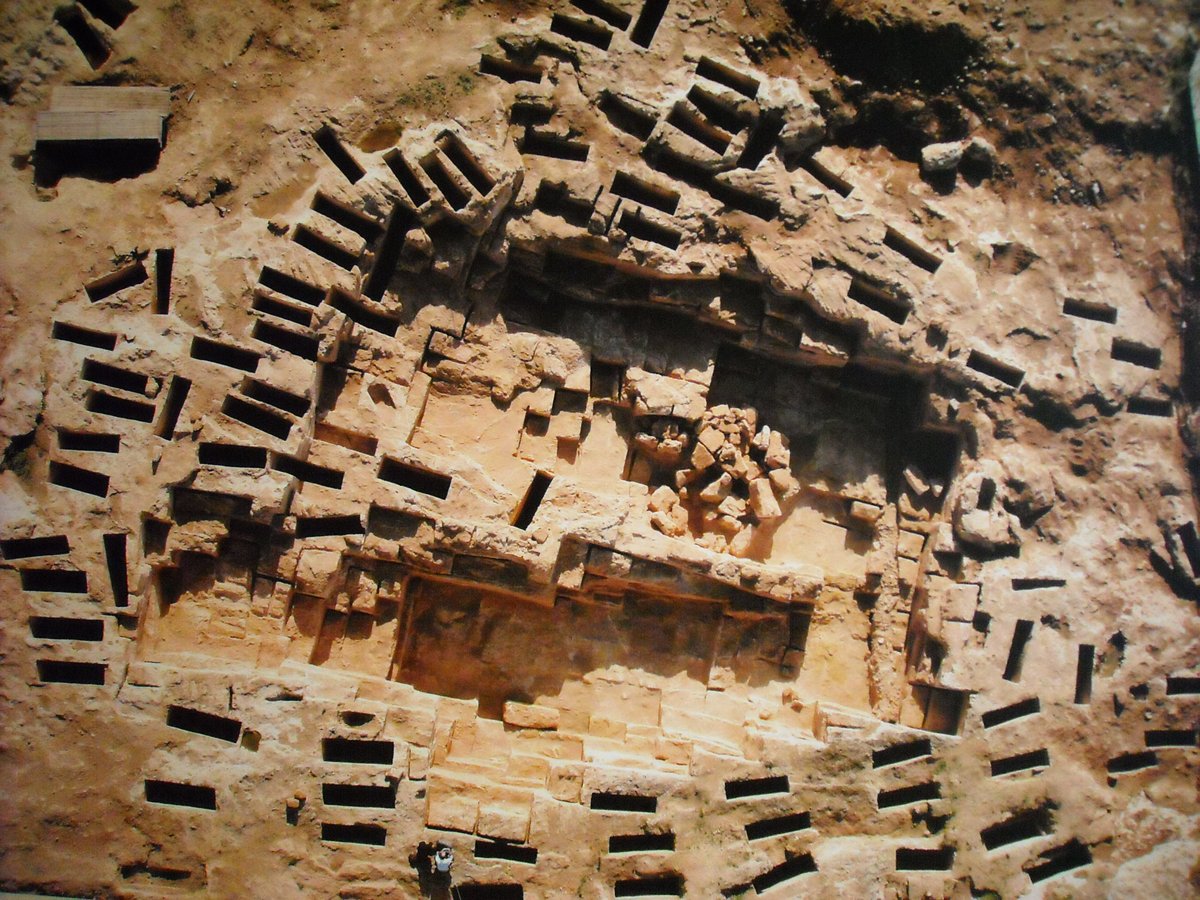
The **Tuvixeddu Necropolis**, situated within the city of Cagliari, Sardinia, is known as 'little cavity' in Sardinian. It is the largest Punic necropolis in the Mediterranean, used by man since Neolithic times, although it was the Carthaginians who first utilized the hill for burials, creating the largest Punic necropolis on the island. The burial chambers in Tuvixeddu were beautifully decorated; amphorae and ampoules for essences were found. Among the Punic tombs, the 'Uraeus Tomb' and the 'Fighter Tomb', adorned with paintings of palm trees and masks, stand out.
Another famous tomb is the 'Wheel Tomb'. However, modern urban development has fragmented the necropolis, dividing it into preserved archaeological zones and areas covered by residential and industrial developments. The necropolis was opened to the public in May 2014, but the protected park only encompasses about 3.5 hectares accessible to the public. Efforts since the 1960s by heritage authorities have aimed to ensure the preservation of the remaining terrain.
Burial activity at Tuvixeddu declined after the mid-1st century CE, marking the end of its primary funerary role amid broader shifts in Roman provincial practices. In late antiquity, the site saw no significant expansions, and by the 5th century CE, disruptions from the Vandal invasion of Sardinia in 456 CE contributed to the abandonment of organized burials across the island.
Sources: Wikipedia, Wikidata, Wikimedia Commons
Written by Sardinian
Discuss this with the author and others
No comments yet. Be the first to start the conversation.