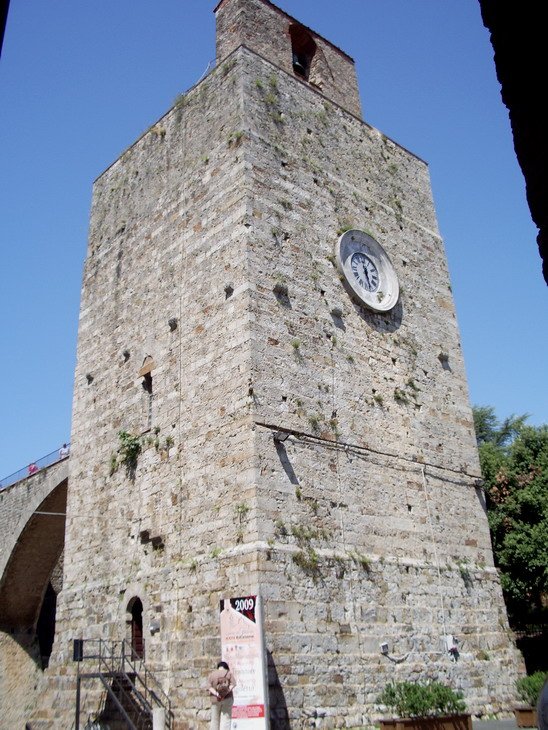

Torre del Candeliere, also known as Torre dell'orologio, is a musealized tower located in the Terziere di Città Nuova in the city of Massa Marittima. Completed in 1228 during the podesteria of Tedice Malabarba, the tower was erected to inaugurate the expansion of the city outside of Città Vecchia and the Borgo. An inscription on the tower reads, 'OCTO BIS DECEM CURREBANT MCC, QUANDO TEDICI MALABARBE MASSE IUBENTI, PLACUIT INITIUM AULE DONARE PRESENTI, PRINCIPIUM NOVE URBIS, DECUSQUE FERENTI', highlighting its function as a watchtower and a symbol of the self-governing city's independence from the dominion of bishop-princes.
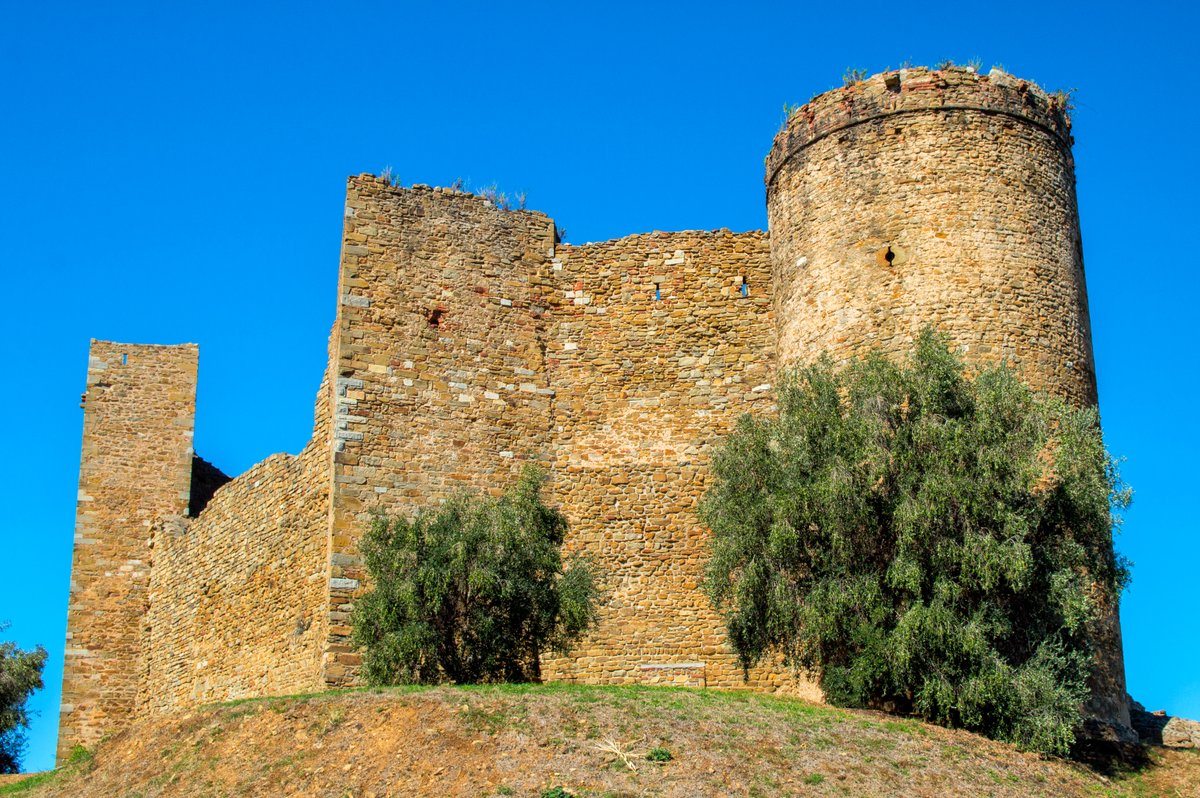
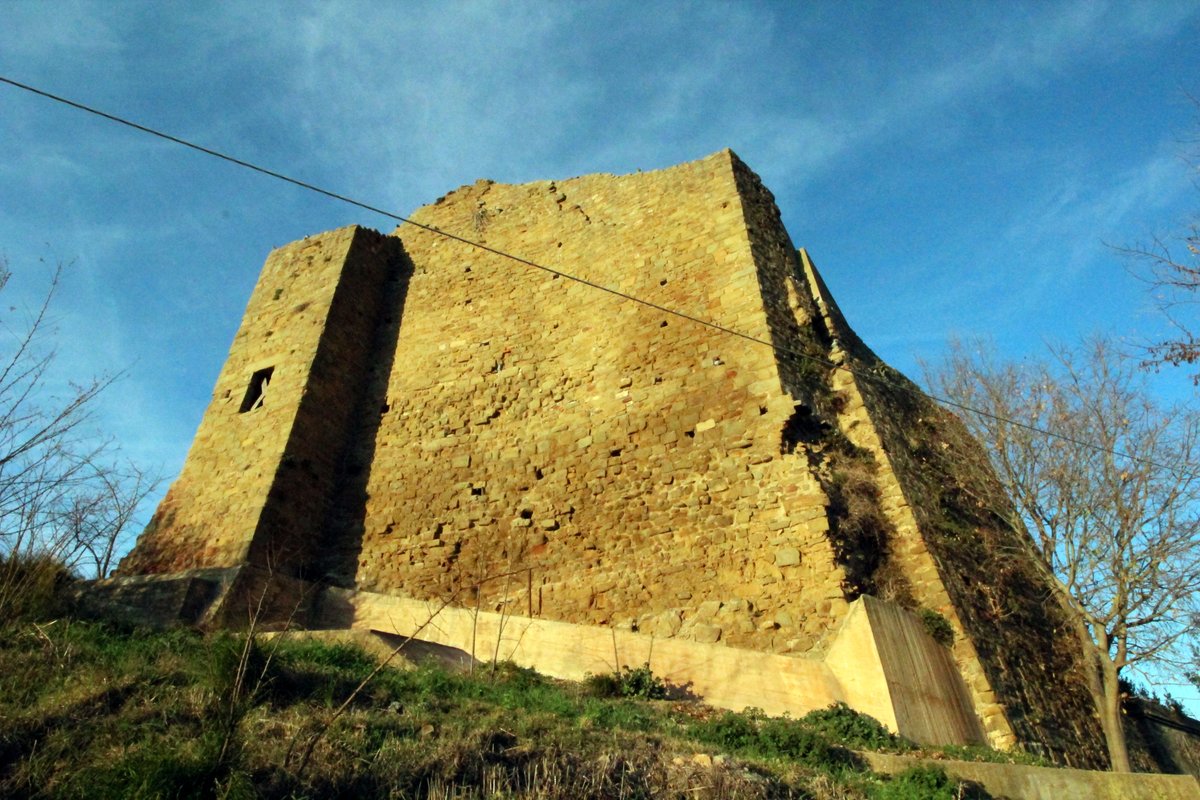
Standing 28 meters tall, the tower underwent significant changes after the Senese defeated Massa in protracted struggles. In 1335, the Senese cut off one-third of the tower's height to demonstrate their authority and began constructing the Cassero Senese, completed in 1337. This fortress was connected to the Massa fortifications via a single-span viaduct bridge with a span of 21.79 meters.
The tower has seen various additions over the centuries, including a 400 kg bell cast by Luca di Bandi da Cortona placed on the summit in 1413, and the city's first clock installed in 1443. The clock was later replaced in 1563 and again in 1610. The bell was destroyed by lightning in 1760 and replaced with a 140 kg bell featuring an inscription seeking the blessing of the Madonna, San Cerbone, and San Bernardino.
In 1985, the tower was musealized. Visitors can now climb to the uppermost floor to see the 1760 bell and the city panorama, or traverse the single-span viaduct bridge to reach the Cassero Senese. The tower has a quadrangular section with a tapered base and travertine-clad walls, while the clock is situated at half-height on the side facing the square. The interior includes a library, a history of the city's mint from 1317 to 1319, and a view of the complex clock mechanism.
The ground floor, which is elevated, houses the ticket office and a library. A narrow staircase leads to the second floor, where panels illustrate the history of the tower and the Senese fortress. On the third floor, the complex mechanism of the clock can be viewed, and a door leads to the arched opening that connects to the Cassero Senese fortifications.
Sources: Wikipedia, OpenStreetMap, Wikidata, Wikimedia Commons
Written by Nicolo Ciampini
Discuss this with the author and others
No comments yet. Be the first to start the conversation.