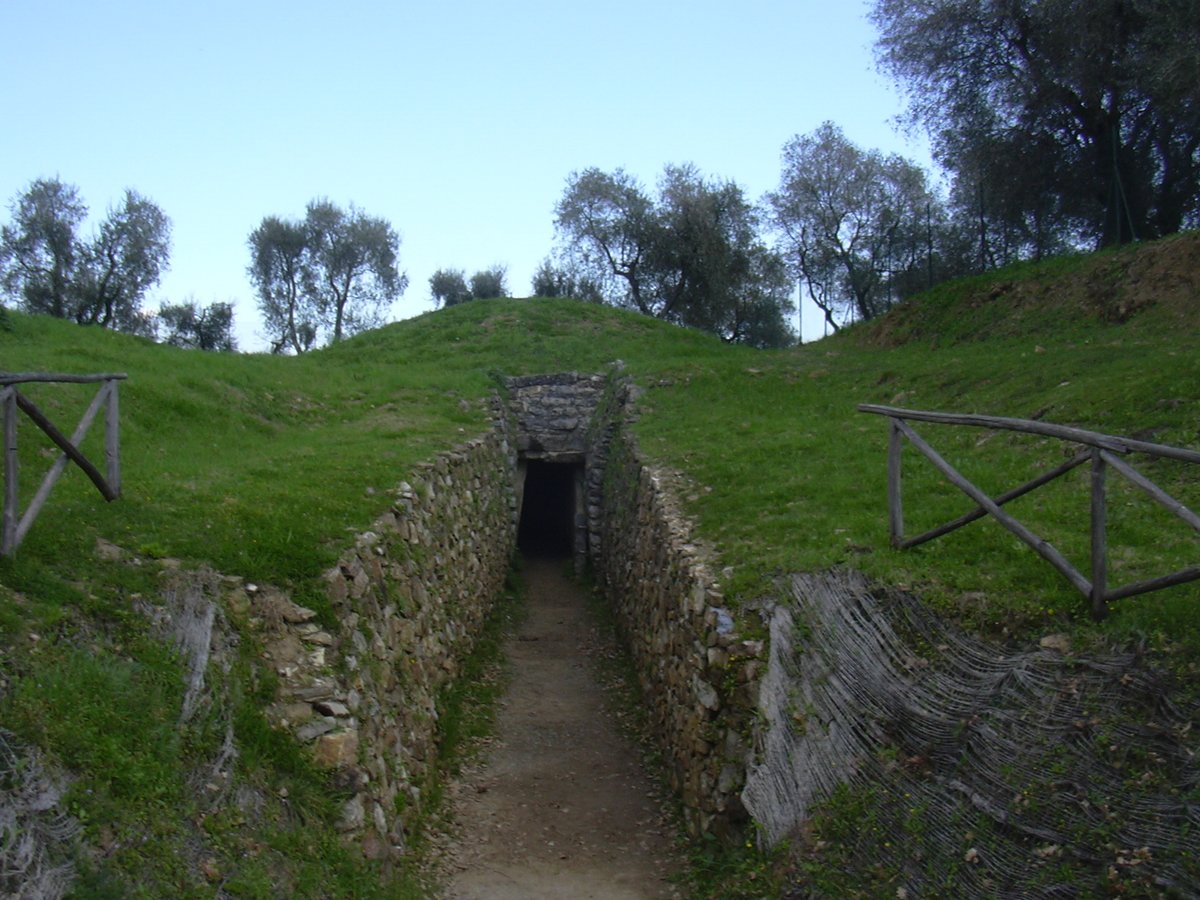

In the archaeological site of Vetulonia, a place called Poggio al Diavolino hides an enigma - the Diavolino II tomb, an Etruscan burial site dating back to the second half of the 7th century BC. Discovered by Isidoro Falchi in the 1900s, it lies in the frazione Vetulonia of the commune of Castiglione della Pescaia. The tomb's circular chamber, its long dromos divided into two sectors, and its tambour with a diameter of 80 m make for an impressive structure.
The structure is a tholos tomb, or false dome, where the roof was created using concentric rings of stone blocks that gradually reduce toward the top. A central pillar, called an omphalos, served as a symbol of the world axis, linking the world of the living to the world of the dead. The tomb has undergone restoration work, which included the reconstruction of the entire vault and the central pillar using modern materials.
Today, the archaeological pieces are preserved at the musée archéologique national de Florence as well as the Musée archéologique Isidoro Falchi.
Sources: Wikipedia, OpenStreetMap, Wikidata, Wikimedia Commons


Written by Nicolo Ciampini
Discuss this with the author and others
No comments yet. Be the first to start the conversation.