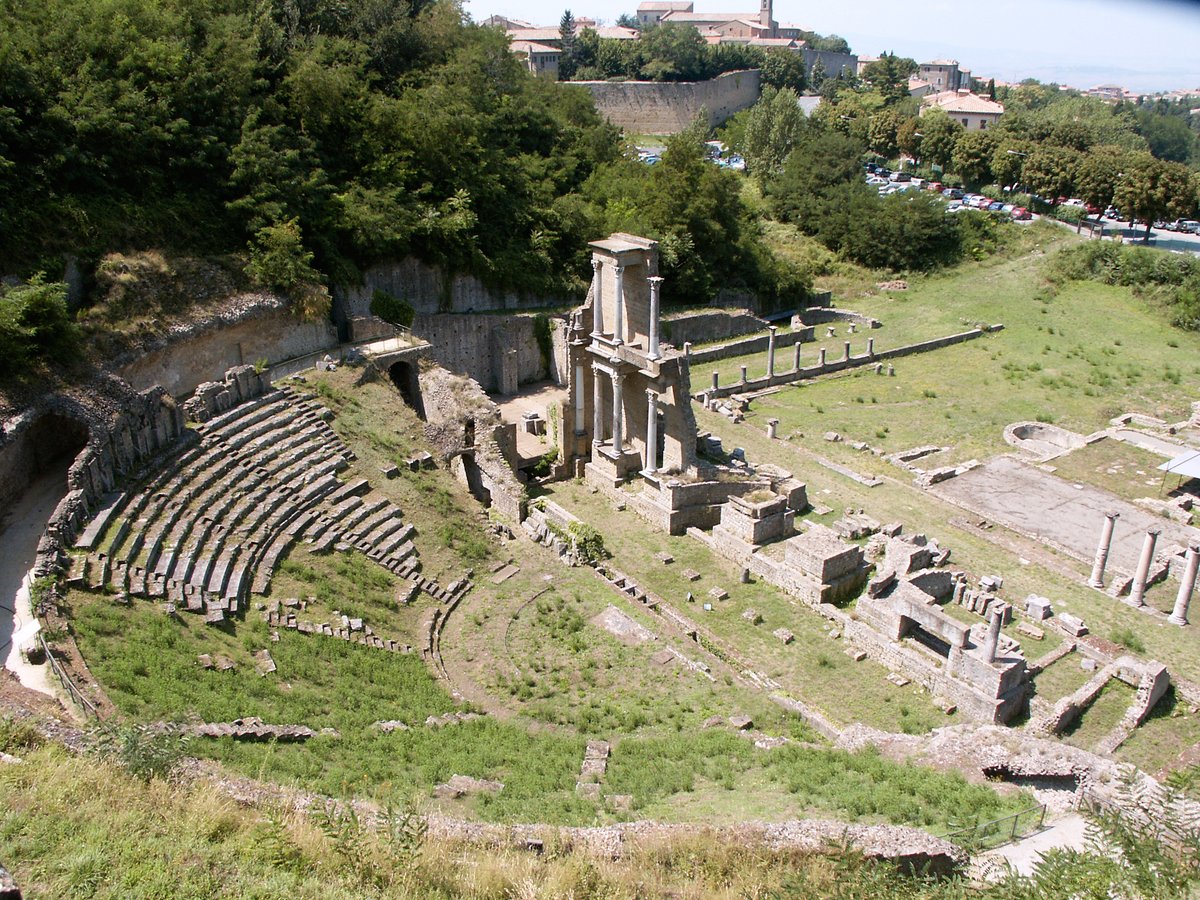

Between the 1st century BC and the 3rd century AD, the Roman theatre positioned on Volterra's hill, bankrolled by the Caecina family for the esteemed Augustus and his wife, Livia, thrived as a hub for entertainment. Crafted onto the hill's natural incline, the theatre boasted a remarkable long façade, featuring a substantial central niche, and accommodated around 3,500 attendees. The elaborate scaenae frons, stretching an impressive 36 meters, showcased statues of Augustus and Livia.
Some of these statues now reside in the Guarnacci Etruscan Museum, alongside the theatre's dedicatory inscription. In the 3rd century, the scaena was repurposed as a public bath. In 1950, during archaeological excavations orchestrated by Enrico Fiumi, a motley crew of twenty-four, comprising sixteen patients and eight assistant nurses from a local psychiatric hospital, collaborated with Fiumi in an unusual therapeutic endeavor. A plaque has since been erected to acknowledge their effort. The theatre was partially reconstructed in the 1970s, and regular festivals are held there every summer.
Sources: Wikipedia, OpenStreetMap, Wikidata, Wikimedia Commons
Written by Nicolo Ciampini
Discuss this with the author and others
No comments yet. Be the first to start the conversation.