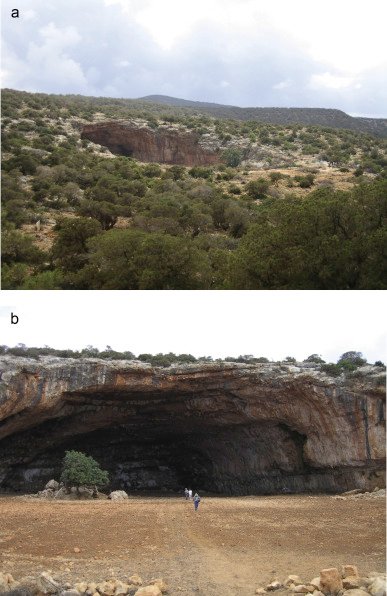

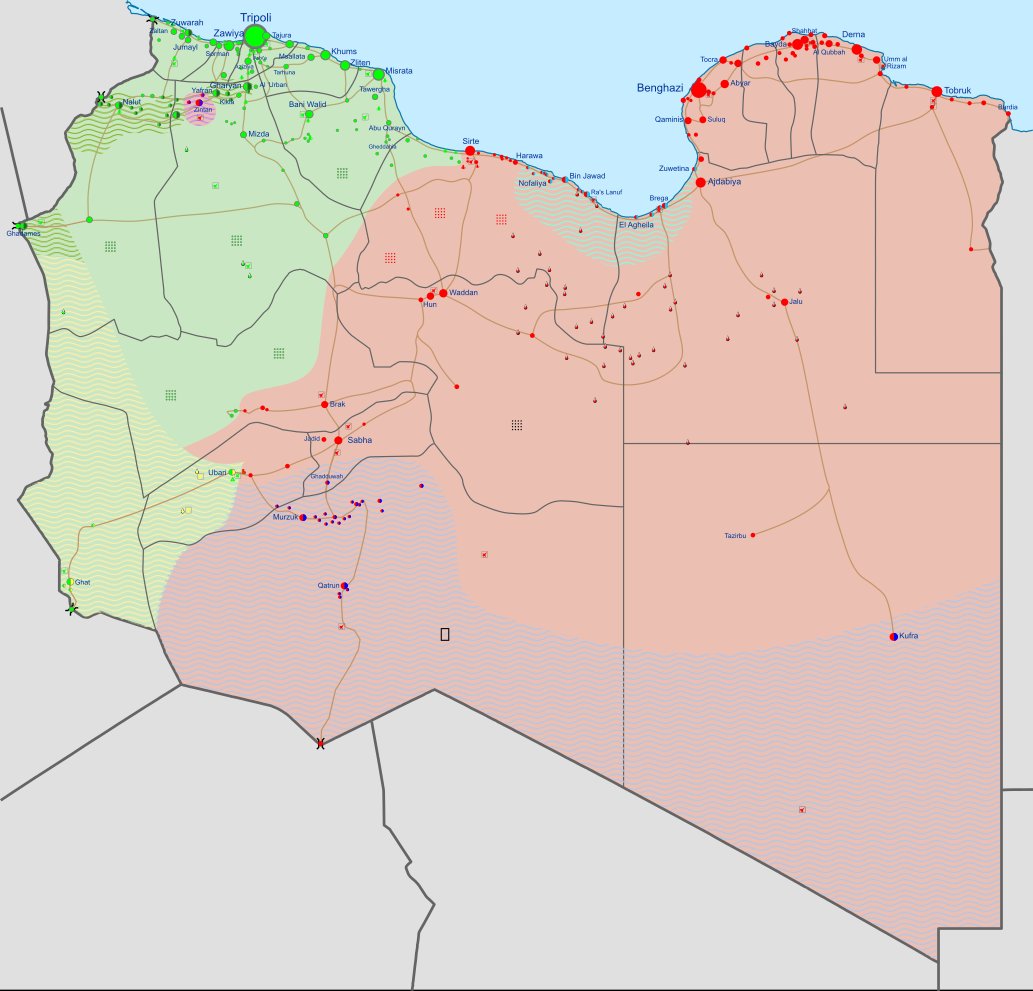
Haua Fteah is a large karstic cave located in the Cyrenaica of northeastern Libya. Formed by sea erosion during the early Pleistocene, the cave sits at the base of the Jebel Akhdar, or Green Mountain. The entrance faces the Mediterranean Sea, and the interior roofed portion spans 80 metres. Evidence of modern human presence in the cave dates back to 200,000 years ago.
Charles McBurney and his team excavated the site from 1950 to 1955, uncovering a series of cultural phases. In August 1952, they retrieved a human mandible from a depth of 23 feet. The fragments include the left ascending ramus and a part of the condylar process with the second and third molars attached. While the wisdom tooth had emerged but was not exposed for long - suggesting the individual was in young adulthood between eighteen and twenty-five years old at death - recent research has confirmed the mandible belongs to a fully modern human.
Further layers reveal the Dabban, an early type of blade-and-burin industry. These blades are thought to be the oldest of the Upper Paleolithic and are found only in Haua Fteah and one other nearby site. The origins of the Dabban remain unknown. The cave's stratigraphy shows major climatic changes during the Pleistocene, including stages where the shoreline was six meters above and twenty meters below present sea levels.
Today, the Cyrenaica Prehistory Project, run by Graeme Barker of Cambridge, continues to study the site. Researchers use geomorphological, palaeoecological, and archaeological studies to understand how humans adapted to abrupt climatic changes and how humans adapted to those changes. From 2007 through 2013, the project completed seven excavation seasons to expand the knowledge of the cave's long sequence of use.
Sources: Wikipedia, OpenStreetMap, Wikidata, Wikimedia Commons



Written by Mutabor
Discuss this with the author and others
No comments yet. Be the first to start the conversation.