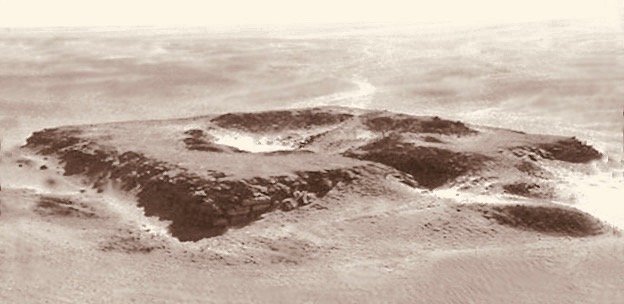

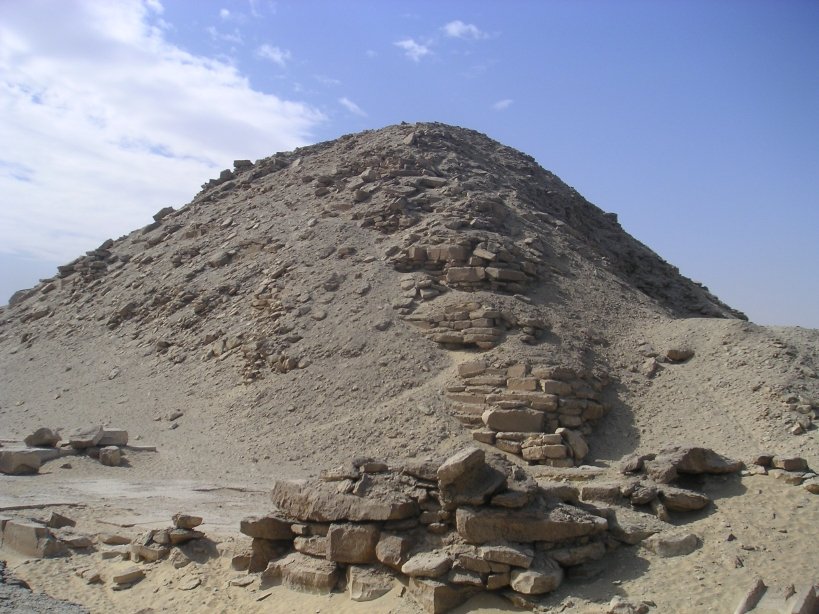
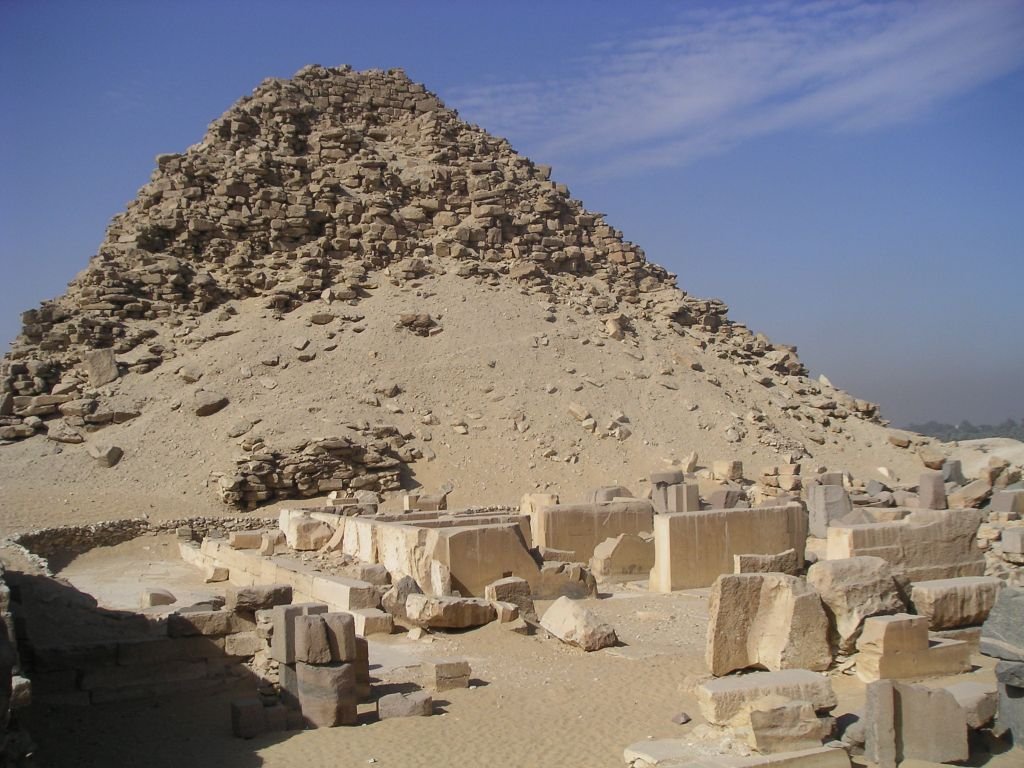
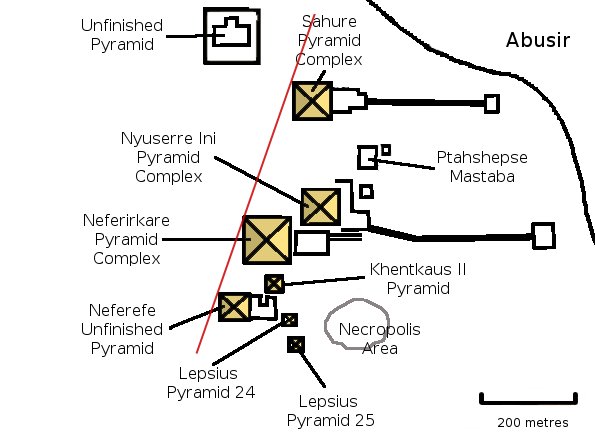
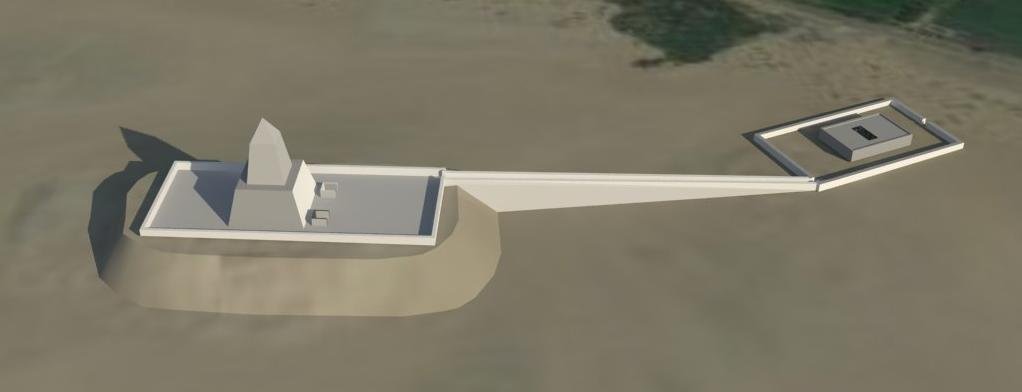
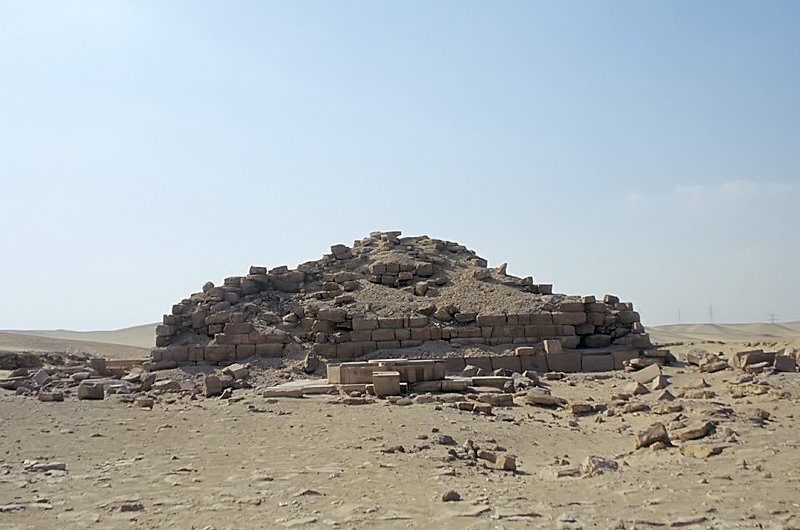
The pyramid of Neferefre was an unfinished funerary monument built for the Egyptian pharaoh Neferefre of the Fifth Dynasty in the 25th century BC. It is the third and final pyramid built on the Abusir diagonal - a line connecting the Abusir pyramids with Heliopolis - and is sited south-west of Neferirkare's pyramid.
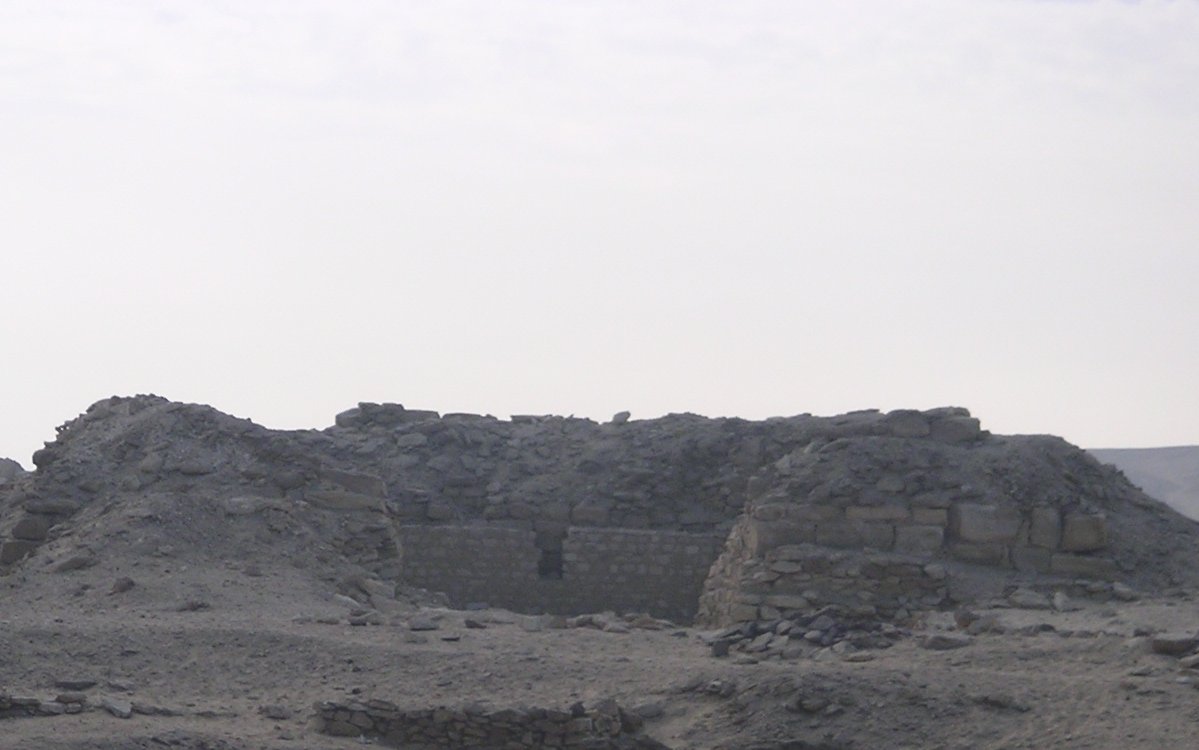
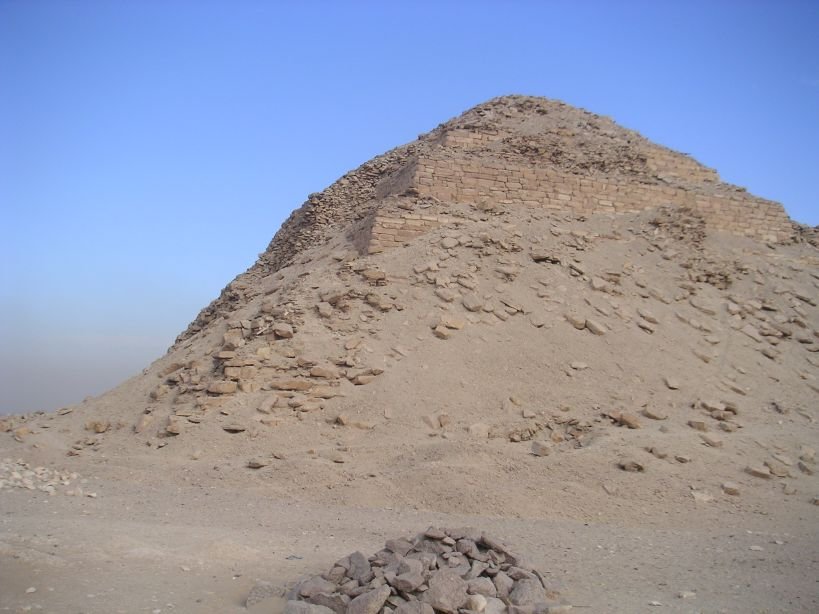
Constructed in a manner different from preceding dynasties, the pyramids at Abusir used horizontal layers of stone blocks. This method was less time-consuming but resulted in unstable structures where only the outer casing was made of high-quality limestone. Once stripped of this casing, the cores were exposed to erosion and human destruction, leaving the monuments as ruinous mounds. In the substructure of Neferefre's pyramid, excavators found fragments of a red granite sarcophagus and the remains of the pharaoh, who died at around twenty to twenty-three years of age.
Research began in the 1970s by a team from Charles University in Prague. They identified the owner as Neferefre from a single cursive inscription written in black on a block taken from the corridor. While earlier explorers like Ludwig Borchardt had concluded the structure was unused because he failed to find a passage, the Czech team's work in the 1980s allowed for a thorough examination of the internal structure, confirming the absence of accretion layers.
Sources: Wikipedia, OpenStreetMap, Wikidata, Wikimedia Commons
Written by Mutabor
Discuss this with the author and others
No comments yet. Be the first to start the conversation.