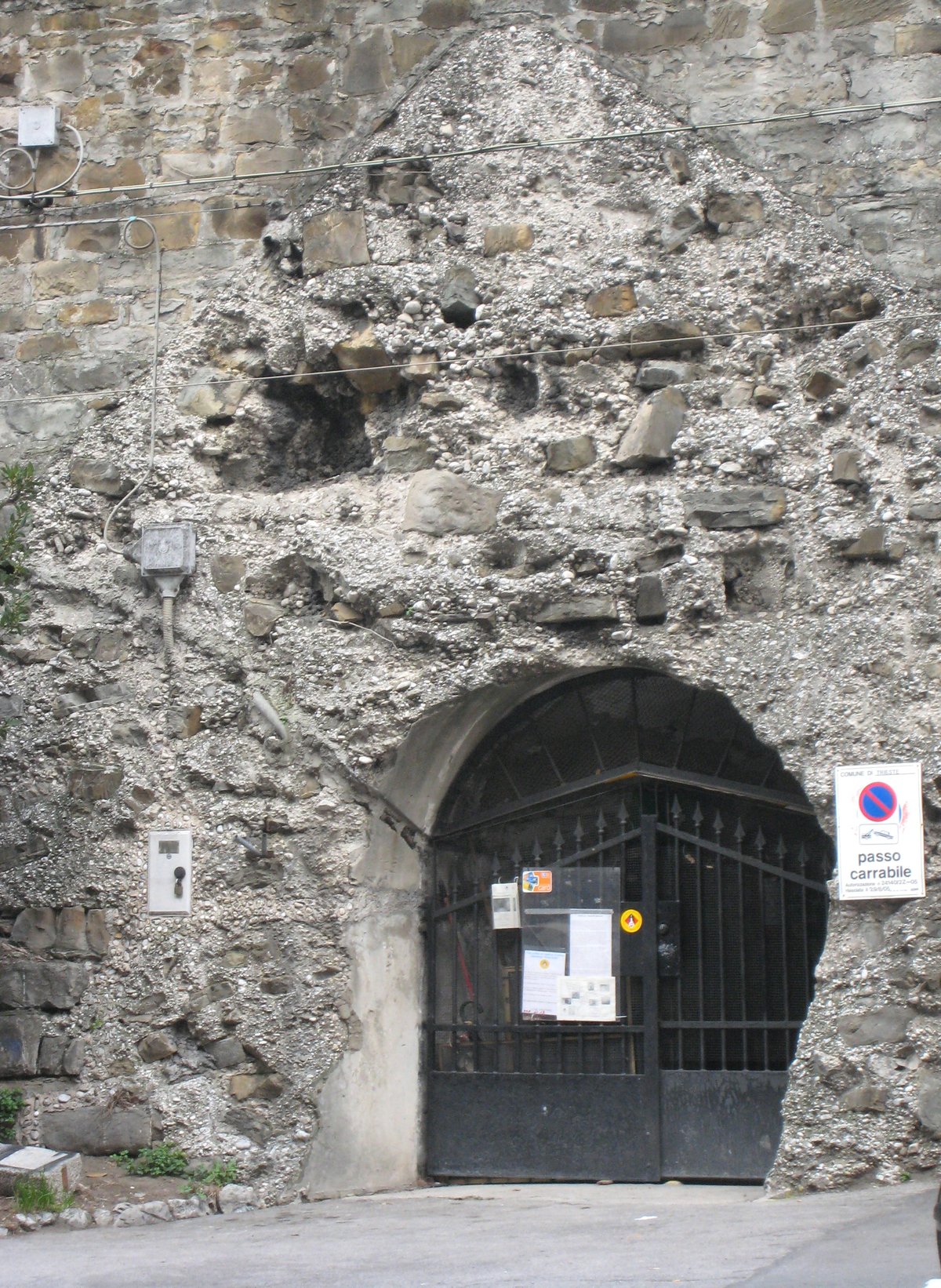

Kleines Berlin is a complex of underground air-raid tunnels in Trieste, Italy, built by German forces during World War II. The construction of the shelter was not the highest priority because an existing 'municipal' tunnel was already available. To serve this tunnel, Nazi authorities supplied an electric system made of bare copper wires, following German standards rather than the bare lead wires used in other local antiaircraft tunnels.
The underground complex is divided into two structurally different sectors. The Italian sector consists of a series of parallel tunnels connected by perpendicular ones, equipped with wooden benches, a first aid room, and toilet facilities. It is served by three entrances on via Fabio Severo. In contrast, the German sector consists of a set of large rooms perpendicular to a long main tunnel, covering an area of 1,000 square meters.
The German sector was occupied exclusively by SS troops and was used by Odilo Globočnik to reach offices in the Court of Trieste from his home without going outside. Access to this sector was forbidden to non-German staff, and no Italians were allowed entry except for an electrician. During the war, German soldiers and Italian civilians would flee into the 'municipal' tunnel, while the German sector remained restricted. The complex also faced issues with high humidity, which the Germans tried to combat using coke coal braziers, though the resulting gas could cause asphyxia in the municipal tunnel.
In April 1945, the Nazi leadership abandoned Trieste, and an insurrection broke out before Yugoslav Partisan troops entered the city. The Court of Trieste, which was connected to the antiaircraft shelter by tunnels, was one of the final strongholds. No trace of a Yugoslav attempt to penetrate the corridor has been found, suggesting the passage's existence was likely unknown to them. German soldiers eventually surrendered to New Zealand troops, ending the occupation twenty months later.
Sources: Wikipedia, OpenStreetMap, Wikidata, Wikimedia Commons

Written by Nicolo Ciampini
Discuss this with the author and others
No comments yet. Be the first to start the conversation.