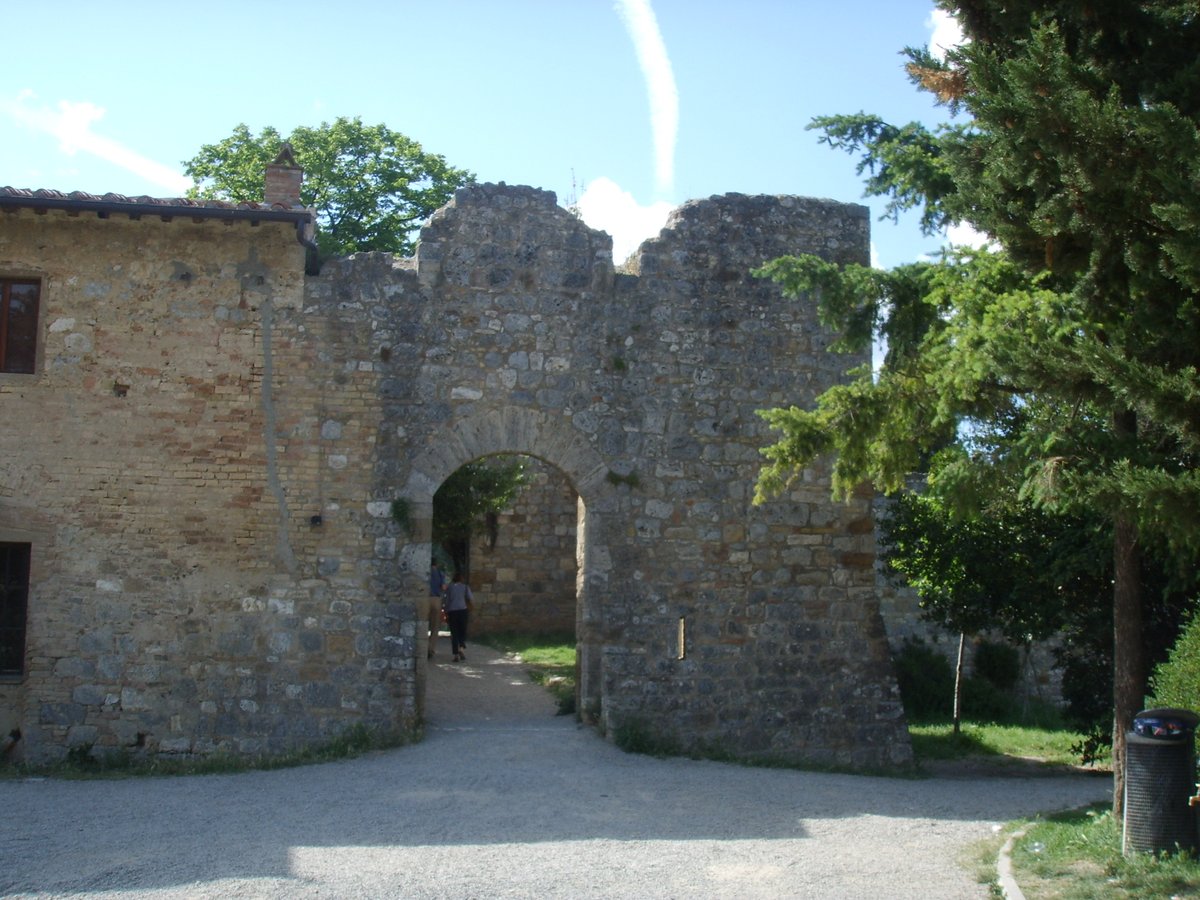

Berged in the 14th century, Rocca di Montestaffoli was initially a castle belonging to the bishop of Volterra. Its strategic position, nestled between two circular walls, made it a vital marketplace during the Middle Ages. Goods exchanged hands with neighboring cities, thanks to its location where the Via Francigena intersected with the route connecting Pisa and Siena.
The Florentines, bestowed San Gimignano for protection after a series of plagues and internal disputes, rebuilt the current Rocca di Montestaffoli in the 14th century. Yet, it lay abandoned during the Grand Duchy of Tuscany and did not see restoration until the 20th century. Today, only the walls remain, but they are far from idle. In recent summers, they have been appropriated for contemporary art installations and theatrical performances.
It's a puzzling pairing - a medieval fortress with modern art. However, Rocca di Montestaffoli's heritage extends back to the days of the Renaissance Lords who once dwelled there. Tourists can traverse its crumbling walls, envisioning the commotion of medieval markets and the grandiose occasions that could have unfolded within its stone walls.
But the real enchantment of Rocca di Montestaffoli lies in itsmakeover: from a defensive stronghold to an anomalous stage for contemporary art. Its worn, imposing walls offer a poignant reminder of a bygone era, still radiating life and art into the present.
Sources: Wikipedia, OpenStreetMap, Wikidata, Wikimedia Commons
Written by Nicolo Ciampini
Discuss this with the author and others
No comments yet. Be the first to start the conversation.