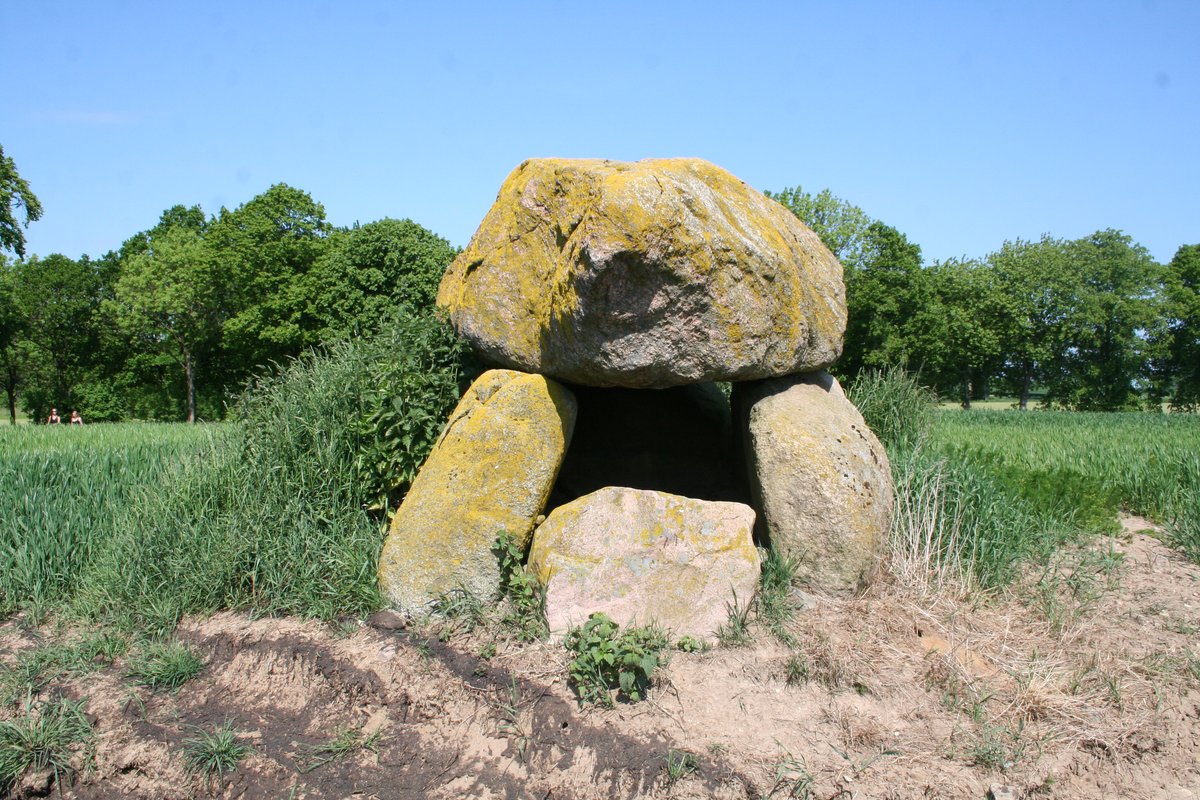
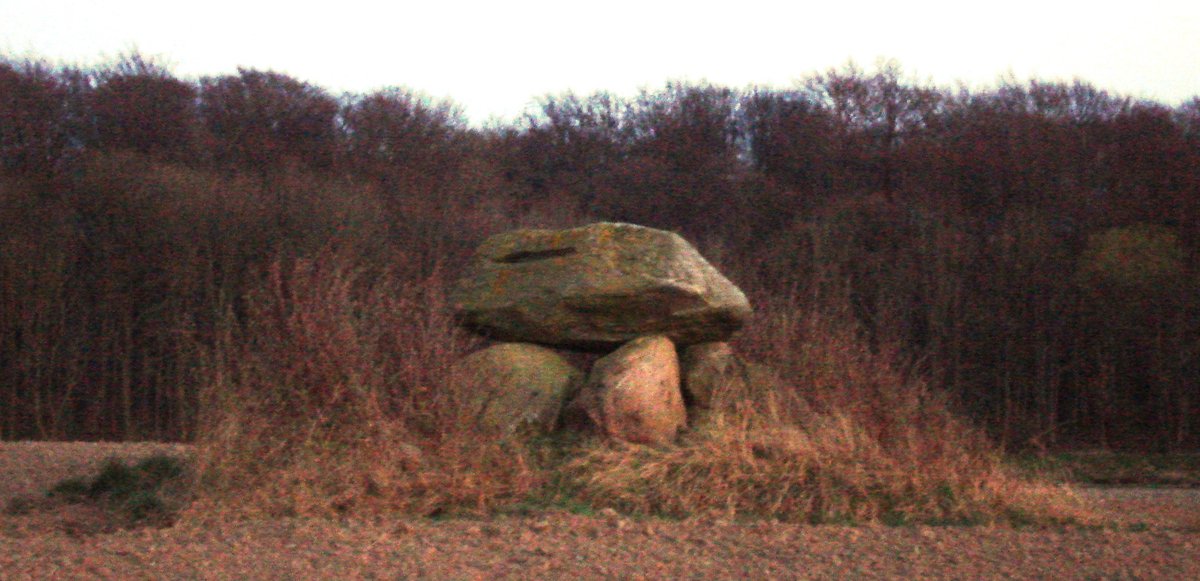
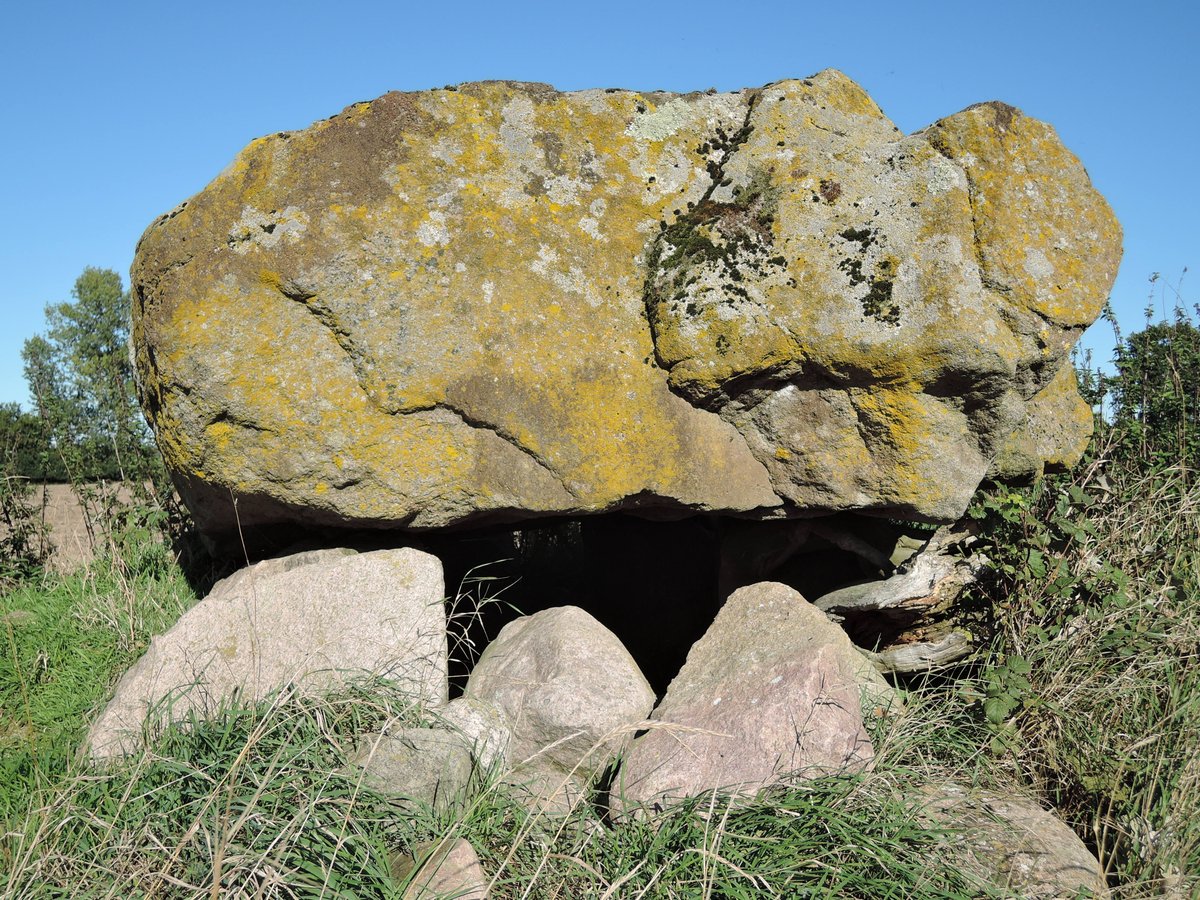
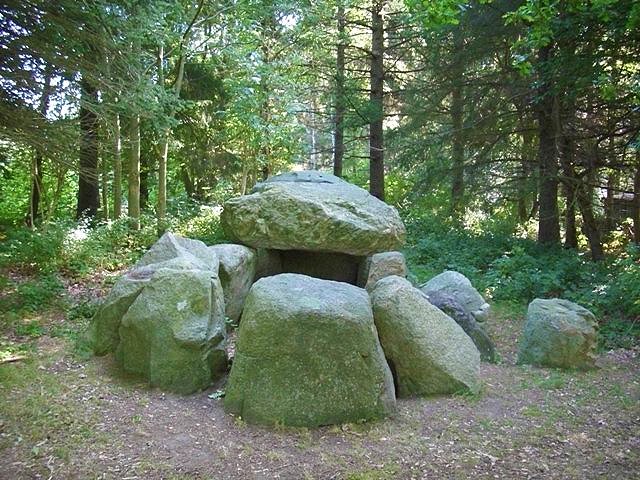
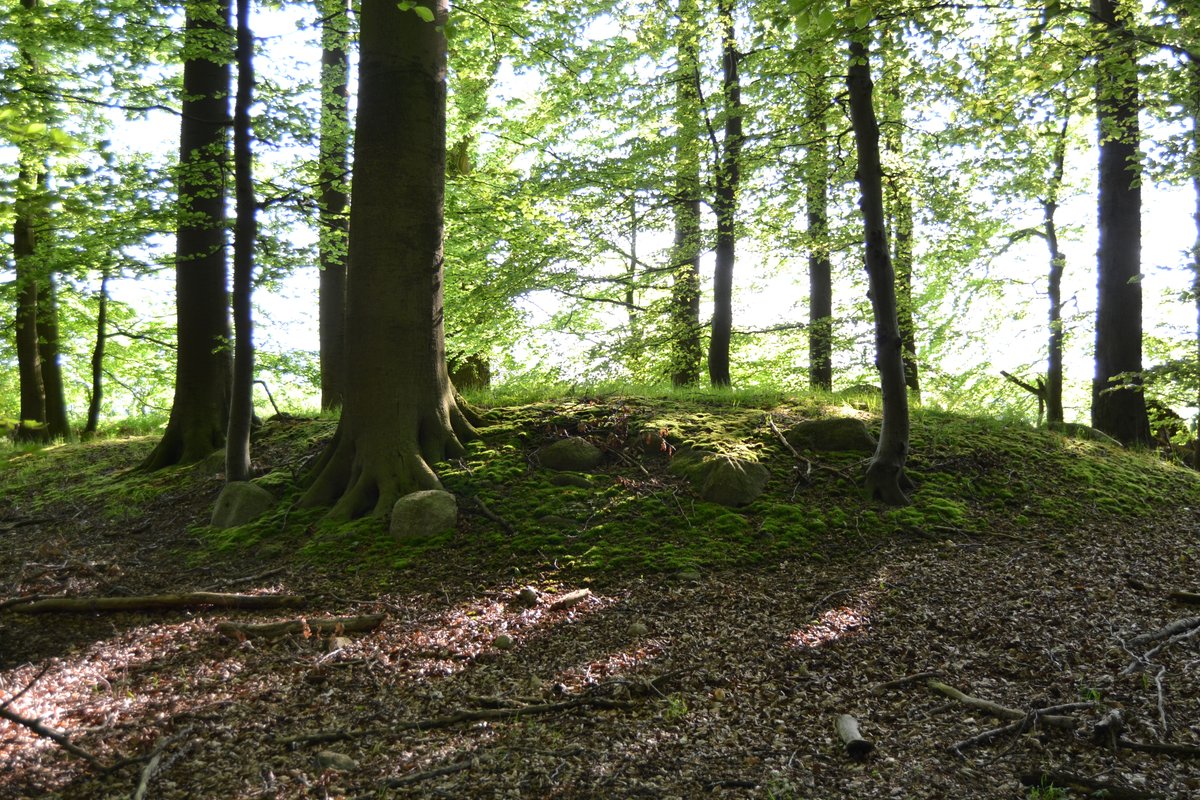
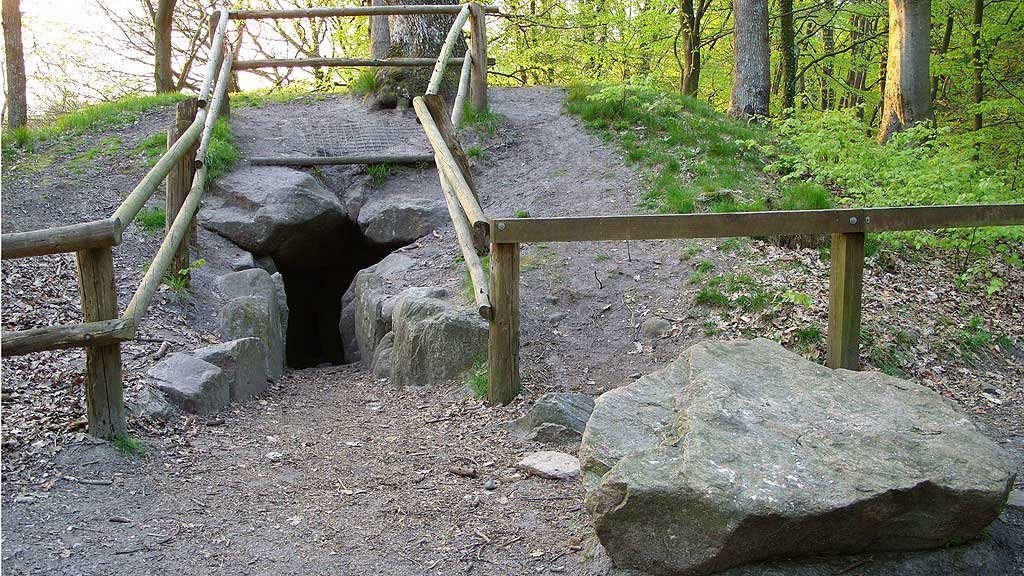
The earth has long since washed away, leaving only the heavy bones of a Neolithic tomb. What remains of the Birkenmoor 14 site are the massive support stones and the heavy capstone that once shielded a chamber for the dead.
These stones were set nearly five thousand years ago. Between 3500 and 2800 BC, the site was constructed as a megalithic tomb by the Funnelbeaker culture in the Danish Wohld. The structure is documented as Sprockhoff 131 in the 1966 work 'Atlas der Megalithgräber Deutschlands'.
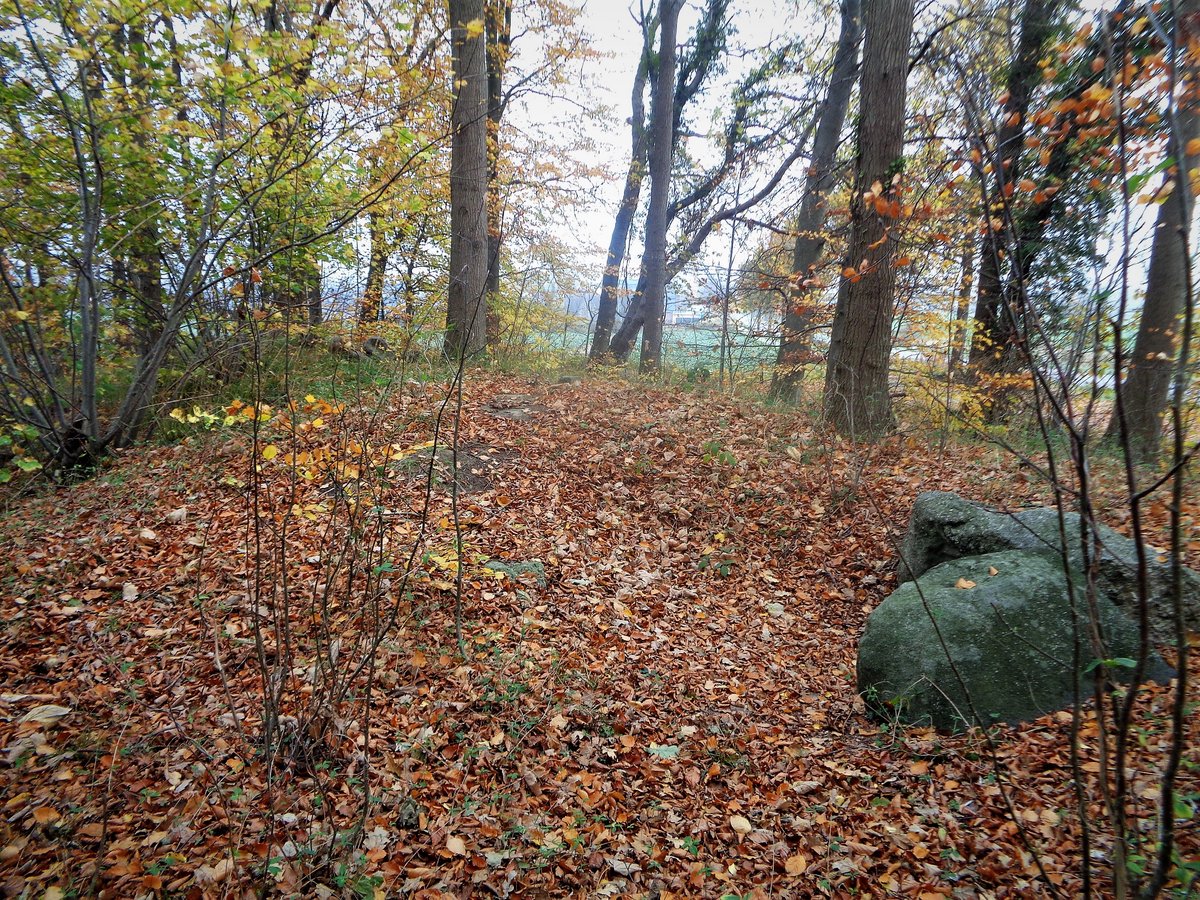
While the original earthen mounds have crumbled into the soil over the millennia, the megalithic architecture survives. The structure sits in an open field about 80 metres south of the Landesstraße 44. Another burial mound is located directly on the L 44 road, and the site is preserved under monument protection.
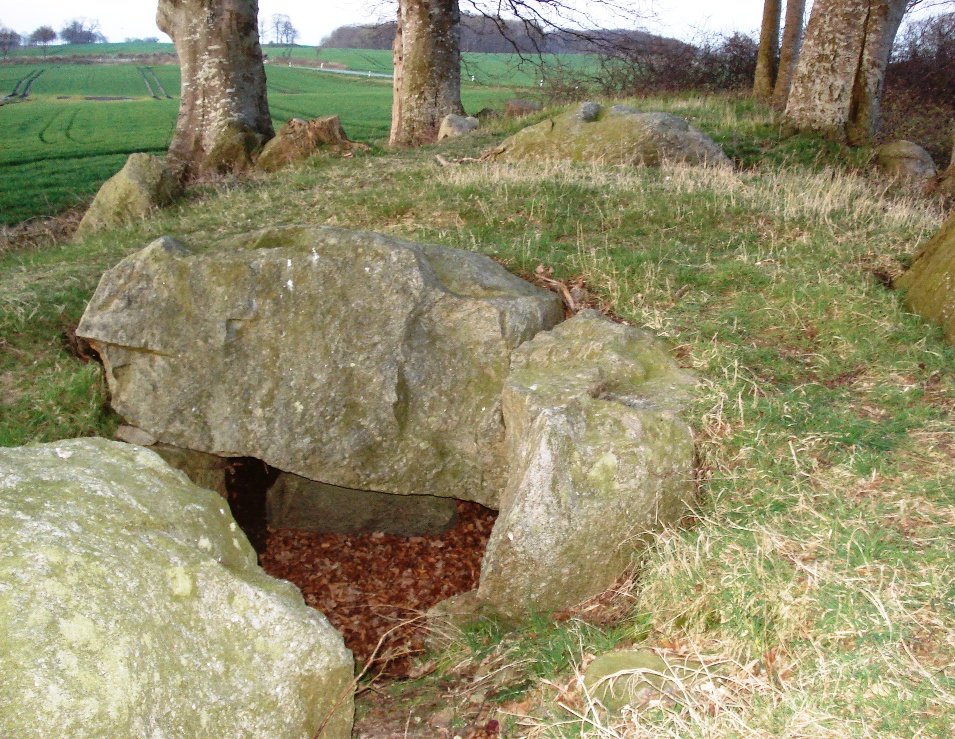
If you walk approximately 900 metres to the northeast, you will find another similar dolmen at Kuhholzberg. Together, they are part of the megalithic tombs preserved in the region of Schleswig-Holstein.
Sources: Wikipedia, OpenStreetMap, Wikidata, Wikimedia Commons
Written by Aurora
Discuss this with the author and others
No comments yet. Be the first to start the conversation.