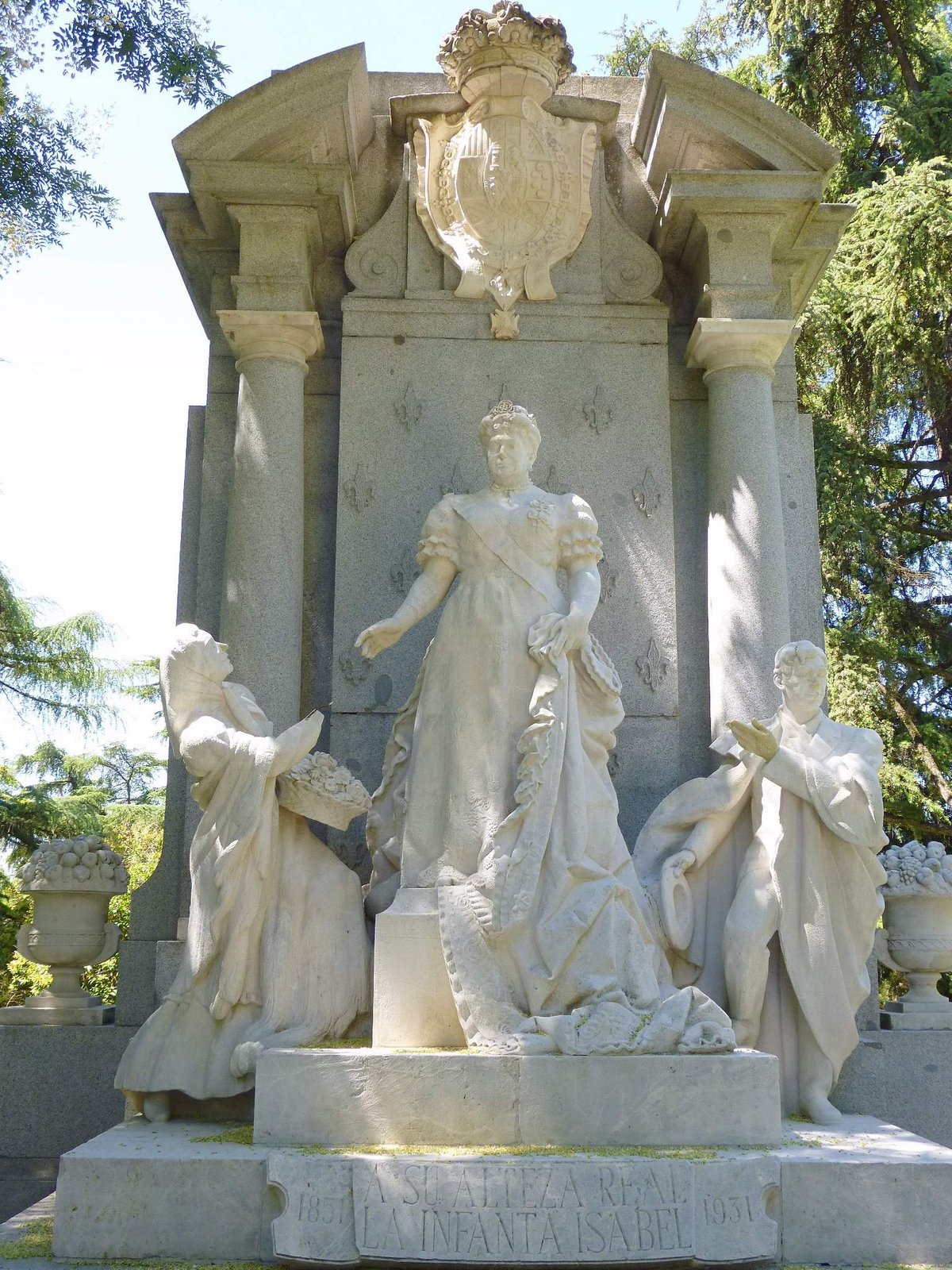

Isabel de Borbón was born in Madrid on December 20, 1851, as the firstborn daughter of Queen Isabel II and Francisco de Asís de Borbón. She was named Princess of Asturias by royal decree in 1852, but in 1857, the birth of her brother Alfonso displaced her as the heir to the throne. She became Princess of Asturias for a second time in 1874 following the proclamation of her brother as king, until the birth of her niece in 1880.
Her personal life was marked by hardship. She entered an arranged marriage in 1868 with Cayetano de Borbón-Dos Sicilias, the Count of Girgenti, whose epilepsy she was not informed of before the wedding. Following a miscarriage in 1871, Cayetano took his own life in Lucerne two months later. Despite these personal struggles, Isabel remained a figure of great popular sympathy, particularly among the people of Madrid who affectionately called her "La Chata."
Isabel was known for her public presence, including a notable trip to Buenos Aires in 1910 to celebrate the Centenary of the May Revolution. When the Second Republic was proclaimed, she chose to leave for France to join her relatives rather than being forced into exile. She died of natural causes in a convent near Paris five days after departing.
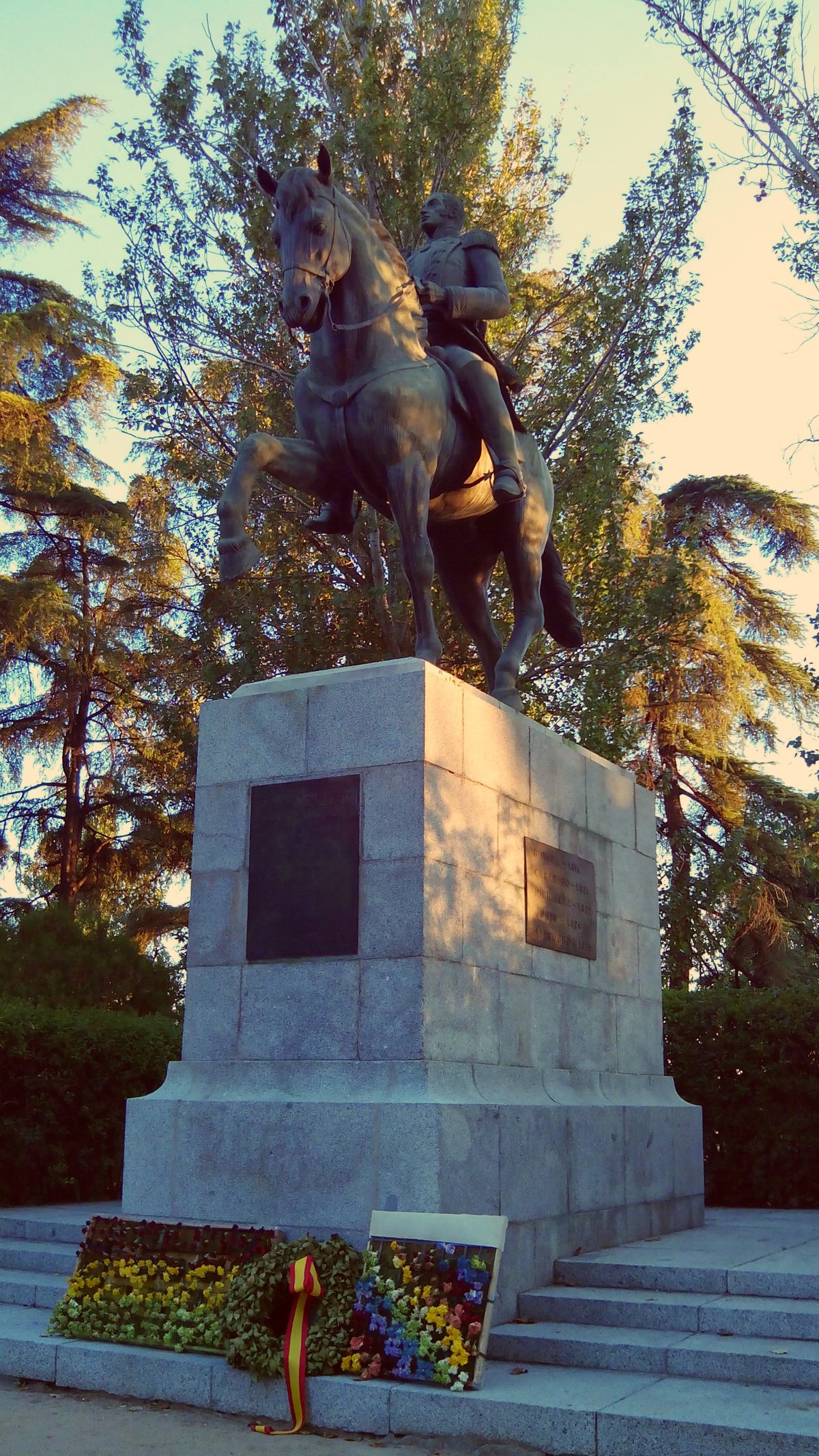
Today, her memory is preserved in several locations. In the gardens of the Palacio Real de La Granja, a monument by Lorenzo Coullaut Valera was inaugurated in 1928, and a room dedicated to her remains open to the public. Near the Palacio de Quintana, where she resided for many years, a stone monument by Gerardo Zaragoza and Javier García-Lomas was installed in 1955 along the Paseo del Pintor Rosales.
Sources: Wikipedia, OpenStreetMap, Wikidata, Wikimedia Commons
Written by Nicolo Ciampini
Discuss this with the author and others
No comments yet. Be the first to start the conversation.