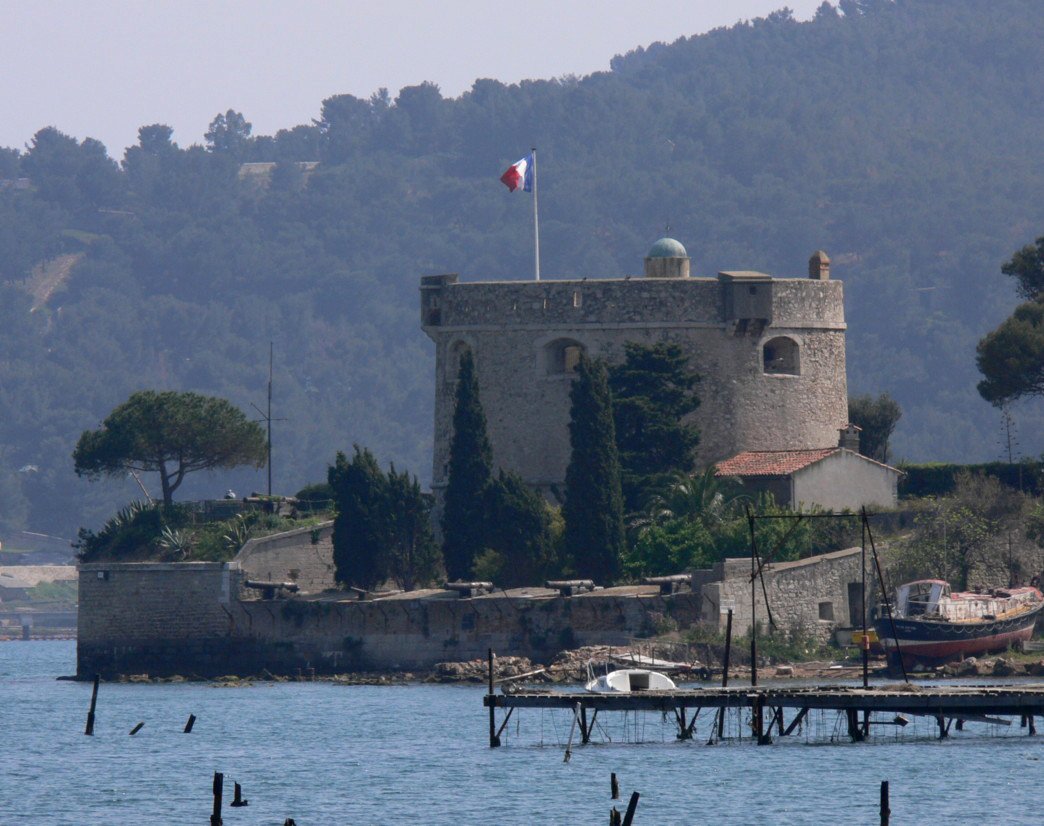

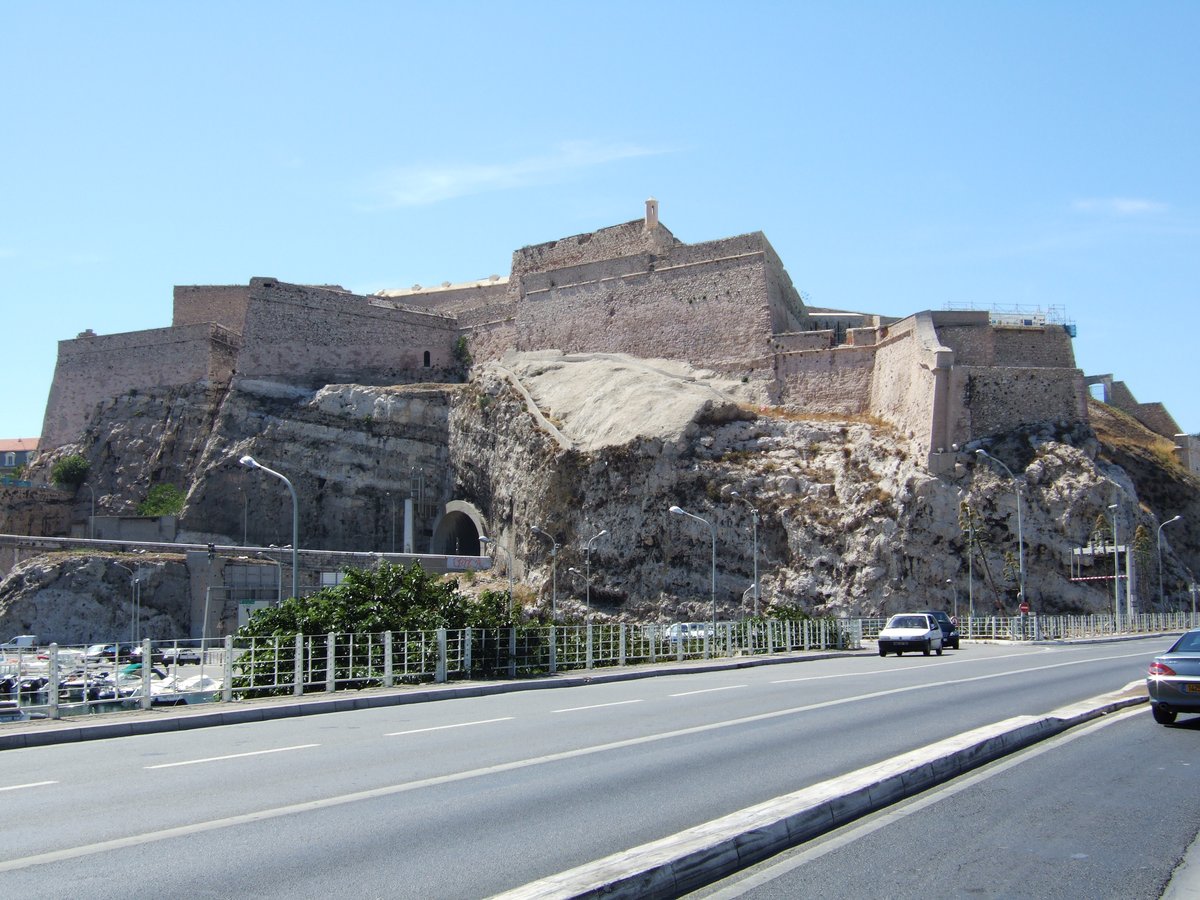
The Fort de Balaguier was built in 1636 to protect the roadstead of Toulon from intrusions. Its construction was decided following an inspection of the coast of Provence by Henri de Séguiran, first president of the parliament of Provence and lieutenant to the Grand Master of Navigation, Cardinal de Richelieu. The fort was built to counter the belligerent intentions of the House of Habsburg in the Mediterranean. During the same period, Richelieu commissioned a series of defensive towers along the coast, from Antibes to the Île des Embiez.
Construction was a strategic necessity because the Tour Royale alone could not guarantee the security of the small roadstead of Toulon. The distance between the two structures controlling the entrance is 1,350 meters, while the effective range of the artillery is only about one thousand meters. In 1673, the defenses were improved by naval engineer Gombert with the addition of two open-air batteries. Later, during inspections in 1679 and 1700, Vauban criticized the fort for being poorly protected against a land attack, though his proposed improvements to the tower and its walls were never realized.
In 1793, after the city of Toulon surrendered to the British, the fort became the site of fierce fighting between the soldiers of the Republic, guided by Bonaparte, and the British forces. The fort was later reworked in 1846, and the battery on the right wing was enlarged with a powerful earth parapet. At that time, it was considered whether the tower should be demolished to prevent battery crews from being injured by flying stone shards in the event of a hit on the tower, but this plan was not adopted.
Today, the Fort de Balaguier is listed as a historical monument and is assigned to the National Navy. It is made available to the town of La Seyne-sur-Mer, which operates a maritime museum inside. The museum is open every day except Tuesday.
Sources: Wikipedia, OpenStreetMap, Wikidata, Wikimedia Commons

Written by Nicolo Ciampini
Discuss this with the author and others
No comments yet. Be the first to start the conversation.