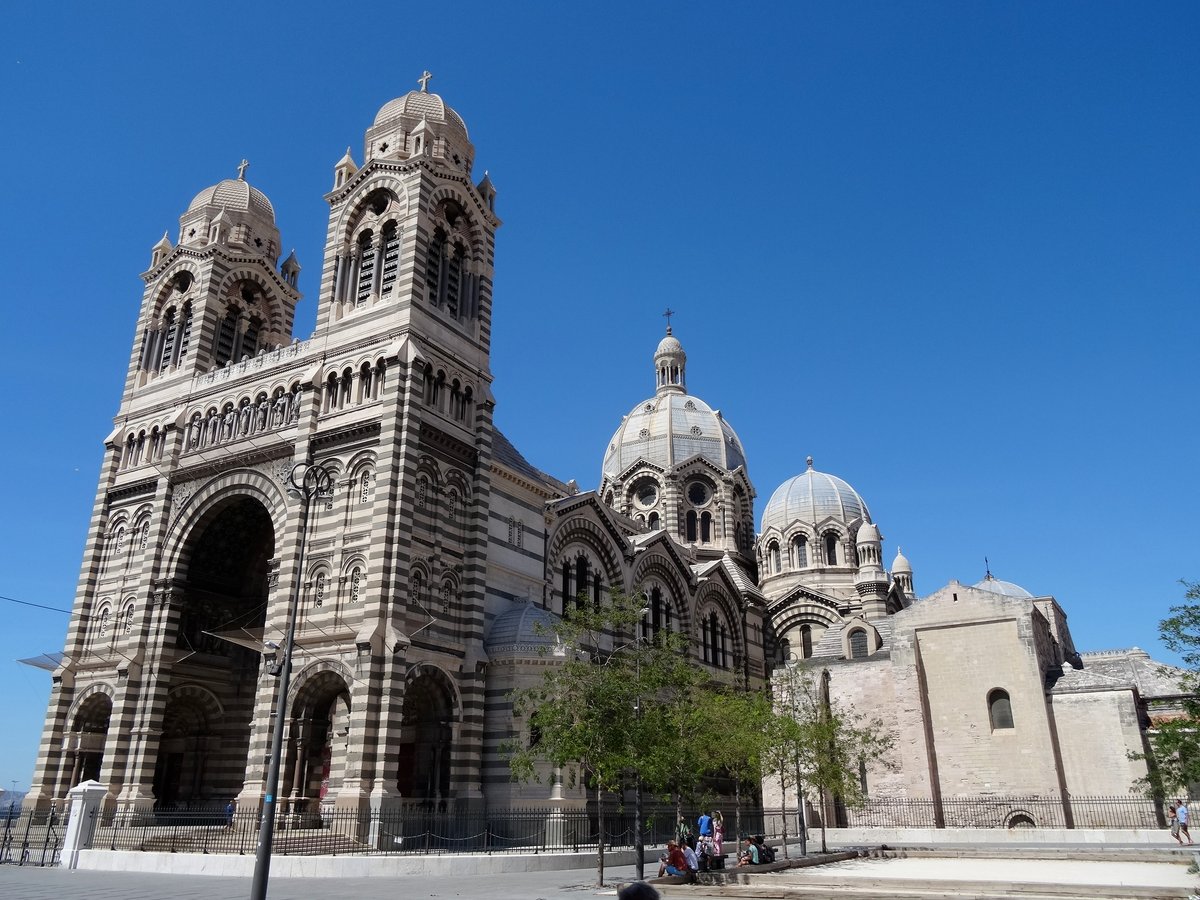

In the heart of Marseille, France, one can find the Marseille Cathedral, also known as Cathédrale Notre-Dame-de-la-Major. This architectural masterpiece was built on an enormous scale in the Byzantine and Roman Revival styles. The foundation stone for the new cathedral was laid by Emperor Napoleon III in 1852, and the first service was held in 1893.
While it was completed in 1896, the building was designed principally by the architects Léon Vaudoyer and Henri-Jacques Espérandieu. It was given the title of minor basilica in 1896 and consecrated in 1897. Measuring 142 metres long with a main cupola reaching 70 metres in height, it is one of the largest cathedrals in France, covering a total of 7,680 square metres.
Part of an earlier, much smaller cathedral still remains alongside the newer structure. That older building was constructed in the 12th century in a simple Romanesque style. Today, the choir and one bay of the nave of that original church remain, and these parts are commonly referred to as the Vieille Major.
Sources: Wikipedia, OpenStreetMap, Wikidata, Wikimedia Commons


Written by Nicolo Ciampini
Discuss this with the author and others
No comments yet. Be the first to start the conversation.