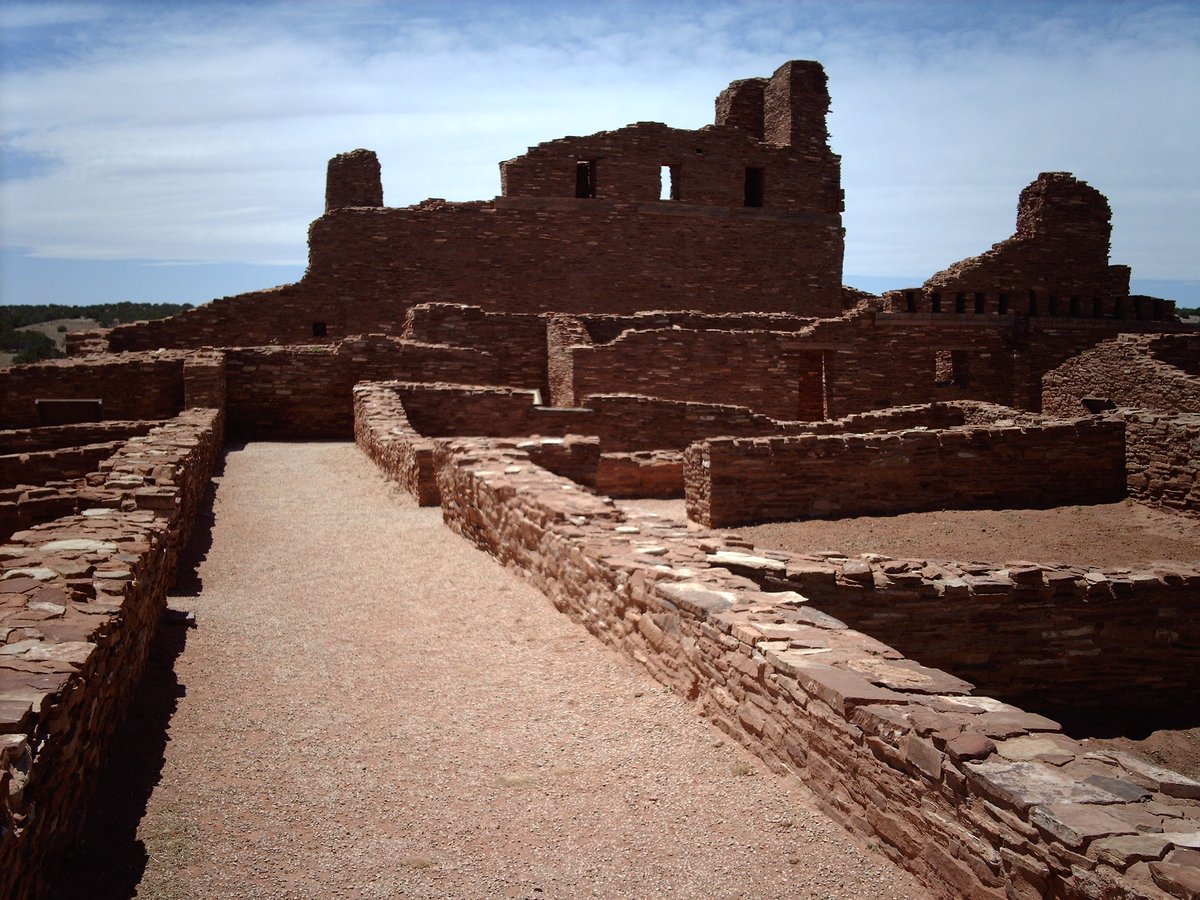

If you ever find yourself in the hills of New Mexico, you might hear about Abó. It wasn't just some random spot on the map. It was a major trading station where the Tompiro-speaking Tanoans acted as the middlemen. They handled the moving of salt from the Salinas deposits and bison skins and meat from the Great Plains over to the Pueblos of the Rio Grande Valley.
Living up there was definitely a balancing act. The village sat at over 6,000 feet, which is basically the limit for growing corn. Since the rainfall was sparse and the winters were cold, the folks there had to get creative. They relied on hunting deer, pronghorn, and rabbits, while also gathering pinyon pine nuts to keep everyone fed.
By 1641, the population hit over 1,600 people. The Spanish arrived in 1622 to start missionary work, but things shifted eventually. Around 1672, the inhabitants moved to the Rio Grande valley to escape a mix of drought and Apache attacks. They eventually joined the Spanish during the 1680 Pueblo Rebellion.
Nowadays, you can hike a half-mile trail around the unexcavated pueblo ruins to get a feel for the scale of the place. It is part of the Salinas Pueblo Missions National Monument. You can still see the Abo Formation clearly, with those distinctive sandstone red beds exposed to the northwest.
Sources: Wikipedia, OpenStreetMap, Wikidata, Wikimedia Commons


Written by Friendly Jane
Discuss this with the author and others
No comments yet. Be the first to start the conversation.