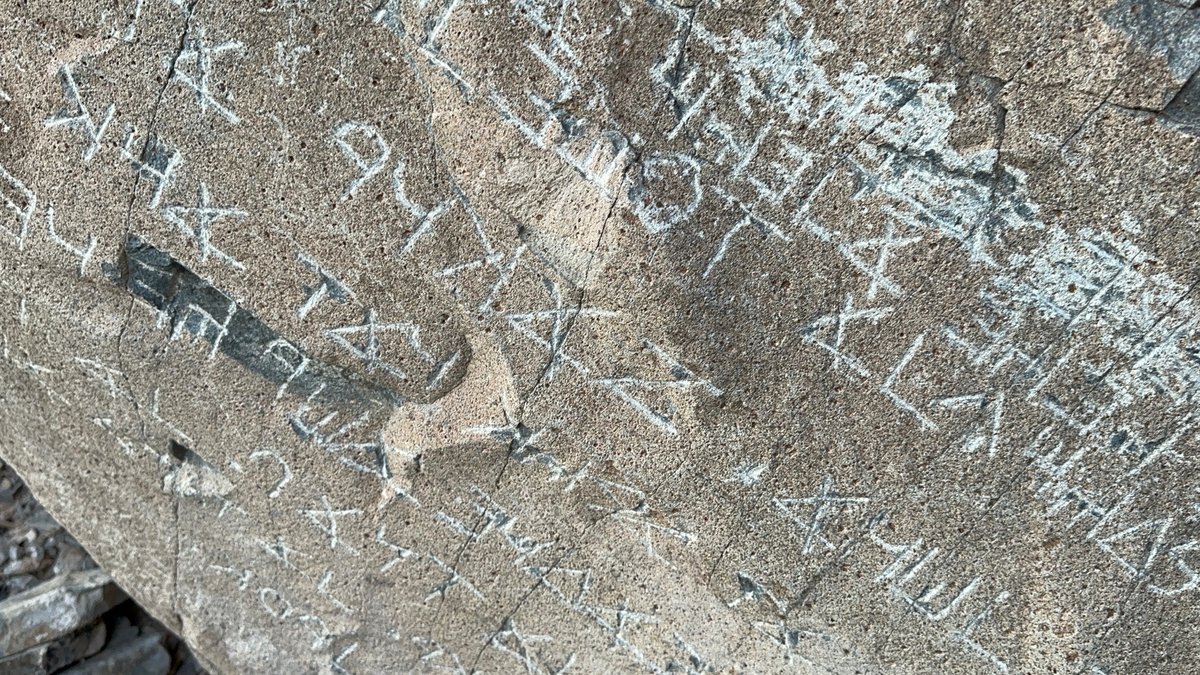
This mammoth stone, weighing over 80 tons, stubbornly refuses to move from Hidden Mountain. Centuries have passed, and some speculate it's been a silent sentinel, hinting at a Semitic connection to the Americas. But most archaeologists scoff at such ideas. Its etchings, a graveyard message, are in Paleo-Hebrew, a cousin to the Phoenician script. The first traces of it were found in 1870, leaving room for modern deceit. Archaeolinguist Cyrus Gordon insists it's a Samaritan mezuzah, a heavy slab traditionally placed at property or synagogue entry, exhibiting a concise Decalogue.
He suggests the Byzantine era as its birthplace. The Samaritan script, a descendant of the Paleo-Hebrew script, is what's used in the etchings. Despite its gargantuan size, the inscribed text utilizes modern Hebrew punctuation, along with ancient-looking symbols, which some claim lends credence to its age. Over the years, the etchings have been polished to a shine that scientists can only dream of. In April 2006, the first line of the unguarded etchings was defaced by vandals.
A Recreational Access Permit from the New Mexico State Land Office will set you back $35 to visit the site. The stone's ownership, along with the identity of the stone's excavator, remain mysteries.
Sources: Wikipedia, OpenStreetMap, Wikidata, Wikimedia Commons
Written by Leroy
Discuss this with the author and others
No comments yet. Be the first to start the conversation.