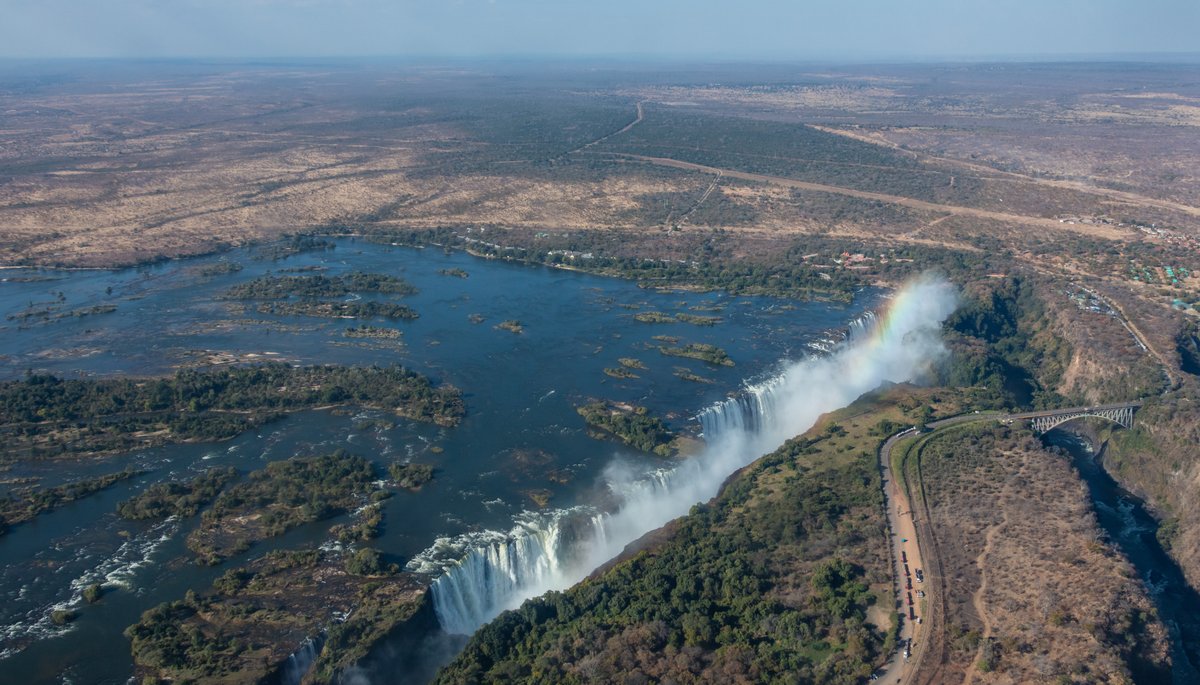

On the border between Zambia and Zimbabwe, the Zambezi River flows into a transverse chasm in the basalt plateau to create Victoria Falls. Known locally as Mosi-oa-Tunya, which means "the smoke that thunders," the falls span a width of 1,708 meters. This makes it the world's largest sheet of falling water, with the river plunging to a depth of 108 meters in the center of the First Gorge.
The region around the falls has a high degree of biodiversity in both plants and animals. The riverine system is fed by the Zambezi, which experiences a rainy season from late November to early April. During this time, the spray from the falls can rise to a height of over 400 meters and can be seen from a distance of up to 50 kilometers.
Historical records show that the falls were well known to local tribes before European arrival. Scottish missionary David Livingstone was the first European recorded to have viewed the falls in November 1855. He named them in honor of Queen Victoria, though the name Mosi-oa-Tunya continues in common usage. On the night of a full moon, a "moonbow" can sometimes be seen in the mist of the spray.
Sources: Wikipedia, OpenStreetMap, Wikidata, Wikimedia Commons
Written by Mutabor
Discuss this with the author and others
No comments yet. Be the first to start the conversation.