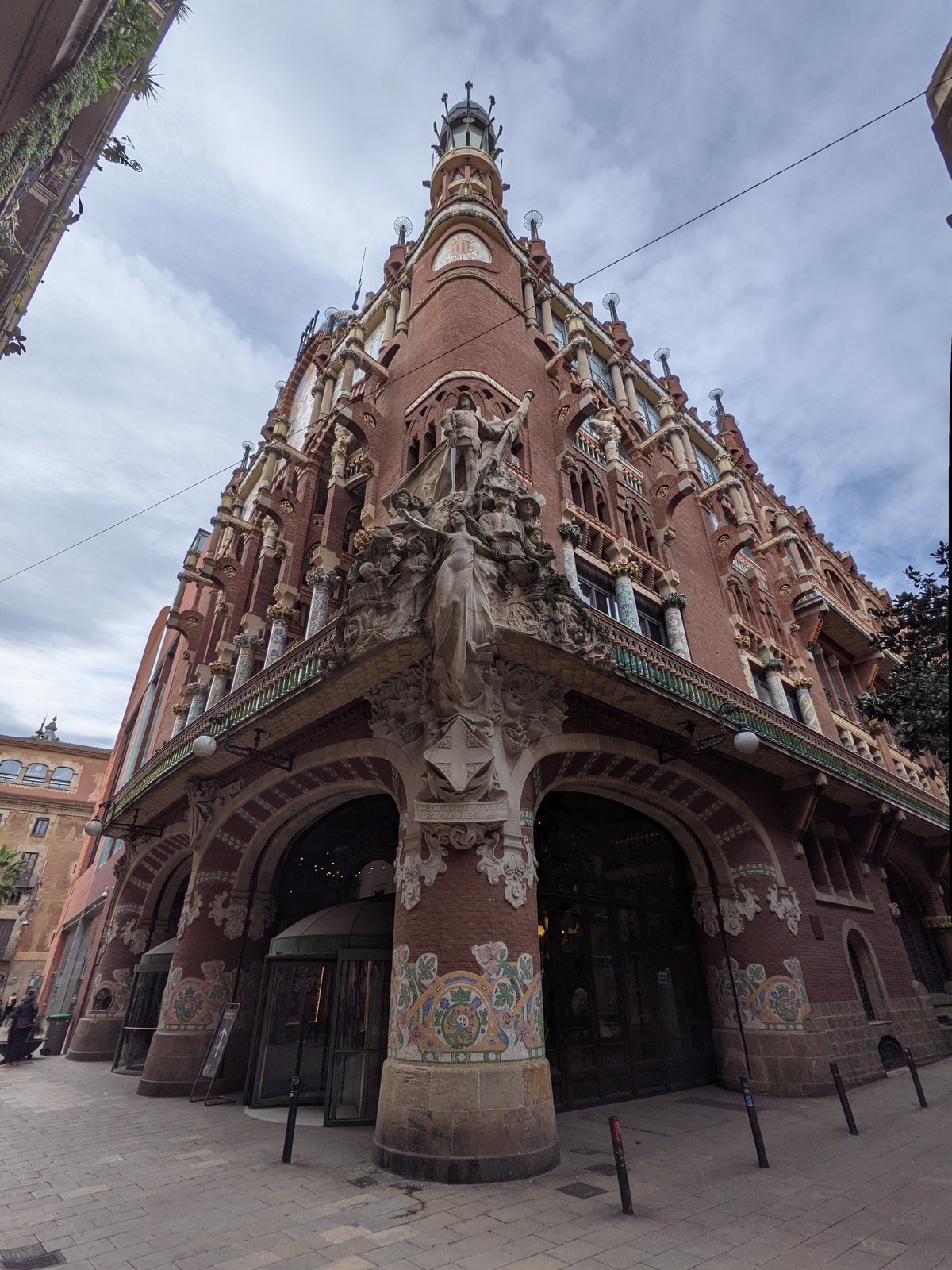

The Palau de la Música Catalana is located in the corner of a cramped street, Carrer Palau de la Música, and Carrer de Sant Pere Mes Alt, in the section of old Barcelona known as Casc Antic. While most prominent modernista buildings are located in the Eixample, this palace was built between 1905 and 1908 by Lluís Domènech i Montaner for Orfeó Català, a choral society that was a leading force in the Catalan cultural movement known as the Renaixença.
The design is typical of Catalan modernism, where curves predominate over straight lines and rich decoration emphasizes floral and other organic motifs. However, the design is eminently rational, paying strict attention to function and making full use of up-to-date materials and technologies like steel framing. The structure, in brick and iron, is clearly expressed, and its walls are the first example of curtain wall structures.
Local patrons requested materials and techniques reflecting Catalan identity, leading the architect to grant local artisans creative autonomy to produce the building's notable ornamentation, sculpture, and decorative structural elements. These include multicolored glazed tile pieces in floral designs and a massive sculptural group symbolizing Catalan music on the corner of the building.
From the vestibule, grand marble staircases ascend from between crowned lamps on columns. The ceiling of the vestibule is decorated with glazed ceramic moldings arranged in the shape of stars. Today, more than half a million people a year attend musical performances in the Palau that range from symphonic and chamber music to jazz and Cançó.
Sources: Wikipedia, OpenStreetMap, Wikidata, Wikimedia Commons
Written by Nicolo Ciampini
Discuss this with the author and others
No comments yet. Be the first to start the conversation.