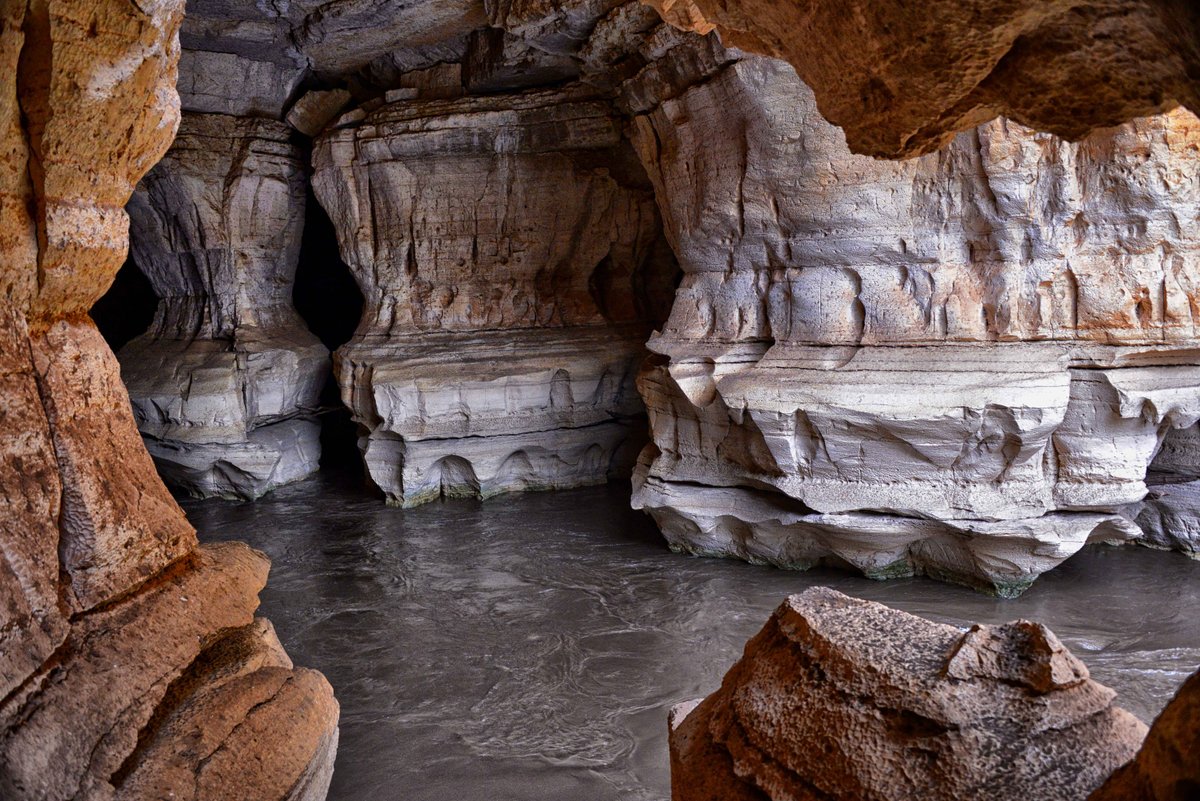

From the 4,300-metre-high Bale Mountains, the Weyib River flows through a 150-kilometre-wide outcrop of Anatole limestone to reach the cave. In earlier times, the river made a sharp left meander before the limestone dissolved. The dissolution of limestone produced phreatic passages that captured the whole flow of the Web river. Eventually, the river abandoned its original meander, creating a dry valley that runs from the cave sink at Ayiew Maco to the resurgence at Holuca, a mere 1 kilometre away.
Deep within this limestone is a journey of 15.1 kilometres, making it the longest cave in Ethiopia. When surveyed in 1972, it was the longest cave in Africa. The cave is formed along a network of joints running north to south and east to west, with passages running in an approximately southeasterly direction. In the Chamber of Columns, many pillars rise from the floor. This complex system possesses 42 entrances, though only four are generally useful for entry.
High above this underground system, a basalt plateau features a large shakehole 100 metres wide and 60 metres deep. For the nearby people, this is a sanctuary of faith. It bears the names of the Muslim holy man Sof Omar and his daughter, Ayiew. These names are woven into the land, for Maco is the local word for name and Holuca is the local word for cave. It stands as a religious center sacred to both Islam and the local Oromo traditional religion.
Men have sought to map this darkness for more than a century. Arthur Donaldson Smith recorded a visit in 1894, and an Italian expedition visited in 1913, though none of these early explorers made a through trip from Ayiew Maco to Holuca. It was not until 1967 that Eric Robson, Chris Clapham, and Kabir Ahmed recorded 8 kilometres of passage. In 1972, a British expedition discovered 6.1 kilometres of new passages and published a full report of their findings.
The cave remains a place of pilgrimage and was added to the UNESCO tentative list in 2011. Near the Ayiew Maco sink, the village of Sof Omar remains where a shrine used by the locals stands in the valley's shadow. Travelers may pass through the Village Entrances to witness where the faithful still pray, or take the Tourist Entrance downstream where the abandoned meander rejoins the Web river.
Sources: Wikipedia, OpenStreetMap, Wikidata, Wikimedia Commons

Written by Mutabor
Discuss this with the author and others
No comments yet. Be the first to start the conversation.