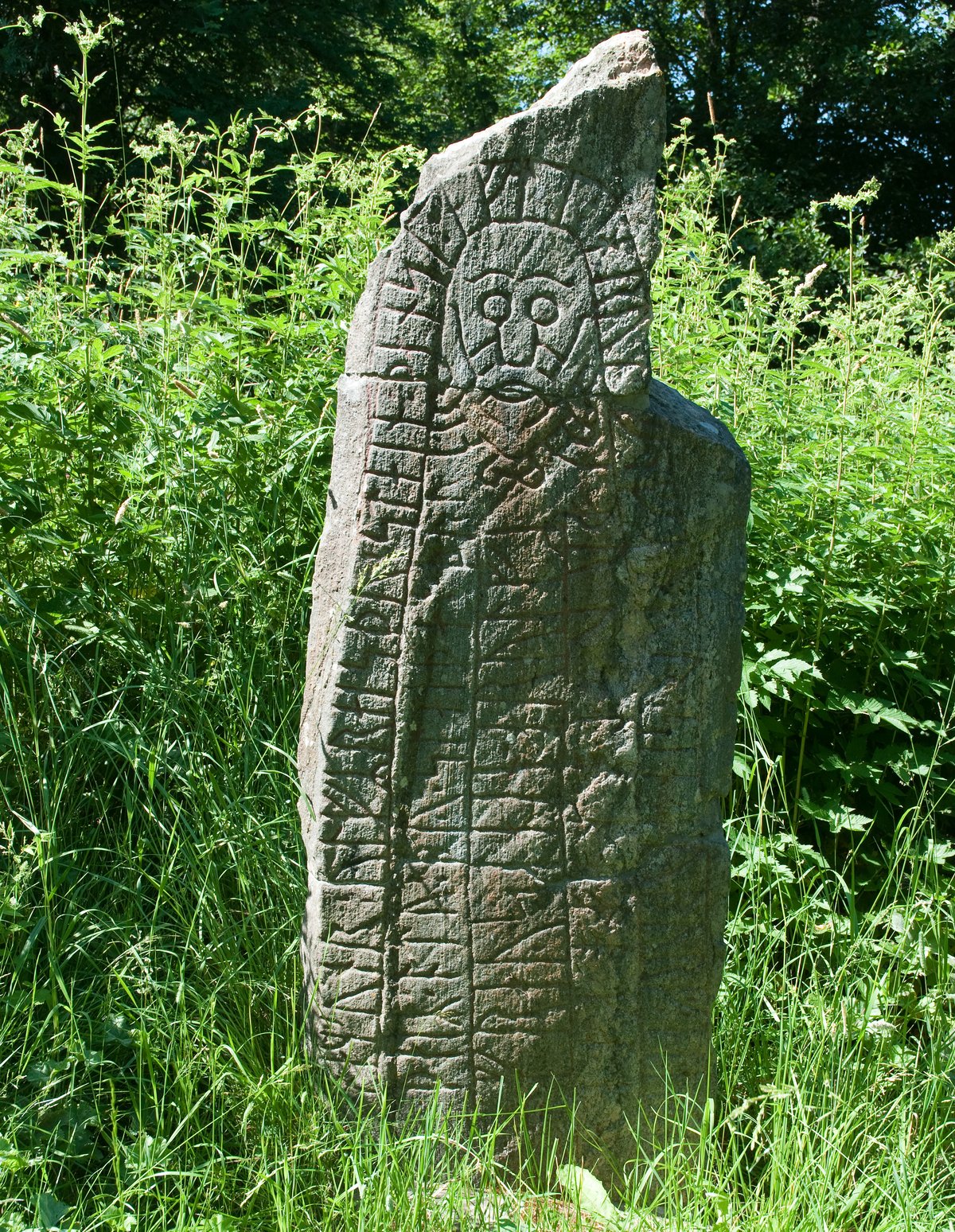

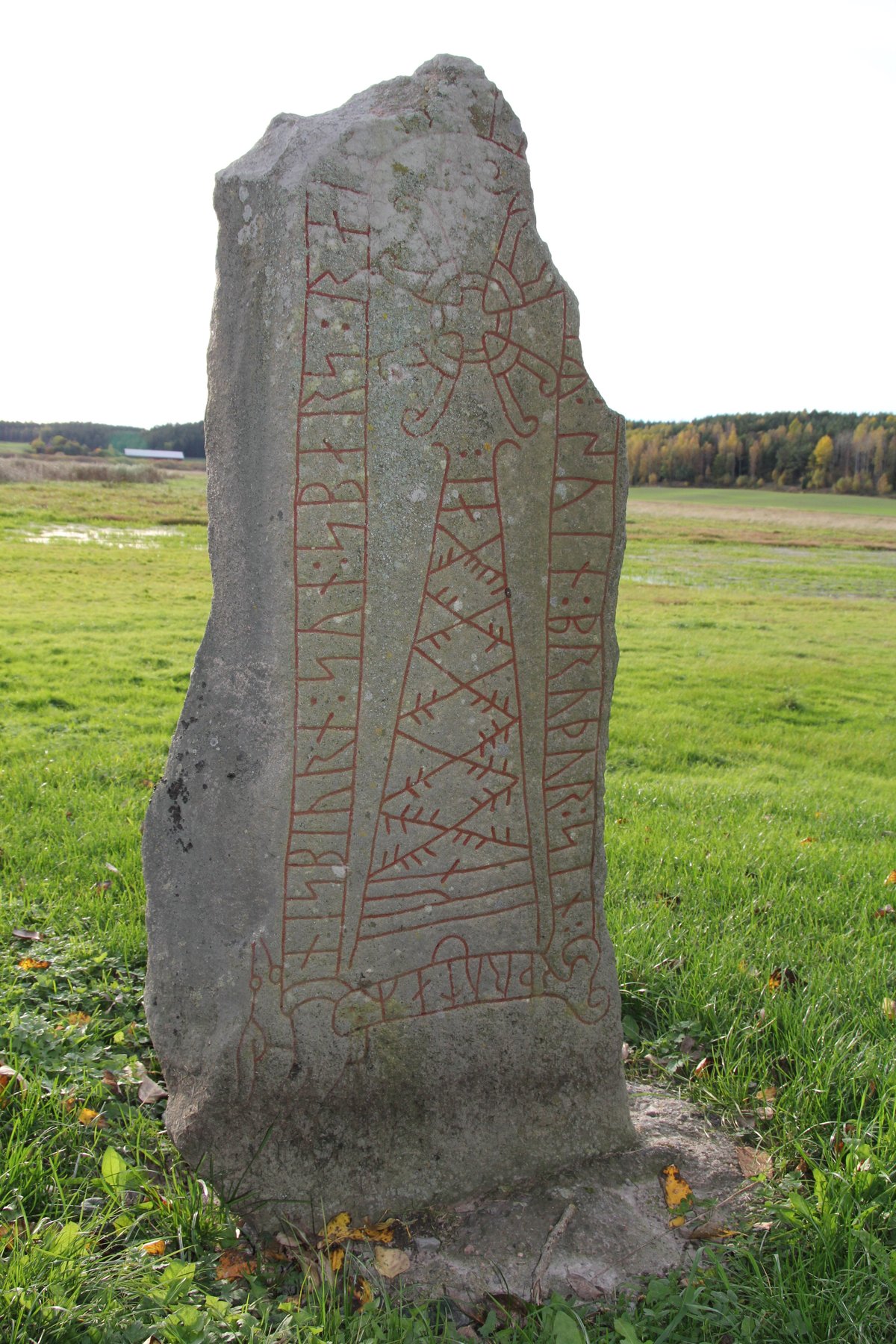
This gneiss slab stands 1.78 metres tall and serves as a significant piece of history. It is classified as being carved in runestone style RAK, which is considered to be the oldest classification. This is the classification for inscriptions that have straight text band ends without any attached serpent or beast heads. One of its most striking features is a facial mask. It has been suggested that the facial mask represents Jesus Christ.
Recovered in three pieces from a bathing area of the Nyköpingsån river near a farm in 1935, the stone was found at an old crossing of this river, which was an important Viking Age waterway in Södermanland. The inscription provides a record of its origin. It identifies two men, Hámundr and Ulfr, who raised the stone as a memorial to their father Hrólfr, assisted by Hrólfr's spouse Eybjôrg. It also names Freysteinn and Hrólfr as thegns, who were owners of the estate of Sleðabrú.
We can look deeper into the linguistic history of the name Sleðabrú. While it was described as coming from Slaiþa|Bru meaning "bridge for sleighs," it has been suggested that the first part of the name comes from the stem slaiðo which means "slowly gliding," and refers to the Nyköpingsån river. The text also contains the Old Norse phrase þrottaʀ þiagnaʀ or "þegns of strength," which is written in a coded form using a combination of runes and cipher runes.
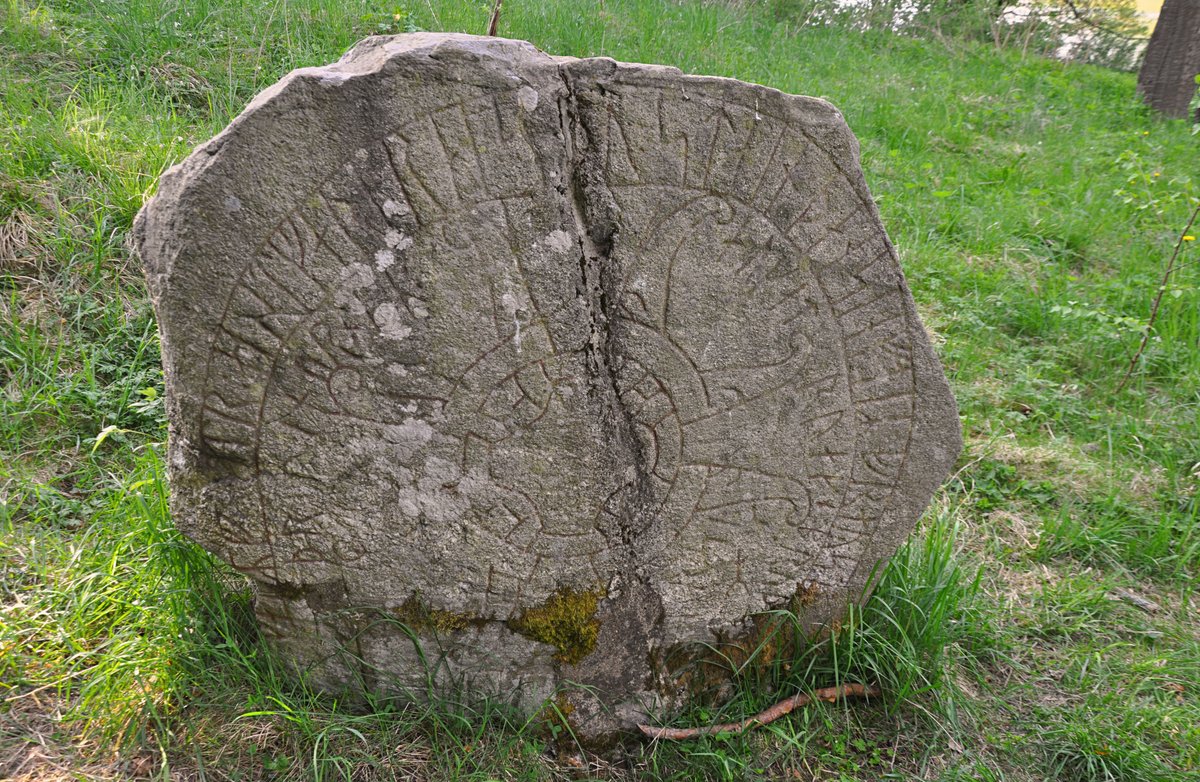
Today, the stone is known locally as the Släbrostenen. It contains a dotted form of the m-rune, which is considered to be a transitional form. A second runestone, Sö 45, has been placed just south of Sö 367.
Sources: Wikipedia, OpenStreetMap, Wikidata, Wikimedia Commons

Written by Nik Frost
Discuss this with the author and others
No comments yet. Be the first to start the conversation.